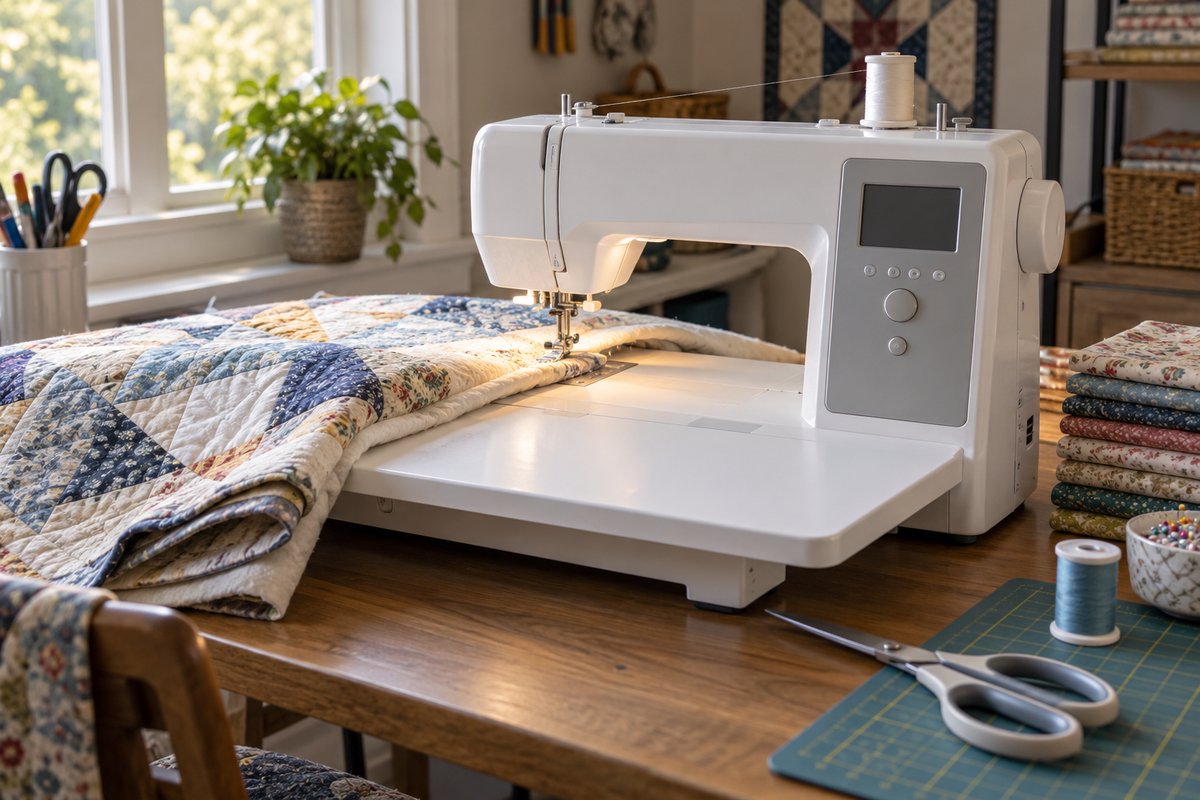
If you're new to quilting, the sewing machine question comes up before almost anything else, and it's easy to get talked into spending more than you need to. The good news: most home sewing machines can quilt just fine as long as a handful of specific things are true about how they're built. This guide covers exactly what those things are, plus a few real, widely available machines that consistently show up as good starting points for beginners. In short, the best sewing machine for quilting beginner shoppers isn't the one with the most stitches, it's the one built to handle a quilt sandwich evenly. See the full sewing machines for quilting hub for more buying guides as they publish.
Table of Contents
What matters in a quilting machine (and what doesn't)
You don't need a longarm machine to start quilting, and you don't need every stitch pattern a manufacturer can cram into the manual. A handful of features do the real work:
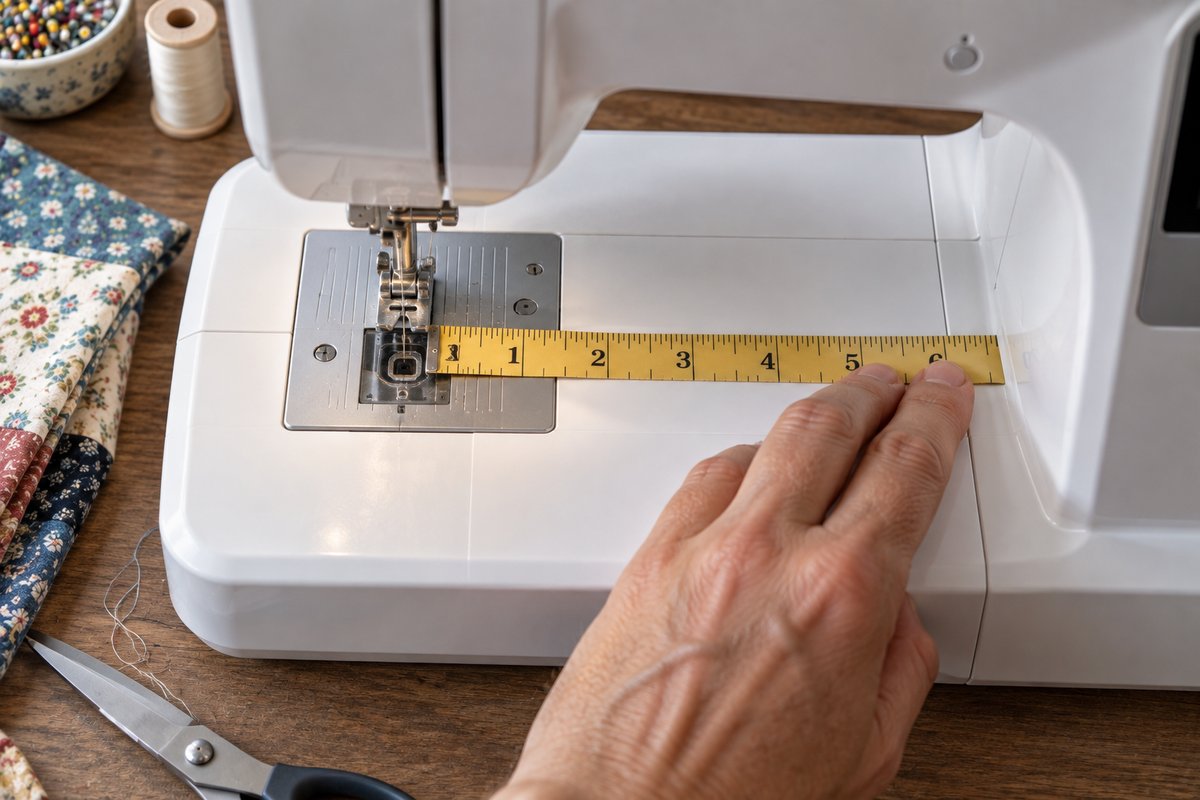
- Throat space. This is the distance between the needle and the body of the machine on the right side. More throat space means more room to move a quilt around while you sew, which matters once you're working on anything bigger than a table runner or a baby quilt.
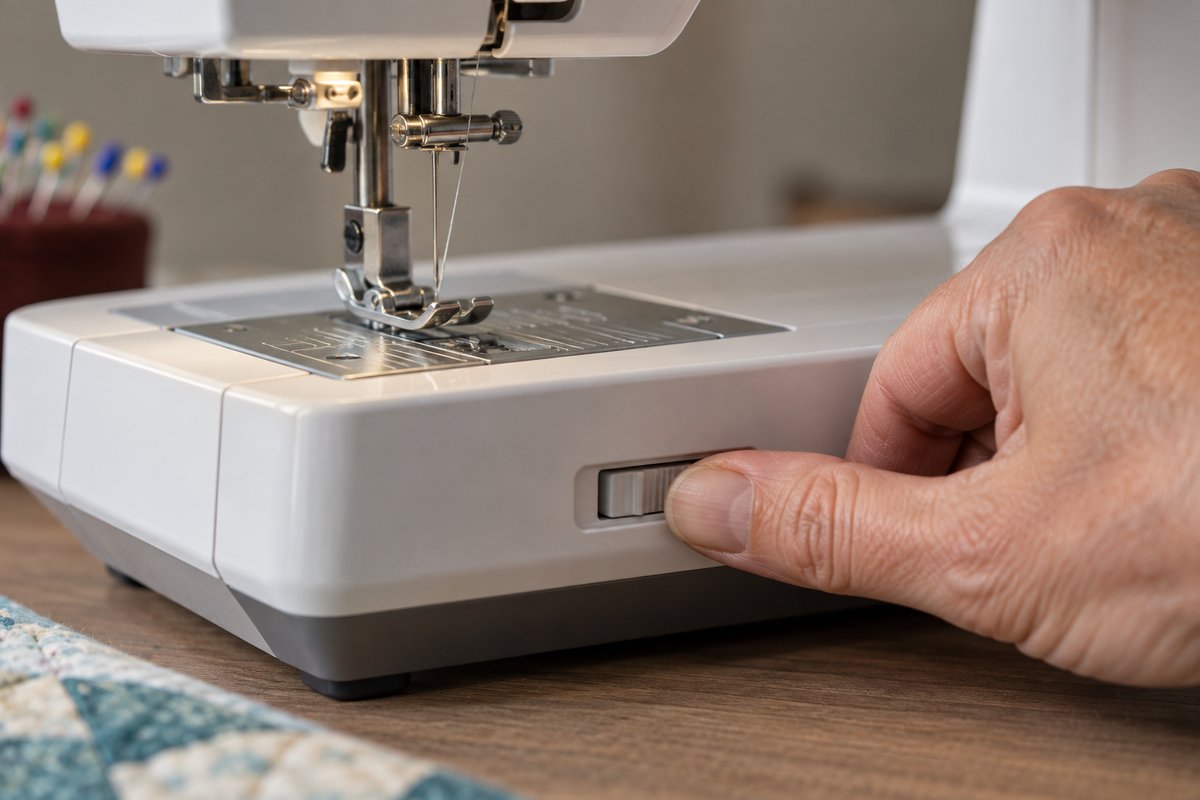
- Drop-feed capability. Free-motion quilting requires being able to drop or cover the feed dogs so you can move the fabric yourself instead of the machine feeding it in a straight line. Almost every machine marketed for quilting has this. A lot of basic machines don't.
- A walking foot (or the option to add one). A walking foot feeds the top and bottom layers of a quilt sandwich evenly, which cuts down on puckering and shifting. Some machines include one. On others it's a separate, fairly inexpensive accessory.
- Adjustable stitch length and a straightforward tension dial. You'll be adjusting both more often than you'd think, especially while you're still learning how your machine handles different thicknesses of batting.
- A reliable, even feed on thicker fabric sandwiches. This is the thing that's hardest to judge from a spec sheet. It's also where cheaper machines tend to struggle first, since a quilt sandwich (top, batting, backing) is a lot thicker than a single layer of quilting cotton.
What you can mostly ignore as a beginner: built-in embroidery functions, huge libraries of decorative stitches, and top-of-the-line computerized features. None of that helps you piece or quilt better. It's fine to want those things eventually, but they're not what separates a machine that quilts well from one that doesn't.
Best Sewing Machine for Quilting Beginner Picks, by Budget
These are real, widely sold machines that consistently come up as sensible choices for someone starting out. They're grouped loosely by budget rather than ranked, because "best" here really does depend on how much throat space and which features matter most to you.
Entry-level: Brother CS7000X
A computerized machine that regularly gets recommended as a first "real" quilting machine. It has a drop-feed feature for free-motion work, a wide table extension included in the box (which effectively adds throat space when you need it), and an automatic needle threader, which matters more than it sounds like it would when you're still building the habit of threading a machine correctly every time. It's a mechanically simple machine underneath the computerized stitch selection, which tends to mean fewer things to go wrong.
Entry-level: Singer Heavy Duty 4432
Not marketed specifically as a quilting machine, but it's a mechanical workhorse with a stronger motor than most machines in its price range, which helps when you're sewing through a quilt sandwich instead of a single layer of cotton. A walking foot isn't included, but it's an inexpensive add-on, and the machine has the drop-feed control needed for free-motion quilting. Good option if you want something simple and durable rather than feature-heavy.
Mid-range: Janome HD3000
A mechanical machine built specifically with heavier fabric and multiple layers in mind, which is essentially what quilting is. It handles a quilt sandwich noticeably better than most machines at this price point, has a solid range of stitch length adjustment, and includes a hard case rather than a soft cover, which matters more than it sounds like once you're transporting a machine to a class or guild meeting. It is a reasonable step up if you have already outgrown an entry-level best sewing machine for quilting beginner pick.
Mid-range: Singer Quantum Stylist 9960
A step up in features (built-in stitches, larger LCD screen, one-step buttonholes) but the part that matters for quilting is that it has a genuinely wide table attachment and a drop-feed feature that a lot of reviewers specifically call out as smooth for free-motion work. It's a heavier machine, which is generally a good sign for stability on a quilt sandwich rather than a downside.
If you want more throat space from the start: Juki TL-2000Qi
A straight-stitch-only machine, which is a real tradeoff (no zigzag, no decorative stitches), but the payoff is a machine built around piecing and quilting specifically, with a wider throat than most home machines and an industrial-style straight stitch that a lot of dedicated quilters end up buying later anyway. Not the first machine most beginners choose, but worth knowing about if you're fairly sure quilting is going to be your main use for a sewing machine rather than one thing among several.
A note on where to buy: this guide is intentionally written without shopping links right now. If you're comparing these in person or online, check current reviews and return policies before buying, especially for anything you're ordering without testing first.
How much throat space do you need?
For piecing blocks and quilting small projects (table runners, baby quilts, wall hangings), a standard 6 to 7 inch throat is usually fine. Once you're quilting anything larger on your home machine rather than sending it to a longarm quilter, more throat space (9 inches and up) makes a real difference in how much you have to bunch and roll the quilt to get it under the needle. If you know you'll mostly be piecing tops and having someone else quilt them, throat space matters much less than it does if you plan to free-motion quilt full-size quilts yourself. This is one of the most practical differences to weigh when picking the best sewing machine for quilting beginner projects.
If you are comparing specific machines, see our Singer Quantum Stylist 9960 review and Brother CS7000X review. Not sure which type to start with? Our guide to mechanical vs computerized sewing machines for quilting explains the tradeoffs. If you also want to embroider, our guide to the best sewing machine for quilting and embroidery covers combo machines.
Common questions
What sewing machine do most quilters use?
There's no single best sewing machine for quilting beginner shoppers must buy, since no one machine works for everyone. Brands like Brother, Janome, Singer, and Juki all show up constantly in quilting communities, and a lot of experienced quilters own more than one machine for different tasks (a straight-stitch machine for piecing, a separate machine or longarm for quilting). What's consistent is that they tend to prioritize even feed on thick fabric and reliable drop-feed control over decorative stitch counts.
Which sewing machines are best for quilting?
The best sewing machine for quilting beginner shoppers can pick is one that handles multiple layers of fabric and batting evenly, offers a wide enough throat for the size projects you make, and lets you drop the feed dogs for free-motion work. That's a longer list of machines than most "best of" roundups suggest, since it's really about a few specific mechanical traits rather than one specific brand or model.
What is the best quilting sewing machine on a budget?
For a best sewing machine for quilting beginner pick on a tight budget, when it comes to the best sewing machine for quilting beginner budgets, entry-level mechanical and computerized machines from Brother and Singer (like the CS7000X and Heavy Duty 4432 above) consistently offer the drop-feed control and stitch length adjustment quilting needs without paying for embroidery functions or huge stitch libraries you won't use for quilting itself.
Is Brother or Singer better for quilting?
Neither brand is the best sewing machine for quilting beginner shoppers across the board. It depends on the specific model. Brother's computerized entry-level machines tend to have smoother automatic features (needle threading, bobbin winding), while Singer's mechanical Heavy Duty line is built around motor strength and simplicity. Both make machines that handle quilting sandwiches well at the beginner and mid-range price points, so the individual model matters more than the brand name.
The bottom line
You don't need to spend a lot to start quilting, and you don't need a machine marketed specifically as a "quilting machine" either. In short, the best sewing machine for quilting beginner needs comes down to a short checklist rather than a brand name. Look for drop-feed control, a walking foot option, adjustable stitch length, and a motor that won't strain on multiple layers of fabric and batting. Get comfortable with those basics on an entry-level machine first, and let your next upgrade be driven by something specific you've run into, not a longer feature list.
9 thoughts on “Best Sewing Machine for Quilting Beginners in 2026”