
Most buying guides for sewing machine extension tables skip the one detail that determines whether the table you order will actually work: these tables are almost always cut to fit one specific machine, not all machines. Order the wrong one, and it will not sit flush, and a wobbly or gapped table causes the exact stitching problems you bought it to fix. This guide explains how extension tables work, how to match one to your machine, and which real, currently sold options cover the most common machines, so you order the right one the first time.
QuiltGearHQ is a participant in the Amazon Services LLC Associates Program, an affiliate advertising program designed to provide a means for sites to earn advertising fees by advertising and linking to Amazon.com.
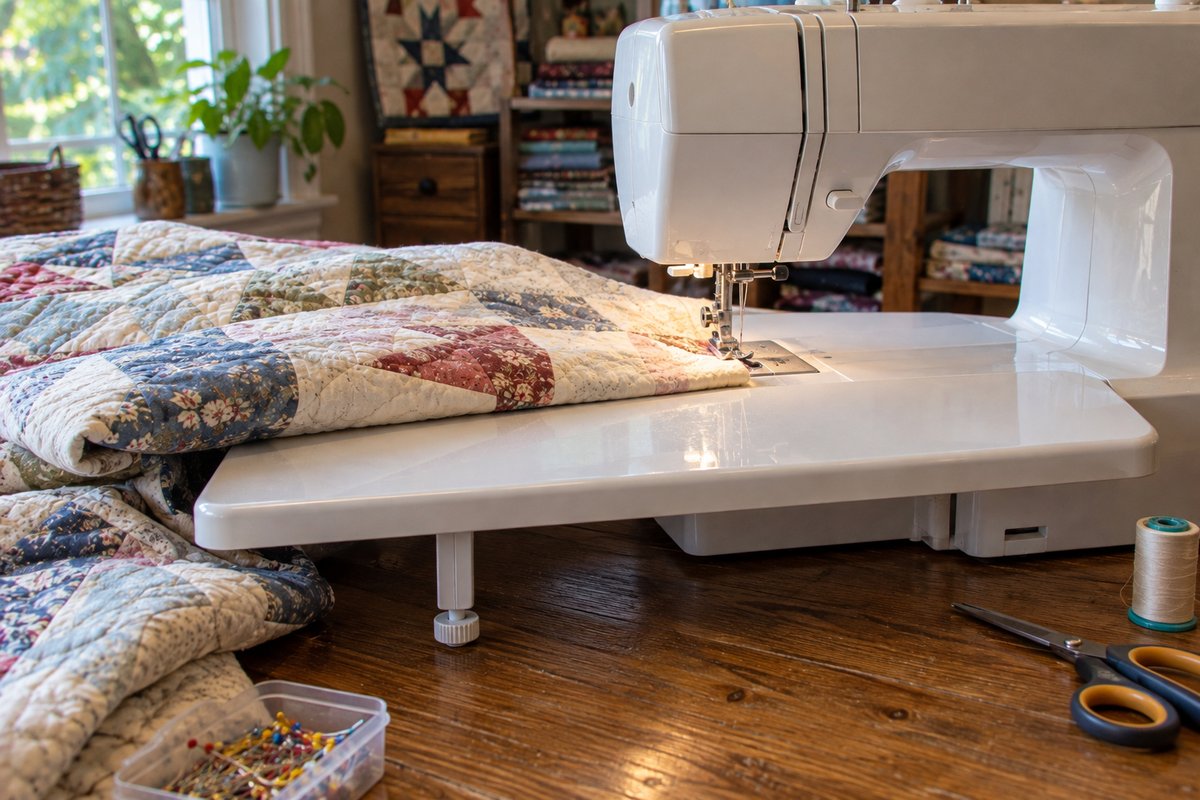
Table of Contents
What an extension table actually does for quilting
An extension table is a flat panel that snaps or bolts onto your sewing machine's free arm, so the sewing surface around the needle becomes as wide as a full table instead of a narrow arm. You don't need one for piecing (sewing small fabric pieces together into a quilt top) small blocks. Once you are quilting a full sandwich (top, batting, and backing), the extra flat surface starts to matter a lot.
Without a flush surface, the quilt's weight pulls down at the edge of the machine bed as it feeds through. That drag shows up as skipped stitches, uneven tension, and puckering, the same problems many quilters blame on the machine or the thread. An extension table supports that weight so the fabric feeds evenly instead of hanging off the edge. Nancy's Notions, a long-running sewing retailer, makes the same point in its buyer's notes: a larger surface keeps layers from shifting, which is why quilters add one in the first place.
The table also gives you more room to steer the fabric during free motion quilting, where both hands need space to guide the quilt in smooth curves. A clear acrylic table has a second benefit here: you can set it over a light source and use it as a makeshift light box for tracing quilting designs.
An extension table will not help with garment sewing that needs the free arm, like hemming sleeves or finishing pant legs. Most tables cover the free arm completely, so if you switch between quilting and garment work on the same machine, expect to remove the table for those projects.
The fit problem most guides never mention
Search for "sewing machine extension table," and most articles describe what the tables do without ever explaining the detail that matters most: almost none of them are truly universal. Extension tables are built to match the exact shape of one machine's free arm and bed. A table cut for a Singer will not sit flush on a Brother, and a table cut for one Singer model may not even fit a different Singer model.
These tables fall into three groups, and knowing which group you are shopping in changes how you search.
- Brand OEM tables. Sold directly by the machine maker (Singer, Brother, Janome) and listed by exact model number. These fit the cleanest because they are designed alongside the machine itself.
- Aftermarket model-specific tables. Made by third parties like StitchTech or CKPSMS. These are reverse-engineered to match a specific list of models, usually at a lower price than the brand's own table.
- Custom-cut tables. Brands like Sew Steady cut a table to order after you enter your machine's brand and model at checkout. These cost more and take a few weeks to arrive, but they cover machines without an off-the-shelf table.
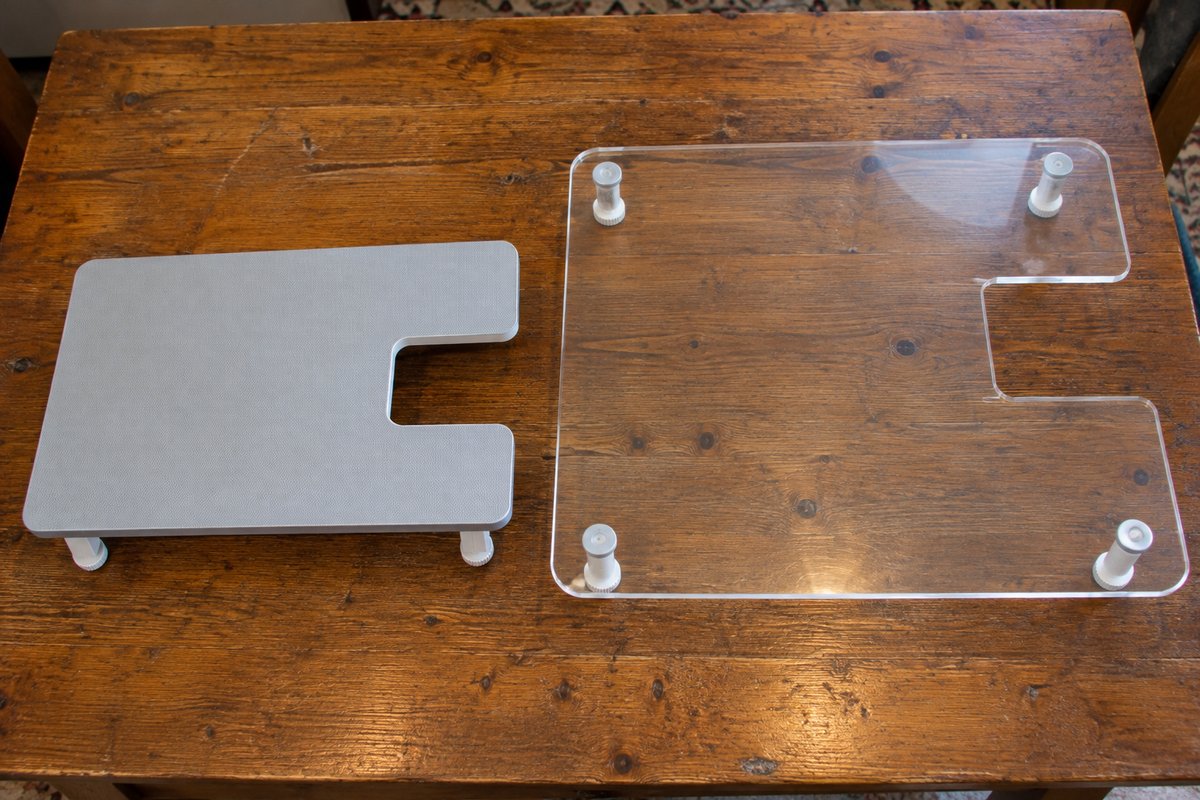
What almost does not exist is a true one-size-fits-all table. Even Sew Steady's Versa Table, marketed as its most flexible option, is still cut to your machine at checkout and comes with a stated limit. On machines with a larger sewing surface, the core piece may cover only about 11 inches near the needle instead of extending fully across. Treat any listing that claims to fit "most machines" with caution unless it names your exact model.
How to find the right extension table for your machine
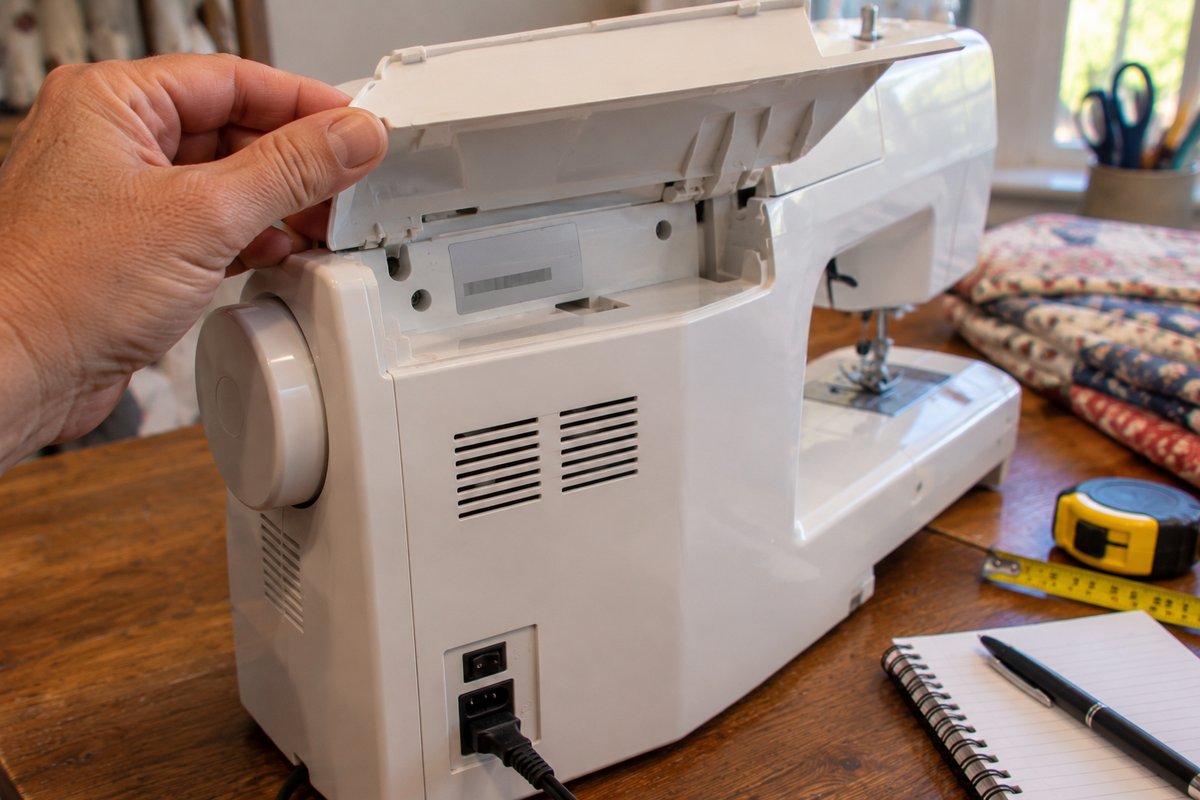
Start with your machine's exact model number, not just the brand. It is usually printed on a sticker on the front, back, or underside of the machine, or inside the manual's first page. A Singer Heavy Duty 4423 and a Singer Heavy Duty 4452 are different enough that a table built for one may not seat correctly on the other.
Once you have the model number, search for it directly along with "extension table," for example, "Brother SE625 extension table." Read the compatibility list on the product page carefully. Sellers like StitchTech and CKPSMS list every compatible model number in the title or bullet points, so check that your exact model appears before buying. If you cannot find a listing that names your model, a custom-cut option like Sew Steady is a good fallback, since it is built from your model number rather than a fixed mold.
Size is the second factor, and it varies more than most buyers expect. Basic snap-on tables for machines like the Singer Heavy Duty line run around 15 by 10 inches, just enough to level out the area right around the needle. Larger tables for computerized and quilting-focused machines measure 18 by 24 inches or more, providing enough surface to support a folded quilt during free motion work. A beveled or rounded front edge, a detail Missouri Star Quilt Co. highlights on its Sew Steady listings, also matters in daily use since it keeps fabric from snagging as you turn the quilt.
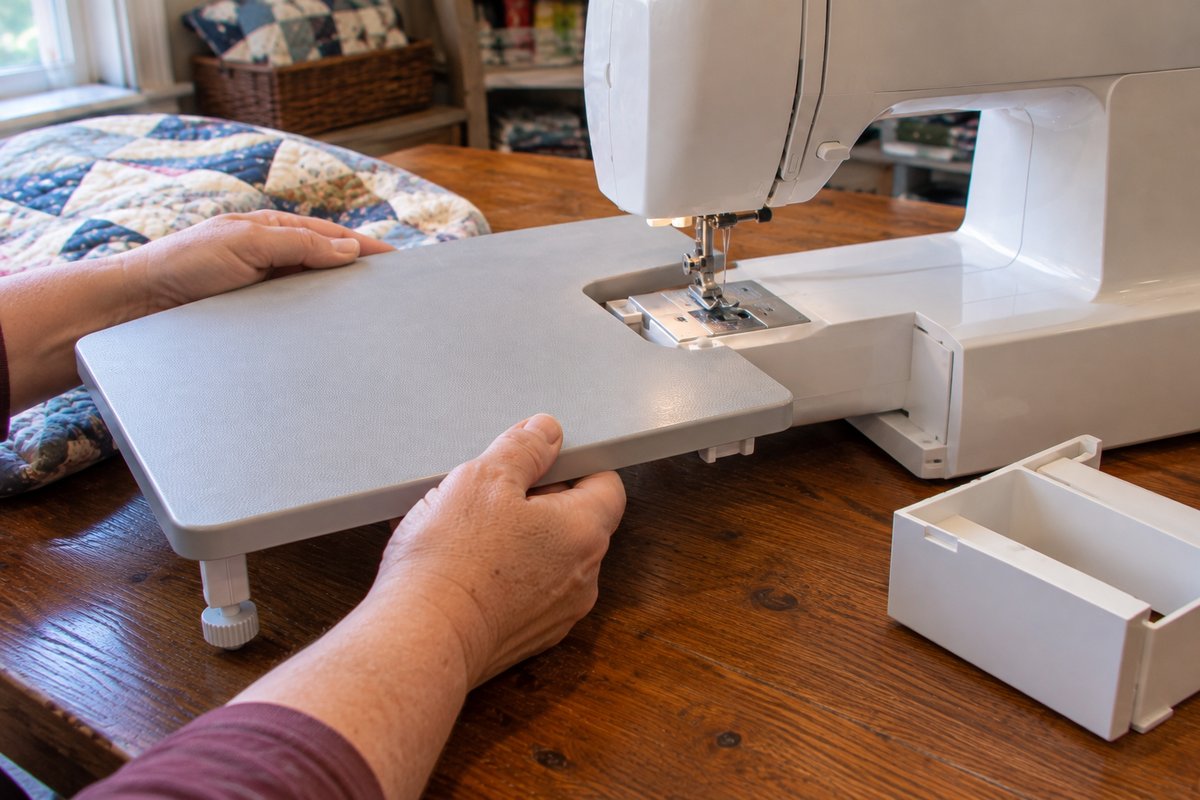
If your machine has an accessory tray or a removable storage compartment on the free arm, note that most tables require removing it first to expose the free arm the table will slide onto. Check the product listing or manual for this step before you buy, so the table is not a surprise return.
Installing and removing an extension table
Most snap-on tables install the same basic way. Remove the machine's storage compartment or accessory tray from the free arm, then slide the table's cutout over the arm until it clicks or seats flat against the machine bed. Singer's own instructions for its Heavy Duty extension table describe this exact process, and most third-party tables follow the same pattern since they are built around the same free arm shape.
Custom-cut tables like Sew Steady use adjustable legs instead of a snap fit. The legs screw into the underside of the acrylic panel and adjust to the exact height of your machine bed so the two surfaces sit level. This takes a little more setup the first time, but the legs fold or detach afterward, which makes these tables easier to store than they look.
Removal is just the reverse. Keep the table's original packaging or a dedicated storage spot, since most are flat enough to slide behind a cabinet or under a table when not in use.
Is an extension table worth it? Pros and cons
An extension table is worth buying if you quilt full-size projects on a standard machine and don't already have a dedicated quilting table or cabinet with a drop-down platform. It is a much cheaper way to get a flush, supported surface than replacing your sewing table. Here is how the tradeoffs break down.
Pros
- Gives a flush, supported surface that reduces fabric drag and uneven stitches on large projects.
- Costs far less than a dedicated quilting table or cabinet.
- Gives both hands more room for free motion quilting.
- A clear acrylic table can double as a light box for tracing designs.
- Most fold flat or detach for storage in small sewing spaces.
Cons
- Fit is machine-specific, so it will not transfer cleanly if you later switch to a different brand or model.
- Custom-cut tables can take two to four weeks to arrive and are often non-returnable once cut.
- Covers the free arm, so you need to remove it for garment sewing.
- Larger acrylic tables add bulk that needs a place to live when not in use.
Best sewing machine extension table for quilting: 5 picks
These five tables are currently sold and cover the machine families most quilters own. Match your exact model against the compatibility list before ordering, even if your machine's brand matches one of the picks below.
StitchTech for Singer Heavy Duty machines: best for the most popular quilting machine
The StitchTech Extension Table, 15 x 10 inches, fits the Singer Heavy Duty 44S, 4411, 4423, 4432, 4452, 5511, 5523, 5532, and 6335, the machine family most often recommended to beginner quilters for its price and power. It snaps onto the free arm after you remove the storage compartment and provides a grey, textured surface about 15 by 10 inches, enough to level the area around the needle for piecing and light quilting.
SINGER Snap-On Table for computerized machines: best Singer-made option
The SINGER Snap-On Extension Table is Singer's own accessory for its computerized Heavy Duty machines (6600C, 6700C, and 6800C). Because Singer makes it rather than a third party, the fit tolerances tend to be tighter, and the foldable legs make it easy to store flat when not attached. If your machine is one of these three exact models, this is the safer OEM choice over an aftermarket table.
StitchTech for Brother Innov-is machines: best for embroidery and quilting combo machines
Brother's Innov-is and PE/SE lines are common among quilters who also do machine embroidery, and the StitchTech Extension Table for Brother Innov-is machines covers a wide range of them, including the LB5000, LB5500, LB6950, LB7000, NS80E, NS1750D, SE600, SE625, and SL500. Check the listing's full compatibility list against your exact model number, since Brother's model naming overlaps across several product lines.
Janome 16 x 11 Extension Table: best for older Janome models
The Janome 16 x 11 Extension Table fits several long-running Janome models, including the 2030, 3160, 4120, 4300, 5300, 780DC, TM200, and TM50. At 16 by 11 inches, it gives more surface area than most snap-on tables built for other brands, which helps when guiding larger blocks during piecing.
Sew Steady Large Deluxe (custom cut): best if nothing off-the-shelf fits
If your machine doesn't show up on any off-the-shelf table's compatibility list, the Sew Steady Large Deluxe, 18 x 24 inches, is cut to order for your specific brand and model at checkout. It is a clear acrylic panel with a beveled front edge and the largest surface on this list, making it a strong pick for quilters working on queen- or king-size projects. Expect a few weeks of lead time since each one is cut after you order, and double-check the return policy before buying, since custom-cut tables are often final sale.
Size and price comparison
| Table | Size | Fits |
|---|---|---|
| StitchTech for Singer Heavy Duty | 15 x 10 in | Singer Heavy Duty 44S, 4411, 4423, 4432, 4452, 5511, 5523, 5532, 6335 |
| SINGER Snap-On Table | 15.25 x 10 in | Singer Heavy Duty 6600C, 6700C, 6800C |
| StitchTech for Brother Innov-is | Varies by model | Brother LB5000, LB5500, LB6950, LB7000, NS80E, NS1750D, SE600, SE625, SL500, and more |
| Janome 16 x 11 Extension Table | 16 x 11 in | Janome 2030, 3160, 4120, 4300, 5300, 780DC, TM200, TM50 |
| Sew Steady Large Deluxe | 18 x 24 in | Custom cut to your exact brand and model |
If you already have, or are shopping for, a stand-alone sewing table or cabinet instead of a machine-specific attachment, our guide to the best sewing table for quilting covers freestanding options with drop-down platforms built for full quilts.
FAQ
Does an extension table fit any sewing machine?
No. Most extension tables are built to match the exact shape of one machine's free arm, so a table made for one brand or model will not sit flush on another. Always check that your exact model number appears on the product's compatibility list before buying, or choose a custom-cut table if it does not.
How do I know what size extension table I need?
Basic snap-on tables, around 15 by 10 inches, are enough to level the area right around the needle for piecing and general sewing. If you quilt full-size projects with free motion quilting, a larger table in the 18 by 24 inch range gives more room to support and guide the quilt.
Can I use an extension table for garment sewing?
Extension tables work fine for garment pieces that do not need the free arm, like flat seams. For sleeves, cuffs, and pant legs, you need the bare free arm, so plan to remove the table for that kind of garment work.
How long does a custom-cut extension table take to arrive?
Custom-cut tables, like Sew Steady's lineup, are typically cut to order after you enter your machine's brand and model at checkout. Expect roughly two to four weeks of lead time, and check the seller's return policy first, since custom pieces are often final sale.
Do I need an extension table for quilting?
Not for piecing small blocks. Once you are quilting a full sandwich, an extension table gives the fabric a flush, supported surface instead of letting it hang off the machine bed, which helps prevent skipped stitches and uneven tension from fabric drag.