
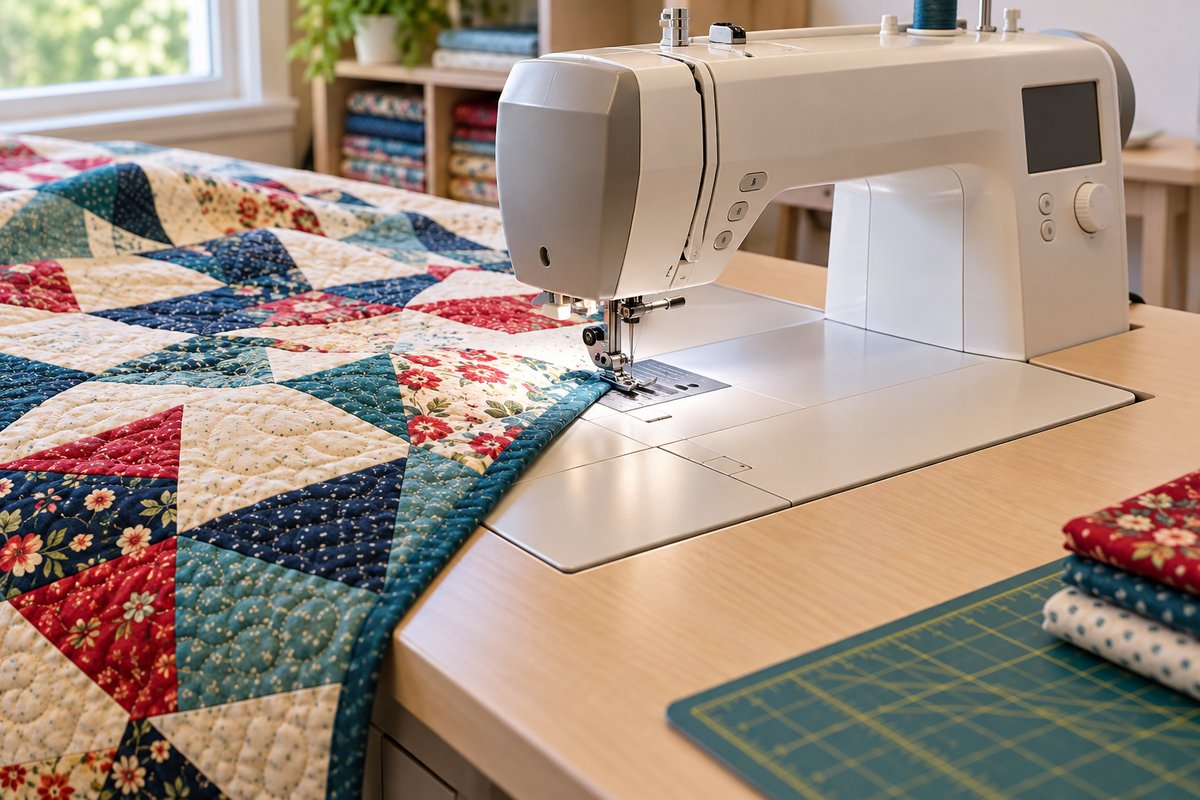
A quilting project outgrows a regular sewing table fast. Once you are wrangling a throw-sized quilt sandwich (the top, batting and backing stacked together) under the needle, a flimsy folding table works against you. Fabric drags at the edge of the machine bed, seams wander off the line, and there is nowhere to set a rotary cutter (a round-blade cutter, like a pizza cutter for fabric) down without it rolling onto the floor.
The right table fixes that by keeping the machine bed flush with the surrounding surface and giving the quilt somewhere to rest besides your lap. Below are 5 sewing tables worth considering for quilting, from a budget folding table to a cabinet with a hydraulic lift, plus what matters when you compare options.
Table of Contents
Do you need a dedicated quilting table?
If you only piece small blocks, no. A standard sewing table or even a kitchen table handles piecing (sewing small fabric pieces together into a quilt top) fine, since the fabric pieces are small enough to control with one hand. Quilting is different. Once you've basted the quilt sandwich and are feeding a queen-size top through the machine, you need a surface wide enough to support the bulk of the quilt instead of pulling at the needle. That pull is what causes skipped stitches and crooked lines on an otherwise well-tuned machine.
The other reason is the flush platform. Most home sewing machines sit a half inch to an inch above a regular tabletop, so fabric has to climb a small ledge every time it passes the machine bed. A table built for sewing drops the machine down into a cutout so the bed sits level with the surrounding surface. That single feature, more than any storage drawer or cutting grid, is what separates a real sewing table from a desk with a hole cut in it.
What to look for in the best sewing table for quilting
A few specs matter more than style or color when you are shopping for a quilting table.
- A drop-down or recessed platform. This is what lets the machine bed sit flush with the tabletop instead of perched above it. Look for the words "adjustable platform" or "drop-down platform" in the listing, not just "sewing table."
- Surface width of 44 inches or more. Garment sewing can get by with less, but a throw quilt needs support on at least one side of the machine. If you regularly make queen or king quilts, add a folding side table or plan on using the table with a longarm (a large quilting machine that rides on a frame) or sit-down frame instead.
- Weight capacity that matches your machine. A basic mechanical machine weighs 15 to 20 pounds. A computerized quilting machine or a small longarm head can run 35 to 50 pounds. Check the platform's rated capacity, not just the table's overall weight limit, since those numbers aren't always the same.
- Storage within reach. Keep thread, bobbins, and a seam ripper near the machine, not in a drawer across the room. Built-in drawers or thread spool pegs save more time than they look like they would.
- Portability versus permanence. A folding or collapsible table makes sense in a shared space or a small apartment. A built-in cabinet makes sense if the table has a permanent spot and you want the extra surface area and storage that a folding design cannot match.
Your chair matters as much as your table. Once you know your table height, our guide to the best sewing chair for quilting shows how to pick a chair that matches it.
Best sewing tables for quilting: 5 picks
Sew Ready Comet Plus: best overall
- 56.75 inches wide by 23.5 inches deep
- Height-adjustable drop-down platform, built-in cutting and measuring grid, storage drawer, fold-down side shelf
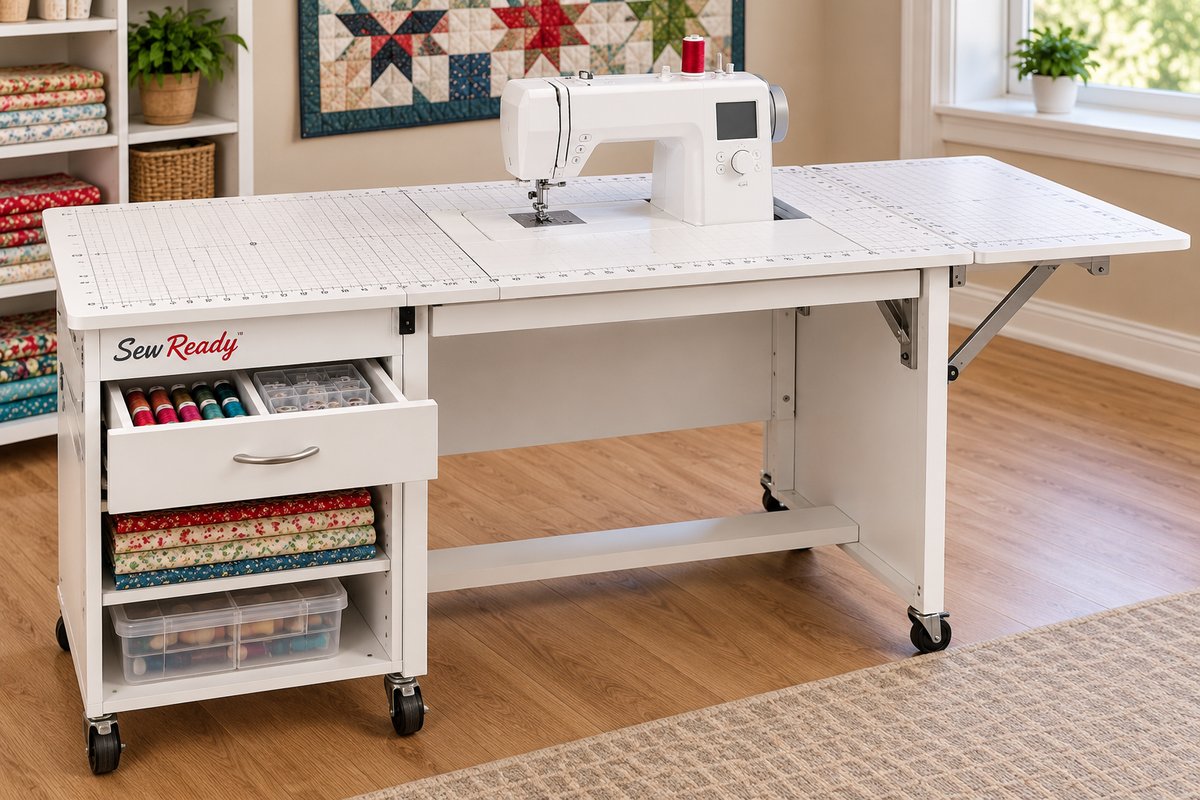
The Comet Plus covers the two things most quilters need without pushing into cabinet-level pricing. The platform drops down and adjusts in height, so the machine bed sits flush no matter which model you own, and the printed grid top doubles as a rough cutting and squaring guide right next to the machine. The fold-down shelf adds extra surface when you need it and tucks away when you don't.
It is a steel-frame table, not a cabinet, so it will not have the weight capacity or storage of the Kangaroo Wallaby II further down this list. For most home quilters working on a single machine, that tradeoff is the right one.
Studio Designs Folding Multipurpose Table: best budget
- 47.5 inches wide by 28 inches deep by 28.5 inches tall, drop-down platform 23 by 10.75 inches
- Six height settings, folding legs that lock, powder-coated steel frame, four floor levelers
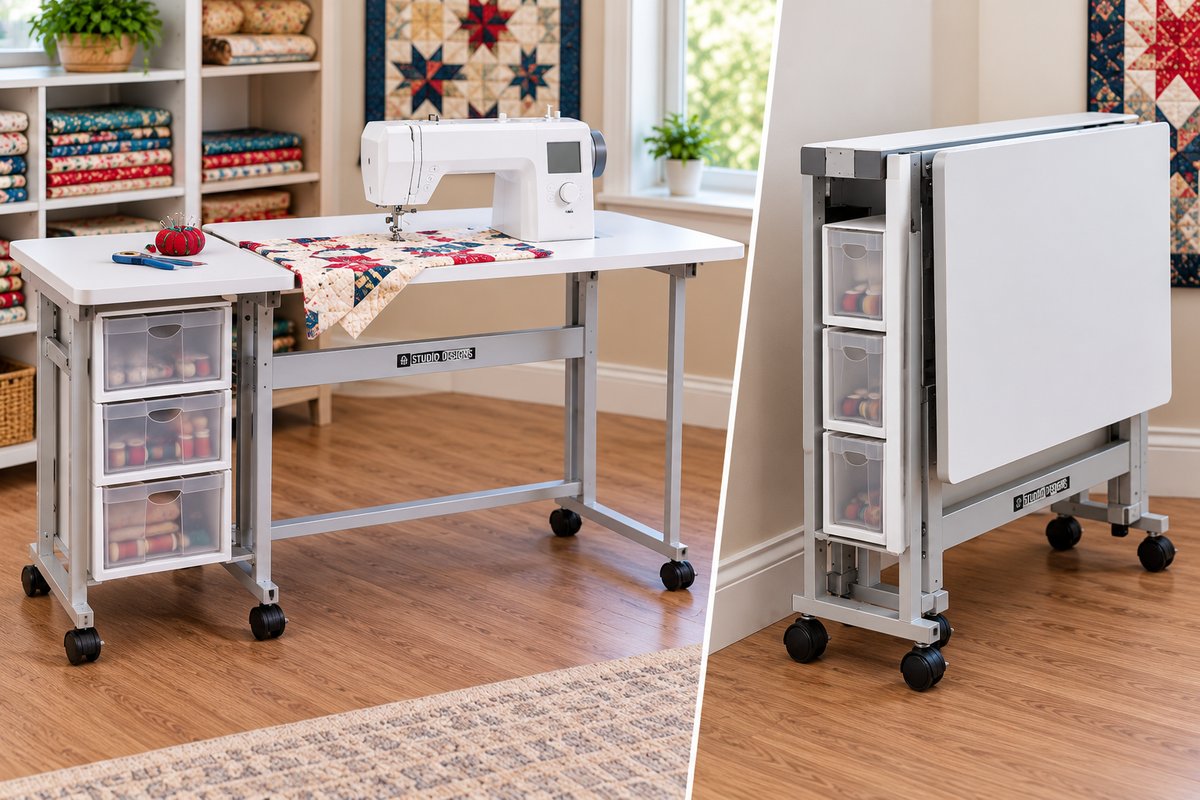
This is the table to buy if you are not ready to commit permanent floor space to quilting yet. It still has the drop-down platform that makes a sewing table worth buying in the first place, and six height settings mean it works whether you sew sitting or standing. The tradeoff is depth. At 28 inches deep it will not give a large quilt much resting room on the far side of the machine, so plan on a folding side table nearby for anything bigger than a lap quilt.
Arrow Gidget II: best portable
- Extended 40 by 20 by 28.5 inches, folds to 4.5 inches thick for storage
- 35-pound table weight, holds up to a 45-pound machine, two platform positions for free arm or flatbed work, dual wheels
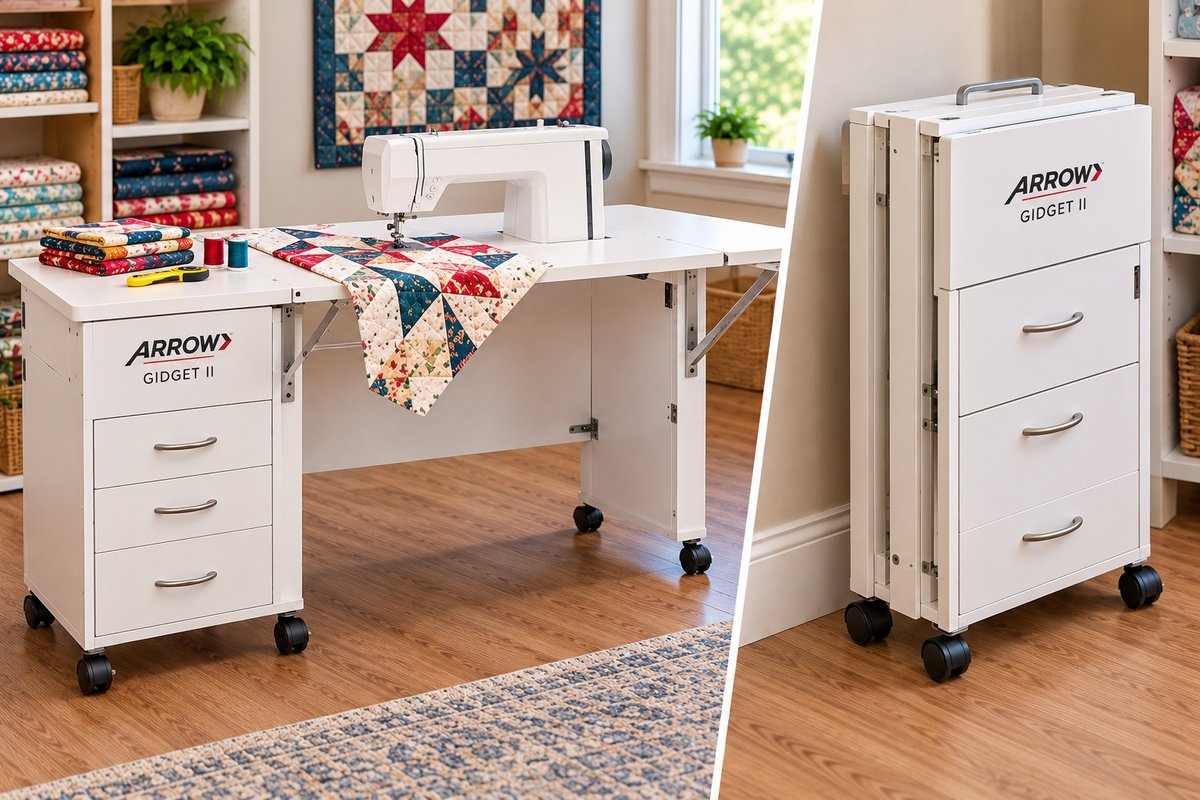
The Gidget II is built for quilters who sew in a shared room, a guest bedroom, or a space that has to go back to being a normal room when the project is done. It collapses flat enough to slide behind a couch or into a closet and rolls on its own wheels, which a steel-frame folding table like the Studio Designs above cannot do. The 45-pound machine rating also covers heavier computerized and semi-industrial machines that a lighter table would not support.
Arrow's own product page lists the full assembled dimensions and weight ratings if you want to confirm it clears a specific machine before buying.
Sew Steady Giant Extension Table: best if you do not need a full table
- 32 by 24 inches
- Custom-cut acrylic table that attaches directly to your machine's bed, not a standalone table
This one is not a table at all in the usual sense. It is a flat acrylic surface cut to fit around your machine's free arm, and it sits flush with the bed by design since it attaches directly to the machine rather than to furniture. If your problem is a desk or table you already like but a machine bed that is too small to support a quilt, this solves it for less than any of the furniture options above. It does not fold away, has no storage, and is cut for one specific machine model, so check compatibility before ordering.
Kangaroo Wallaby II: best heavy-duty
- Opens to 70.6 by 59.9 by 29.5 inches, closes to 42.75 by 19 by 30.25 inches, with a 42.75 by 25-inch fold-out quilt leaf
- 3-position hydraulic lift, 55-pound platform capacity, 33 thread spool holders, locking storage doors, locking casters
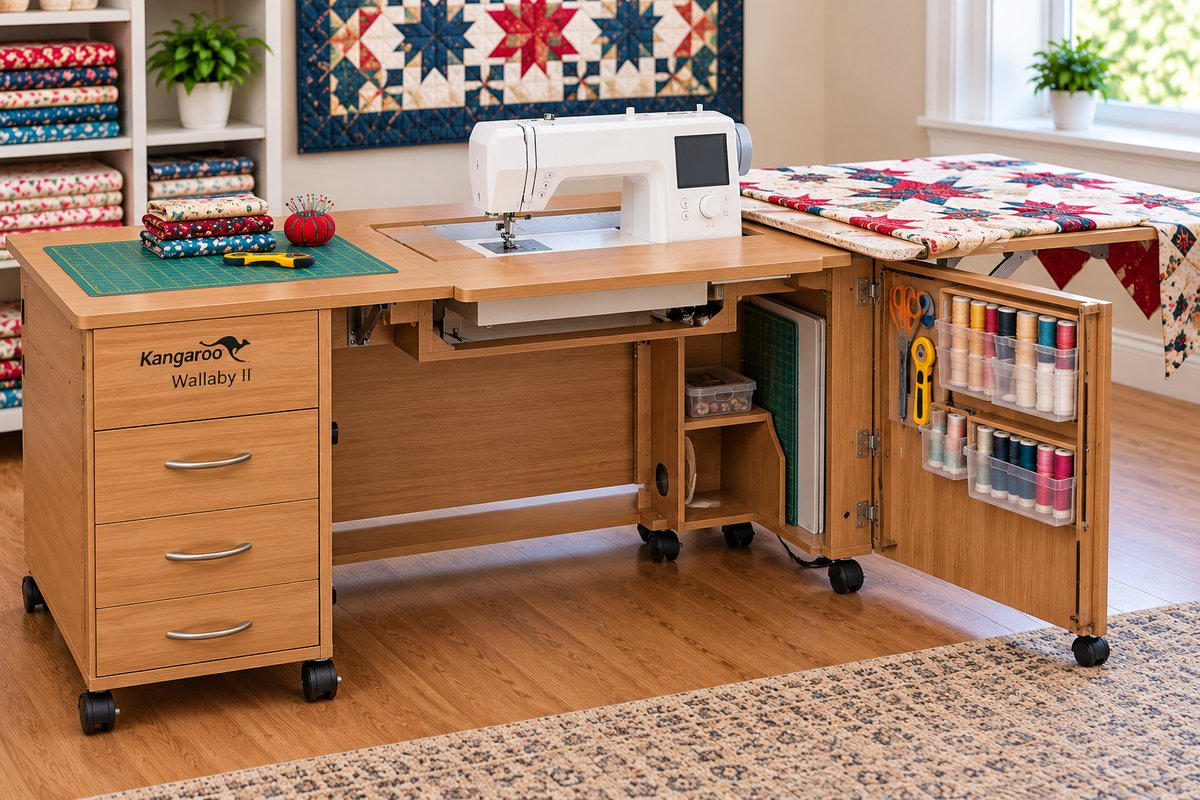
The Wallaby II is for quilters who treat this as a serious hobby or side business. The hydraulic lift moves the machine between free arm, flatbed, and fully recessed storage without the hand-cranking some cheaper lift cabinets rely on. The fold-out quilt leaf adds the width a full-size quilt needs on the far side of the machine. The 55-pound platform rating also covers most sit-down longarm heads, not just regular machines.
It still folds down to a reasonably small footprint and moves on locking casters, so it is not strictly a permanent piece of furniture. At this price, it makes sense once you are certain quilting is a long-term setup, not a trial run.
Comparison table
| Table | Platform type | Best for |
|---|---|---|
| Sew Ready Comet Plus | Height-adjustable drop-down | Best overall for one home machine |
| Studio Designs Folding Multipurpose | Drop-down, 6 height settings | Best budget, small spaces |
| Arrow Gidget II | Collapsible, 2 positions | Best portable, shared rooms |
| Sew Steady Giant Extension Table | Attaches to machine, not furniture | Best if you already like your desk |
| Kangaroo Wallaby II | 3-position hydraulic lift | Best heavy-duty, serious quilters |
Once the table is sorted, the machine sitting on it matters just as much. If you are still shopping for that piece too, see our guide to the best sewing machines for quilting beginners.
FAQ
Do I need a special table for quilting, or will any sewing table work?
A regular table or desk works fine for piecing small blocks. Once you are machine quilting a full sandwich, you need a table with a drop-down platform so the machine bed sits flush with the surface, plus enough width to support the bulk of the quilt. Without that flush platform, fabric drags at the edge of the machine and pulls stitches off line.
What size table is big enough for quilting large quilts?
For a throw or lap quilt, 44 inches of surface width is a reasonable minimum. For queen or king quilts, plan on 55 inches or more on at least one side of the machine, or add a folding side table or quilt leaf. The best sewing table for quilting large bed quilts is almost always a cabinet-style table like the Kangaroo Wallaby II, since its fold-out quilt leaf adds that extra support without a separate table taking up floor space.
Can I turn my existing desk into a quilting-friendly setup without buying a whole table?
Yes, if your machine bed is the problem. An extension table like the Sew Steady Giant Extension Table attaches directly to the machine and sits flush with it, which solves the drag issue for a fraction of the cost of a new table. It will not add storage or a drop-down platform, so it is a partial fix, not a full replacement.
How much weight can a sewing table hold?
It depends on the table and, more specifically, the platform the machine sits on. Folding tables are commonly rated for 15 to 35 pounds, mid-range tables like the Arrow Gidget II for up to 45 pounds, and heavy-duty cabinets like the Kangaroo Wallaby II for up to 55 pounds. Always check the platform's own rating, since it is often lower than the table's total weight capacity.
Match the table to how often you quilt and how much space you have, not just the biggest feature list. A budget folding table with a drop-down platform will outperform a fancier table without one.