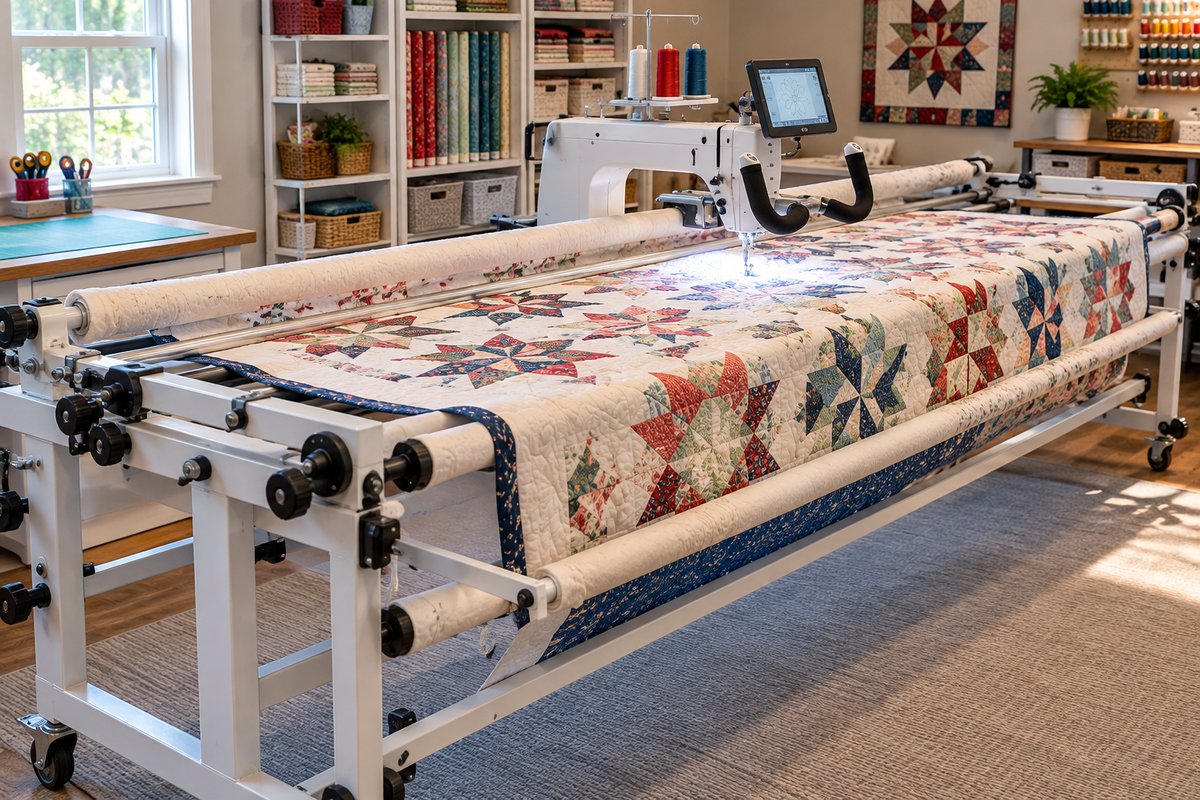
If you have ever finished piecing a quilt top and then wondered how anyone actually stitches the top, batting, and backing together into one finished quilt without the layers shifting, the answer for most serious quilters is longarm quilting. It is the machine and the method behind nearly every professionally finished quilt you have seen at a show or a guild meeting, and it works differently enough from a regular sewing machine that it is worth understanding before you decide whether to send a quilt out or learn to do it yourself.
This guide covers what longarm quilting actually is, how the machine and frame work together, the three main ways quilters guide the stitching, how it compares to quilting on a regular sewing machine, what it typically costs to have a quilt longarm quilted, and whether learning it yourself is worth the investment.
Table of Contents
What Longarm Quilting Actually Is
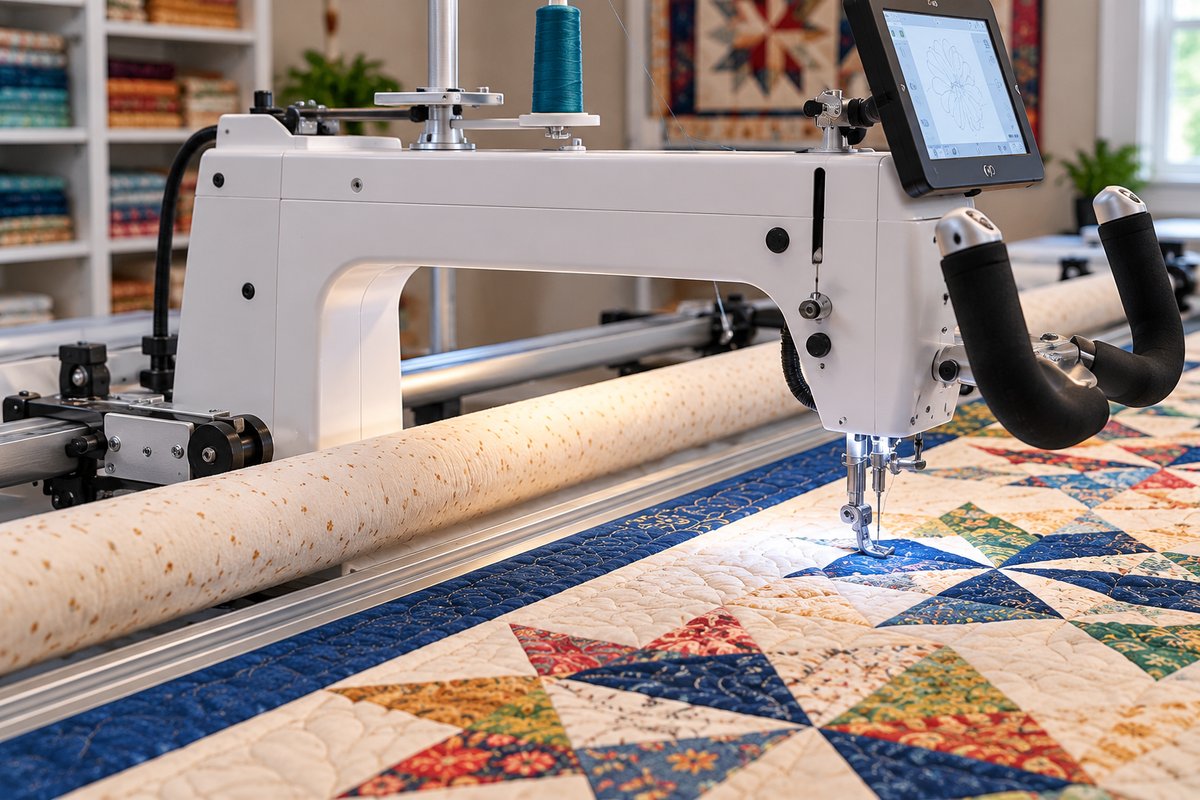
Longarm quilting is the process of stitching a quilt's three layers, the pieced top, the batting, and the backing, together using a specialized sewing machine mounted on a long, rolling frame. The name comes from the machine's extended arm, the throat space between the needle and the body of the machine, which is far larger than anything on a domestic sewing machine.
The key difference from ordinary quilting is what moves. On a regular sewing machine, the quilt stays mostly still, and you push the fabric through a small opening under the needle. On a longarm, the quilt layers stay stationary, rolled onto the frame under tension, and the quilter moves the machine head itself across the surface. That single change removes most of the bulk-wrestling that makes quilting a large quilt on a home machine so physically demanding.
How a Longarm Machine Works
A longarm setup has two main parts working together, and understanding both makes it obvious why the equipment costs what it does and why the learning curve is real.
The Frame
The frame is a large metal framework, commonly ten to fourteen feet long, that holds a set of rollers. The quilt backing, batting, and pieced top are each loaded onto their own roller and kept flat, taut, and properly separated as the quilt is advanced section by section. Proper tension is what keeps a longarm-finished quilt from puckering or shifting, so loading the frame correctly matters as much as the stitching itself.
The Machine Head
The sewing machine head rides on the frame's rails and rolls along them instead of sitting fixed in a cabinet. Its defining feature is throat space, the distance from the needle to the back of the machine's arm, which typically runs from around eighteen to thirty inches depending on the model. That extra room is what lets the quilter make broad, sweeping motions across large sections of the quilt without repositioning constantly, the way a home machine's narrow throat forces you to.
The Three Ways to Guide a Longarm
How the stitching path is actually controlled varies by setup and by budget, and it is one of the first decisions anyone shopping for a longarm system has to make.
- Freehand or free-motion. The quilter guides the machine head by hand, drawing the stitching pattern directly with their own movement, the same skill as free-motion quilting on a domestic machine but scaled up. It has the steepest learning curve and the most creative control.
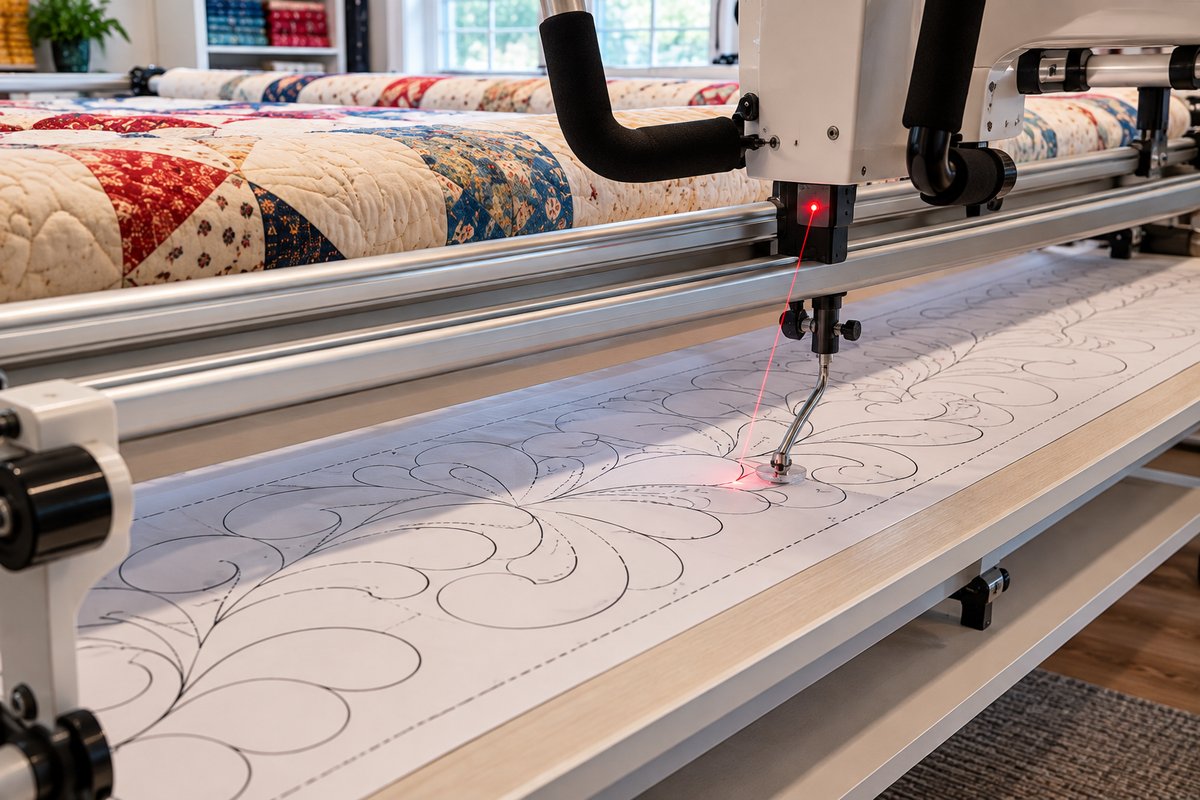
- Pantograph. A paper or vinyl pattern is laid on a shelf under the frame, and the quilter follows its lines with a laser pointer or stylus while the machine head tracks the motion. This produces a continuous, repeating design without requiring freehand skill, and it is the most common starting point for beginners.
- Computerized or robotic. A digital system drives the machine head automatically along a pre-programmed design, stitching intricate or edge-to-edge patterns with a consistency that is difficult to match by hand. This adds high cost on top of the base machine and frame.
Longarm Quilting vs. a Regular Sewing Machine
Domestic sewing machines, including large-throat machines built for quilting, can absolutely quilt a full-size quilt. The difference is how much work the quilter's arms and shoulders do to make it happen. Wrestling a queen or king-size quilt through a machine's small opening means constantly rolling, unrolling, and repositioning heavy, bulky fabric, which is physically tiring and makes it harder to keep stitching consistent over a large project.
A longarm setup flips that relationship. Because the quilt stays anchored on the frame and the machine moves instead, large blankets can be finished in a fraction of the time a domestic machine takes; tension tends to stay more even across the whole quilt since the fabric isn't shifting under its own weight, and the physical strain of managing bulk is mostly eliminated. The tradeoff is upfront cost and floor space. A longarm frame needs a dedicated area of a sewing room or a garage, and a full setup costs significantly more than a domestic machine built for quilting.
What It Costs to Have a Quilt Longarm Quilted
Most quilters who don't own a longarm pay a longarm quilter to finish a top rather than buying their own frame and machine. Pricing at local shops and independent longarm quilters typically runs by the square inch of the quilt, with simple, repeating pantograph designs at the lower end of the range and dense, custom, edge-to-edge or computerized designs costing more per square inch. Many shops also charge separately for batting if you don't supply your own, and some add a flat loading fee on top of the per-inch rate. Getting an actual quote from a local longarm quilter is the only reliable way to know real pricing in your area, since rates vary by region and by how much custom detail a design calls for.
Can You Quilt Without a Longarm?
Yes. Plenty of finished, well-made quilts are stitched entirely on a domestic sewing machine, using either straight-line quilting with a walking foot or free-motion quilting with a darning or free-motion foot. It takes more physical effort on larger projects and a different set of skills than longarm work, but a longarm is not required to finish a quilt. It is a tool that makes finishing faster and, for many quilters, more comfortable, not the only path to a finished quilt.
How Long Does Longarm Quilting Take?
The actual stitching time depends heavily on the design. A simple, repeating pantograph on a lap-size quilt might be finished in under an hour once the quilt is loaded on the frame. A densely custom, edge-to-edge design on a queen- or king-size quilt can take several hours of stitching, and that doesn't include loading, basting, or any trimming and binding prep that comes before and after. For a shop or independent longarm quilter working through a queue of customer quilts, turnaround time from drop-off to finished quilt is usually measured in weeks rather than days, since the stitching itself is often the shortest part of the whole process.
Is Learning Longarm Quilting Worth It?
For a quilter who finishes many quilts a year, gifts them regularly, or wants to take on customer work, learning longarm quilting can pay for itself over time compared to paying per-quilt fees indefinitely. For someone who finishes one or two quilts a year, the upfront cost and the floor space a frame requires are harder to justify, and sending a top out to a local longarm quilter is usually the more practical choice. Many shops that sell longarm machines also offer rental time on a shop machine, which is a lower-commitment way to try the process before buying your own frame.
Common Beginner Mistakes
- Uneven frame tension. Loading the backing or top too loose in one area and too tight in another is the most common cause of puckers and pleats showing up after the quilt comes off the frame.
- Starting with a design that's too ambitious. Jumping straight into dense freehand or custom work before getting comfortable with basic pantograph patterns tends to produce inconsistent stitch length and uneven spacing.
- Ignoring machine speed and stitch regulation. Moving the machine head too fast for the stitch regulator to keep up produces noticeably longer stitches in some spots and shorter ones in others.
- Skipping a basting or test line. Running a quick test row on scrap fabric with the same batting and thread catches tension problems before they show up on the actual quilt.
Frequently Asked Questions
How much does it cost to get a quilt longarm quilted?
Pricing typically runs by the square inch of the finished quilt, with simple pantograph designs at the lower end and dense custom or computerized designs costing more. Many shops charge separately for batting and sometimes add a flat loading fee. Getting a quote directly from a local longarm quilter is the most reliable way to know actual pricing in your area.
Can I quilt without a longarm?
Yes. A domestic sewing machine with a walking foot for straight-line quilting or a free-motion foot for free-motion quilting can finish a full quilt. It takes more physical effort and different skills than longarm work, but you don't need a longarm machine to finish a quilt.
How long does it take to quilt with a longarm?
A simple repeating pantograph on a smaller quilt can be finished in under an hour of stitching time. A dense, custom edge-to-edge design on a larger quilt can take several hours, not counting loading and prep. Shop turnaround from drop-off to finished quilt is usually weeks rather than days.
What is the throat space on a longarm machine?
Throat space is the distance from the needle to the back of the machine's arm, and it's what gives a longarm machine its name. It commonly runs from around eighteen to thirty inches depending on the model, far more than a domestic machine, which lets the quilter cover large areas of the quilt without repositioning constantly.
Is a longarm quilting machine worth buying for a hobbyist?
For a quilter who finishes many quilts a year or wants to take on customer work, a longarm can pay for itself over time compared to ongoing per-quilt fees. For someone finishing one or two quilts a year, the upfront cost and floor space are harder to justify, and many shops offer longarm rental time as a lower-commitment way to try it first.
For a closer look at the machines themselves, including throat size and price comparisons across brands, see our guide to the best longarm quilting machine.