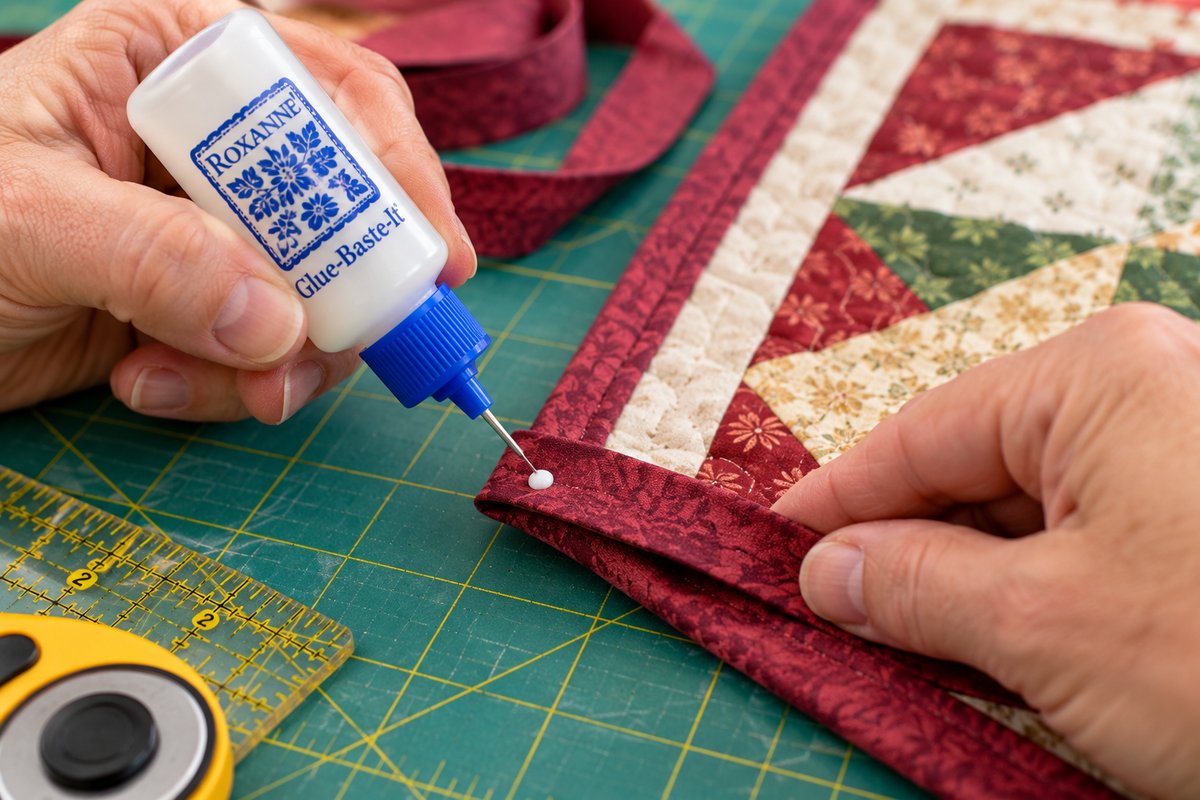
The best fabric glue for quilting holds pieces in place for stitching without leaving a stiff patch, gumming up your needle, or damaging the fabric over time. Glue basting is a quiet, no-pin alternative for English paper piecing, appliqué, and binding, and a small dot of the right glue can replace a whole row of pins. But not every glue on a craft shelf belongs in a quilt. Some are made for paper, some are permanent from the moment they touch fabric, and a few contain acids that can yellow fabric over the years.
This guide covers how to choose the best fabric glue for quilting, four products quilters reach for, and how to glue baste a block without stiff spots or needle drag. If you would rather baste with a spray instead of a liquid glue, see our guide to the best basting spray for quilting.
Table of Contents
How to choose the best fabric glue for quilting
Fabric glues look similar in the bottle, but they behave very differently once a needle goes through them. These are the points that matter most.
- Made for fabric, not paper or wood. A glue built for textiles dries flexible instead of crunchy, so it will not turn a seam allowance into cardboard.
- Needle-friendly. Some glues melt onto a needle from the heat of stitching and cause skipped stitches or thread breaks. Look for a glue quilters specifically describe as easy to sew through.
- Acid-free and pH neutral for anything permanent. A quilt you plan to keep for years should not be basted with a glue that can yellow fabric over time.
- Temporary or permanent. Basting glue is meant to wash out or dissolve once stitching holds the layers. A permanent craft glue is meant to stay, which is useful for embellishments but not for anything you plan to launder often.
- Applicator shape. A fine pen tip suits small English paper piecing pieces, while a bottle with a nozzle covers larger appliqué shapes and binds faster.
We do not list prices because they change often.
Side by side
Here is how the options compare when you are choosing the best fabric glue for quilting a specific project.
| Product | Type | Hold | Best for | Watch for |
|---|---|---|---|---|
| Roxanne Glue-Baste-It | Liquid glue, bottle | Washes out | Binding, appliqué, EPP | Use small dots, not lines |
| Sewline Fabric Glue Pen | Water-soluble glue pen | Washes out | Small EPP and appliqué pieces | Needs refills |
| Elmer's Washable School Glue | Liquid glue, bottle | Washable | Budget basting | Can gum a needle if overapplied |
| Aleene's Original Tacky Glue | Thick craft glue | Permanent | Embellishments, holding binding before stitching | Does not wash out |
Best fabric glue for quilting: 4 picks
Best overall: Roxanne Glue-Baste-It
Roxanne Glue-Baste-It is the liquid glue many quilters name first when the topic of glue basting comes up. It is acid-free and pH neutral, which matters for a quilt meant to last for generations, and it dries flexible instead of crunchy so a needle slips through the basted area rather than collecting adhesive on the way through. Museums that care for heirloom quilts follow the same acid-free principle for their own textile care and conservation practices.
- Acid-free and pH neutral
- Dries flexible, not stiff, so it sews cleanly
- Washes out completely once stitching holds the layers
- Comes with a fine tip applicator for controlled dots and lines
- Works for binding, appliqué, and English paper piecing
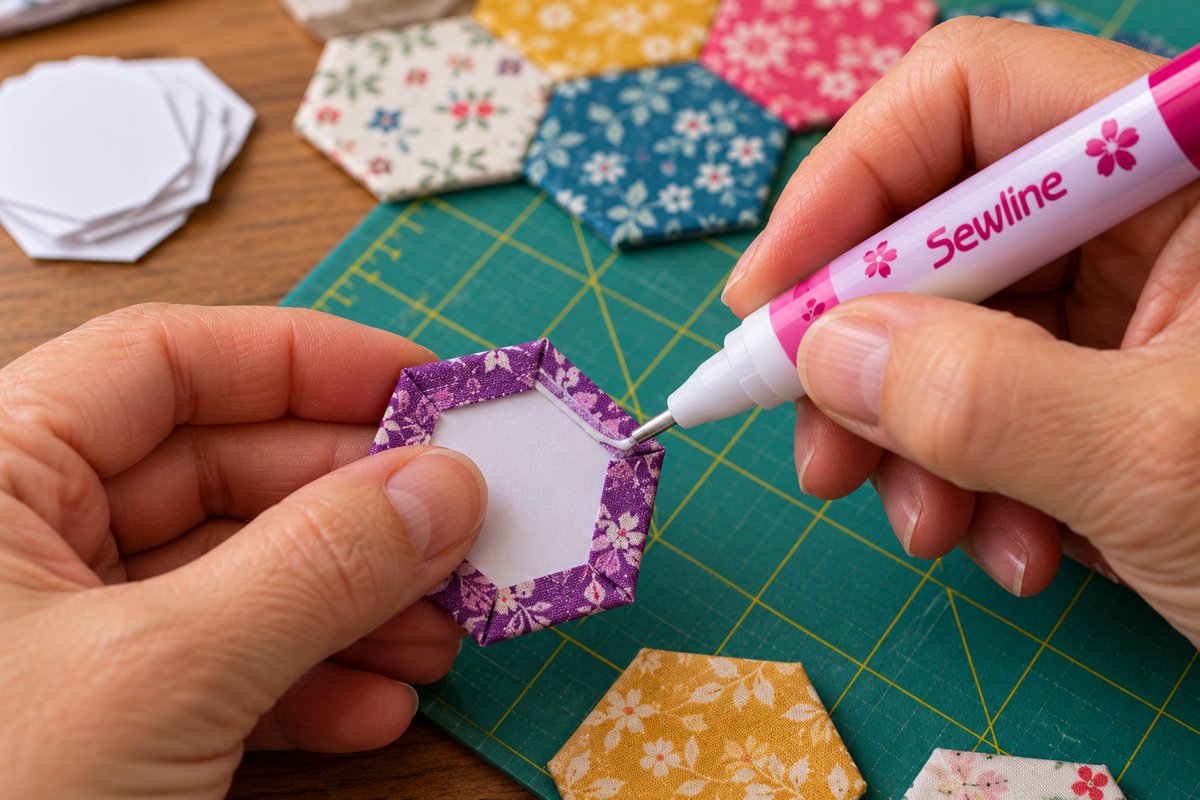
Best for precise placement: Sewline Fabric Glue Pen
The Sewline Fabric Glue Pen is built for small, precise work, which makes it a favorite for English paper piecing. The glue is water-soluble, and quilters use it to hold fabric around paper templates without the glue coming through the fabric or causing it to wrinkle. Once the piece is finished, the glue simply washes out. Mark your fold lines first with a fabric marking pen so the glue goes exactly where you want it.
- Water-soluble and washes out in the final wash
- Pen tip gives precise control on small EPP and appliqué pieces
- Does not show through fabric or cause visible wrinkling
- Refillable, so the pen body is reusable
Best budget: Elmer's Washable School Glue
Elmer's Washable School Glue is the budget option, and it works for basic glue basting if it is applied sparingly. The tradeoff compared to a purpose-made basting glue is friction. Applied too heavily, the glue can transfer onto a needle and, with the heat of stitching, cause drag, skipped stitches, or thread breaks. A thin dot rather than a bead avoids most of that problem.
One important distinction: this is the liquid school glue in the bottle, not Elmer's spray adhesive. The spray version isn't washable in the same way and isn't a substitute here.
- Inexpensive and easy to find
- Washable when applied sparingly
- Apply thin dots, not lines, to avoid needle gumming
- Liquid bottle only. Do not substitute the spray adhesive version
Best for permanent hold: Aleene's Original Tacky Glue
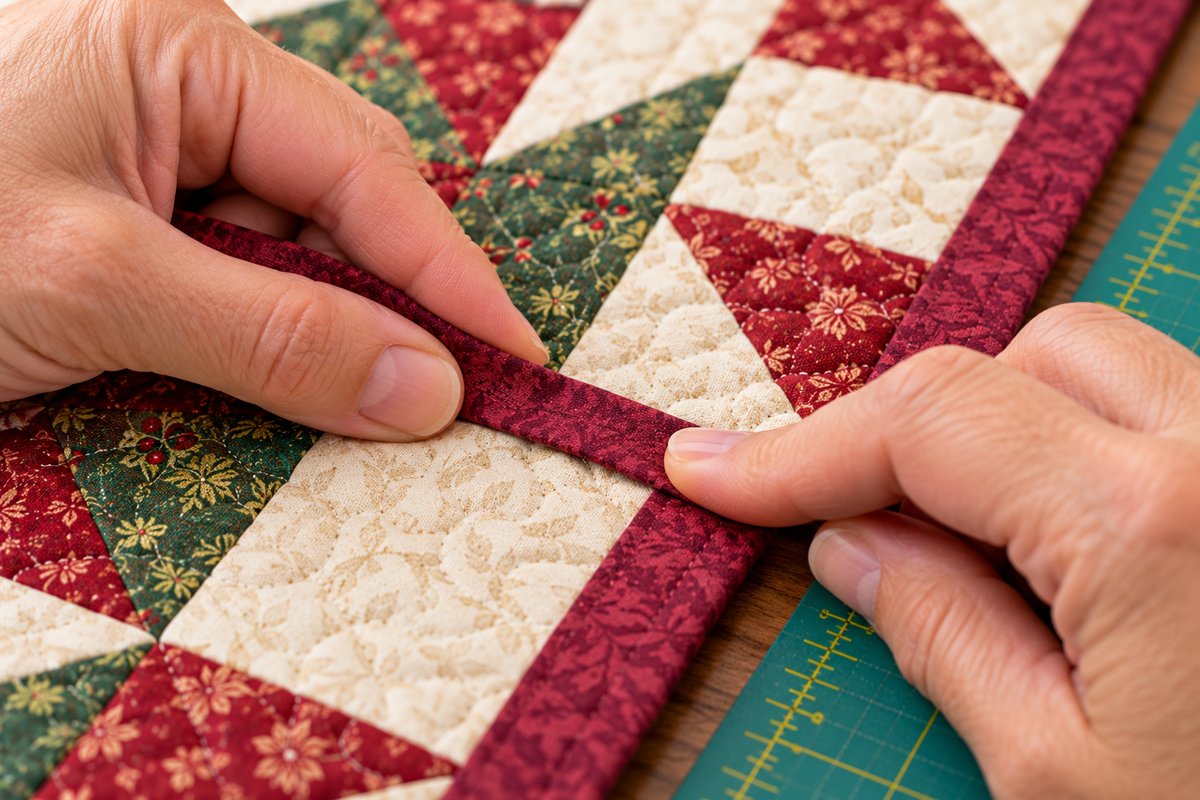
Aleene's Original Tacky Glue is a thick craft glue with strong initial tack, and it is a permanent glue rather than a temporary basting glue. Quilters use it to hold binding flat and in place before hand stitching and to secure embellishments that do not need to survive frequent washing. It is not meant to wash out, so it belongs on projects where a permanent bond is the goal.
- Thick formula with strong initial tack
- Good for holding binding before hand stitching
- Suited to embellishments and other permanent additions
- Permanent. Does not wash out, so avoid it anywhere near the quilt top itself
How to glue baste a quilt block
- Test on a scrap first. Glue a small piece of scrap fabric and let it dry so you can check the hold and confirm it will wash out if that matters for your project.
- Apply small dots, not lines. A little glue goes a long way. Dots along a seam allowance or the fold of a binding hold well without soaking through the fabric.
- Press the pieces together and hold for a few seconds. Finger pressing sets the bond enough to move on to the next section.
- Let it dry before you stitch. Stitching over wet glue is what causes most needle problems. A few minutes of dry time makes a real difference.
- Stitch as usual. Sew through the glued area the same way you would sew through pinned fabric.
- Wash out temporary glue once the stitching is done. A normal wash removes basting glue that is meant to be temporary.
Fabric glue mistakes to avoid
- Using too much glue. A thick bead is more likely to gum a needle and show through light fabric than a small dot.
- Stitching before the glue dries. Wet glue is what transfers onto a needle and causes drag or skipped stitches.
- Reaching for a permanent glue on a basting job. A permanent craft glue will not wash out, so save it for embellishments rather than seams you plan to launder.
- Confusing a spray adhesive with a liquid glue of the same brand. Some brands sell both, and the spray version usually behaves differently than the liquid.
- Skipping the scrap test on vintage or delicate fabric. Older or delicate fabric can react differently to glue than sturdy quilting cotton.
Frequently asked questions
What is the best fabric glue for quilting?
For most quilters, the best fabric glue for quilting is Roxanne Glue-Baste-It. It is acid-free, pH neutral, dries flexible, and washes out completely once stitching holds the layers. The Sewline Fabric Glue Pen is a good choice for small English paper piecing and appliqué pieces that need precise placement.
Does fabric glue wash out of quilts?
A glue made for basting, such as Roxanne Glue-Baste-It or the Sewline Fabric Glue Pen, washes out in a normal wash once stitching holds the fabric. Permanent craft glue, such as Aleene's Original Tacky Glue, does not wash out, so reserve it for embellishments rather than seams you plan to launder.
Can you use regular school glue for quilting?
Washable school glue can work for basic glue basting if you apply it sparingly. Applied too heavily, it can transfer onto the needle and cause drag or skipped stitches during stitching. A purpose-made basting glue such as Roxanne Glue-Baste-It dries flexible and is less likely to cause that problem.
Is fabric glue better than pins for basting?
Fabric glue holds fabric flat without the bulk of pins, which is useful for English paper piecing and appliqué where pins can get in the way of small stitches. Pins remain a reliable option for larger pieces or anyone who prefers not to introduce glue near the fabric. Many quilters use both, depending on the project.
Will fabric glue damage my sewing machine needle?
A small amount of the right glue, applied as dots rather than lines and allowed to dry before stitching, should not damage a needle. Heavy application of any glue, or stitching before it dries, is what typically causes gumming, drag, or skipped stitches.
Bottom line
The best fabric glue for quilting depends on the job. Roxanne Glue-Baste-It is the best all-around pick for binding, appliqué, and English paper piecing. Reach for the Sewline Fabric Glue Pen when you need precise placement on small EPP pieces, and keep Elmer's Washable School Glue on hand as a budget option if you apply it sparingly. Save Aleene's Original Tacky Glue for embellishments and anything you want to stay put for good. Whatever you choose, test on a scrap, use small dots, and let the glue dry before you stitch.
1 thought on “Best Fabric Glue for Quilting: 4 Picks and When to Use Each (2026)”