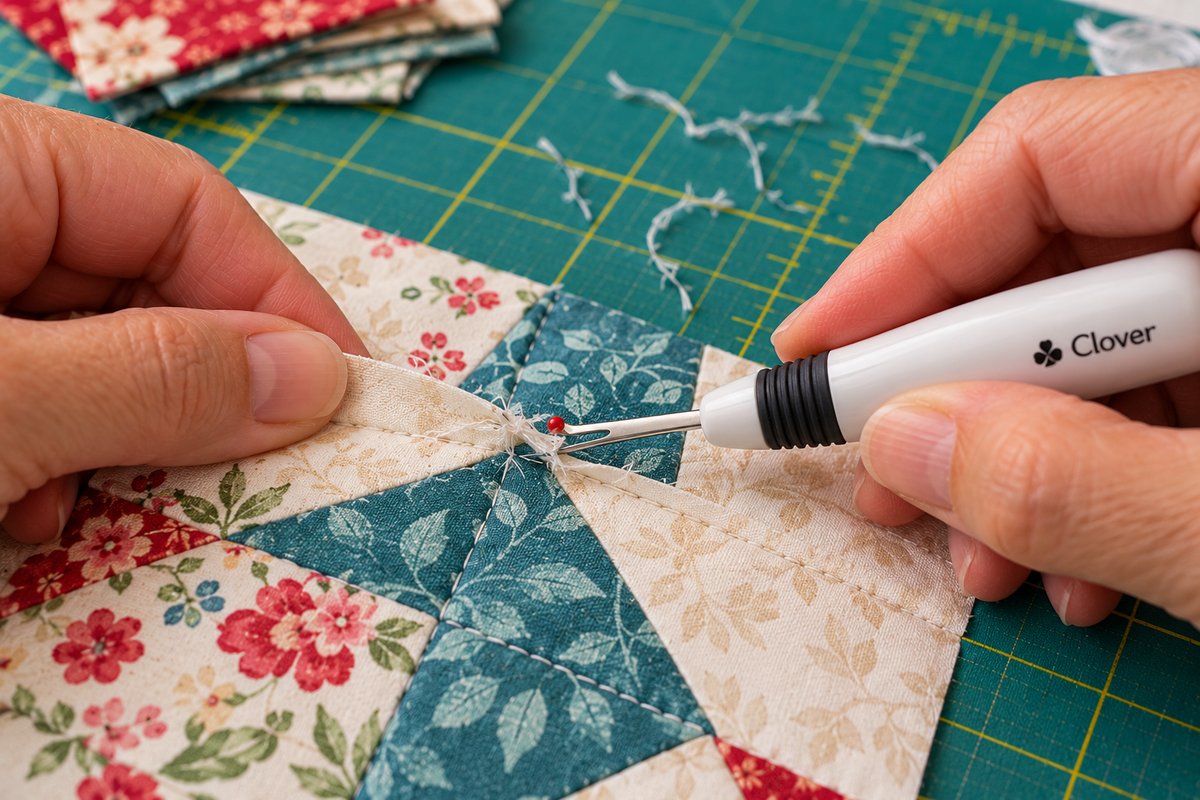
The best seam ripper for quilting takes out the wrong stitches fast without tearing the fabric underneath. Every quilter rips out a seam sooner or later, and the tool you reach for decides whether that five minutes feels routine or turns into a patch job on a nicked block. A sharp blade and a well-shaped tip matter more than most people expect from something this small.
This guide covers how to choose the best seam ripper for quilting, four picks worth owning, and how to use one without cutting through fabric you meant to keep. If you glue baste instead of pinning, see our guide to the best fabric glue for quilting for another notion worth having on hand.
Table of Contents
How to Choose the Best Seam Ripper for Quilting
Seam rippers look nearly identical on a store shelf, but they behave very differently once you are three stitches into fixing a mistake. These are the points that matter most when picking the best seam ripper for quilting.
- A protected point. Clover's own design calls the small ball on the short end "a game changer" because it glides under the seam ahead of the blade, lifting threads instead of letting the sharp tip catch the fabric. Clover's product page shows exactly how the shape works.
- A genuinely sharp blade. A dull ripper does not cut; it saws, and sawing is what stretches or nicks the fabric around the stitch line. Quality steel holds an edge through far more seams than a bargain blade.
- A grip you can hold for more than a minute. Ripping out a long seam is repetitive motion. A cushioned, non-slip handle matters more here than it does on most sewing notions.
- One blade size or two. A fine blade suits piecing thread and delicate fabric. A second, larger blade earns its keep on quilt sandwiches, denim, and anywhere thread is doubled or heavier.
- Hands-free options for limited grip strength. A tabletop ripper that locks to your work surface lets you guide fabric with both hands, which matters for anyone who deals with hand pain or reduced grip strength.
We do not list prices because they change often.
Side by Side
Here is how the options compare when you are choosing the best seam ripper for quilting a specific project.
| Product | Blade | Best for | Watch for |
|---|---|---|---|
| Clover Ergonomic Seam Ripper | Single curved blade with ball tip | Everyday piecing and thick layers | Blade is not swappable for a larger size |
| Havel's Ultra Pro Seam Ripper | Single ultra-sharp blade | Precision work, twist-to-cut technique | Different motion than a push-style ripper |
| Dritz Seam-Fix Double-Sided Seam Ripper | Fine blade and heavy-duty blade | Switching between delicate and heavy fabric | Two tips to keep capped and track of |
| Fiskars Tabletop Seam Ripper | Fixed steel blade, hands-free base | Limited grip strength, long ripping sessions | Needs a smooth, non-porous surface to suction to |
Best Seam Ripper for Quilting: 4 Picks
Best overall: Clover Ergonomic Seam Ripper
The Clover Ergonomic Seam Ripper is the one quilters mention first, and the small red ball on the short end is why. It rides underneath the seam ahead of the curved blade, lifting stitches for the blade to catch instead of letting the sharp point snag the weave. The comfort grip handle is built for longer sessions, and the curved blade handles thick layers like quilt sandwiches and denim without extra effort.
- Protective ball tip keeps the blade from catching fabric
- Comfort grip handle designed for extended use
- Curved blade handles thick layers and multiple fabrics
- A familiar, trusted shape most quilters already know how to use
Best for precision: Havel's Ultra Pro Seam Ripper
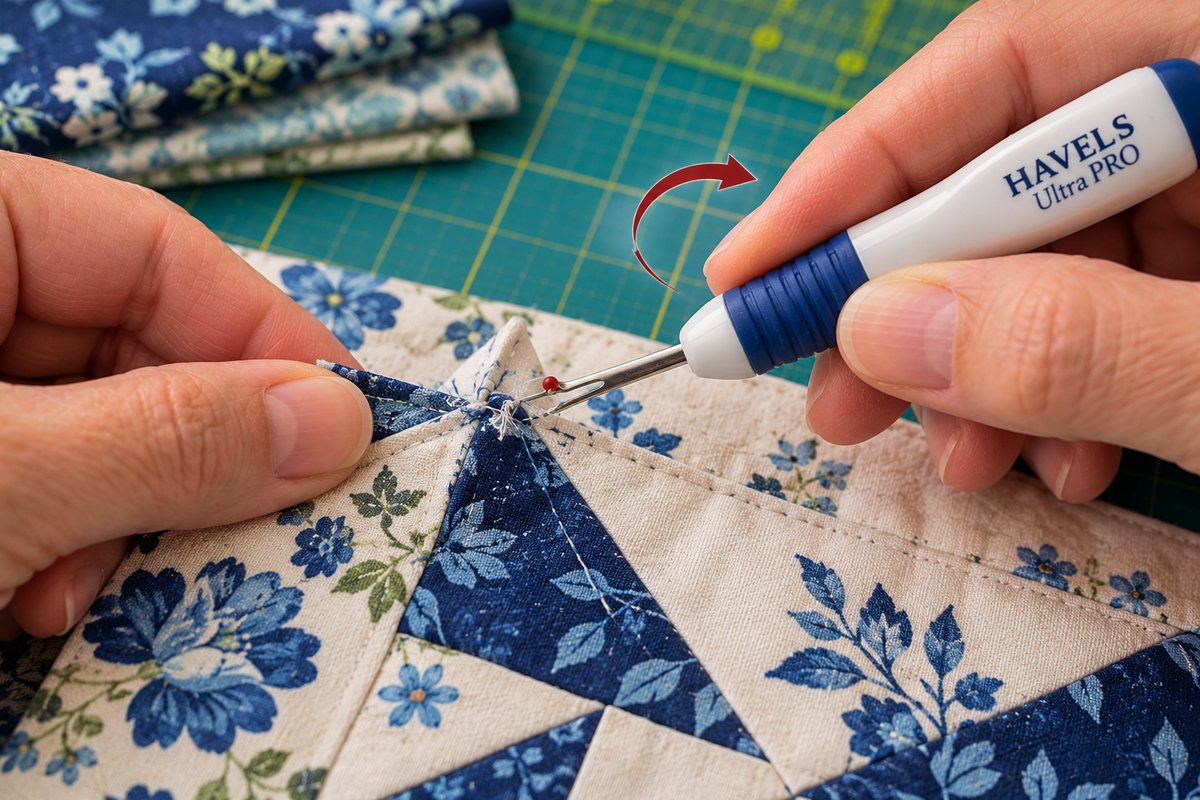
The Havel's Ultra Pro uses a different motion than most seam rippers. Instead of pushing the blade forward through the stitch, you insert the tip and give it a slight twist to make the cut. That twisting motion is gentler on the fabric around the stitch line, which is why quilters who work on fine or fussy-cut pieces tend to reach for it. The handle is built for a comfortable grip during long correction sessions.
- Twist-to-cut motion instead of a push cut
- Ultra-sharp blade cuts cleanly with less pressure
- Ergonomic handle for extended use
- Gentler technique for fine or fussy-cut fabric
Best budget: Dritz Seam-Fix Double-Sided Seam Ripper
The Dritz Seam-Fix puts a fine blade on one end and a heavy-duty blade on the other, so one tool covers delicate piecing thread and heavier double stitching without switching tools. Rubbery tips on each end help lift and grab loose threads once the stitches are cut, and protective caps keep both blades safe in a sewing kit. It is an affordable pick that still covers two different jobs.
- Fine blade and heavy-duty blade on one tool
- Rubbery tips help lift cut threads away
- Non-slip ergonomic handle
- Protective caps for both blade ends
Best hands-free: Fiskars Tabletop Seam Ripper
The Fiskars Tabletop Seam Ripper locks to a smooth work surface with a spring-loaded suction base, freeing both hands to guide the fabric instead of holding a tool. A locking lever controls the suction, and a cap protects the steel blade and stores right on the base. This is the pick for anyone dealing with hand pain, reduced grip strength, or who wants a steadier, more controlled way to rip a long seam.
- Hands-free design frees both hands to guide fabric
- Spring-loaded suction base locks to most smooth surfaces
- Premium steel blade with a built-in storage cap
- Easier on hands that struggle with a traditional grip
How to Use a Seam Ripper Without Damaging Fabric
Even the best seam ripper for quilting still needs the right technique. A rushed hand causes more damage than a dull blade.
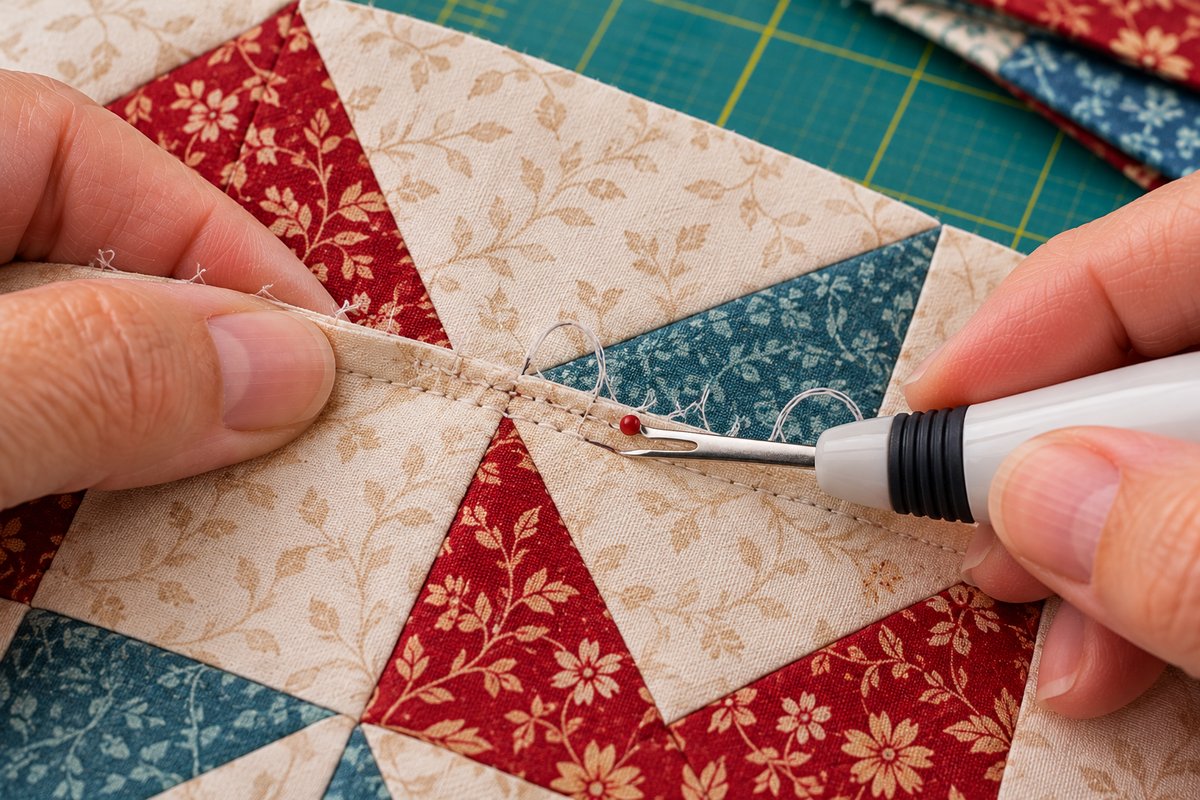
- Work from the bobbin side first. Bobbin thread is usually looser, which makes the first few stitches easier to catch and cut.
- Cut every third or fourth stitch, not every one. Skipping stitches lets you pull the top thread free in one motion instead of cutting each stitch individually.
- Pull the thread free once you've cut several stitches. Gently tug the top thread and let the cut stitches release rather than forcing it.
- Brush away loose threads before stitching again. Stray threads left in the seam allowance can get caught in the next pass and pucker the fabric.
- Slow down near corners and seam intersections. This is where a slip is most likely to nick the fabric, so shorten your strokes and keep the point shallow.
Seam Ripper Mistakes to Avoid
- Sawing with a dull blade. Forcing a dull ripper through thread is what stretches or tears the surrounding fabric. Replace or sharpen the blade instead of pushing harder.
- Cutting every single stitch one at a time. It is slower and gives the point more chances to slip and catch the fabric.
- Ripping against the grain in a hurry. Working too fast across a bias seam is a common way to stretch or distort the fabric.
- Leaving the blade uncapped in a sewing kit. An uncapped blade dulls faster from bumping other tools and is a real snag risk for fingers and other fabric in the kit.
- Using the same ripper on every fabric weight. A blade sized for quilting cotton struggles on denim or multiple layers, and forcing it raises the odds of a slip.
Frequently Asked Questions
What is the best seam ripper for quilting?
For most quilters, the best seam ripper for quilting is the Clover Ergonomic Seam Ripper. Its protective ball tip glides under the seam ahead of the blade, and the curved blade handles thick quilt layers well. The Havel's Ultra Pro is a good choice if you prefer its twist-to-cut motion for delicate or fussy-cut fabric.
How do you use a seam ripper without ripping the fabric?
Work from the bobbin side first, cut every third or fourth stitch instead of every single one, then gently pull the top thread free. Slow down near corners and seam intersections, where a slip is most likely to nick the fabric.
Why does my seam ripper keep catching the fabric?
A dull blade is the most common cause. Instead of slicing cleanly, a dull ripper saws through the thread, and that extra pressure is what catches or stretches the surrounding fabric. Replacing the blade or the whole ripper usually solves it.
Is a bigger seam ripper blade better for quilting?
Not always. A larger blade works well on thick quilt sandwiches and heavier fabric, but a fine blade gives better control on delicate piecing thread. A double-sided ripper with both blade sizes covers more projects than either one alone.
What is a hands-free seam ripper good for?
A hands-free tabletop seam ripper, such as the Fiskars Tabletop Seam Ripper, locks to a work surface with a suction base so both hands stay free to guide the fabric. It is especially useful for anyone dealing with hand pain or reduced grip strength.
Bottom Line
The best seam ripper for quilting comes down to how you work. The Clover Ergonomic Seam Ripper is the reliable everyday pick, especially on thicker quilt layers. Reach for the Havel's Ultra Pro when you want its gentler twist-to-cut motion on delicate or fussy-cut fabric, and keep a Dritz Seam-Fix nearby for the days you need both a fine and a heavy-duty blade. If grip strength or hand pain makes a traditional ripper hard to use, the Fiskars Tabletop Seam Ripper is worth the switch. Whichever one you pick, a sharp blade and a slow hand near corners will save you more fabric than any single feature.
1 thought on “Best Seam Ripper for Quilting: 4 Picks and When to Use Each (2026)”