Picking the best needles for quilting comes down to matching the needle to what you are actually stitching through, not grabbing whatever is already loaded in the machine. A needle built for lightweight piecing struggles the moment it hits batting and backing, and a needle sized for heavy work can leave visible holes in a delicate cotton top. The right pick changes stitch quality more than most people expect from a part this small and this cheap to replace. It is the same logic behind swapping a dull seam ripper or checking your iron before a big project. Small tools make an outsized difference.
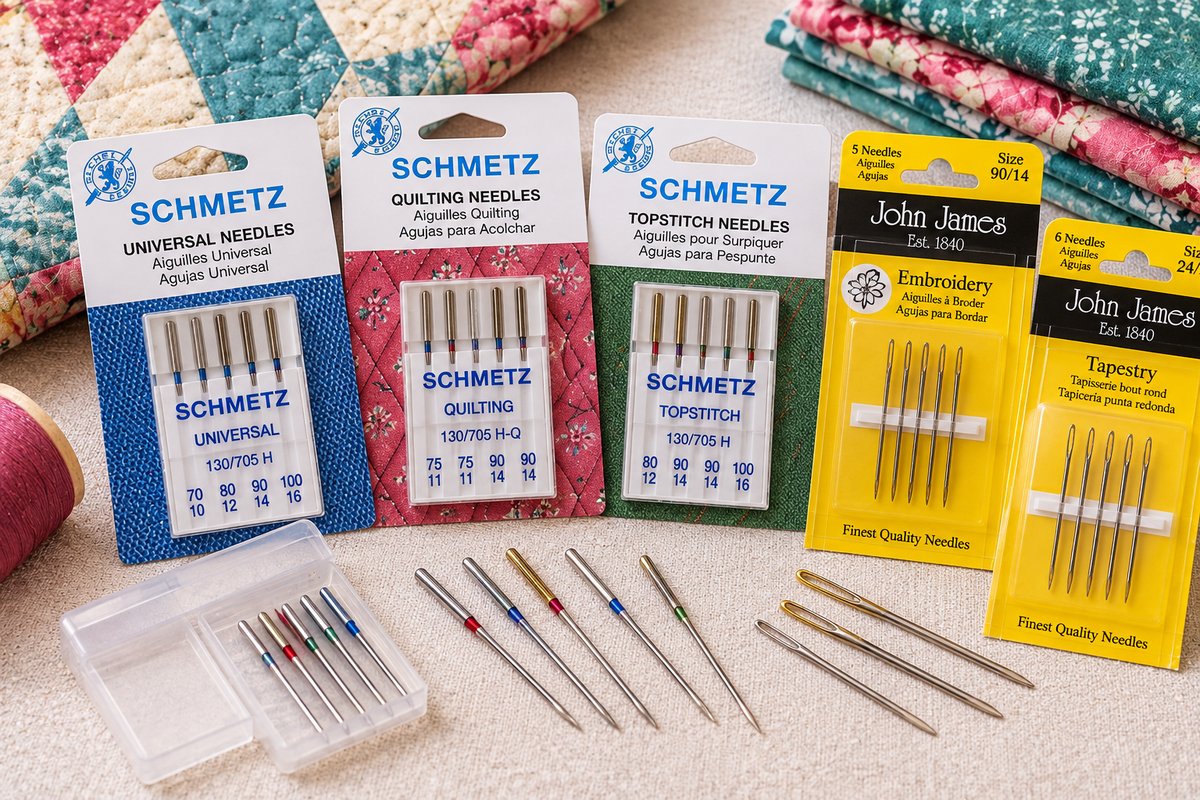
Table of Contents
How to Choose the Best Needles for Quilting
Needle size uses a two-number system, and the two numbering conventions run in opposite directions depending on whether you are shopping for machine needles or hand needles. Machine needles are labeled European size first and American size second, such as 75/11 or 90/14, and a smaller number means a smaller, finer needle. Hand needles work the other way. A size 12 is finer and smaller than a size 8, so the number goes down as the needle gets thicker.
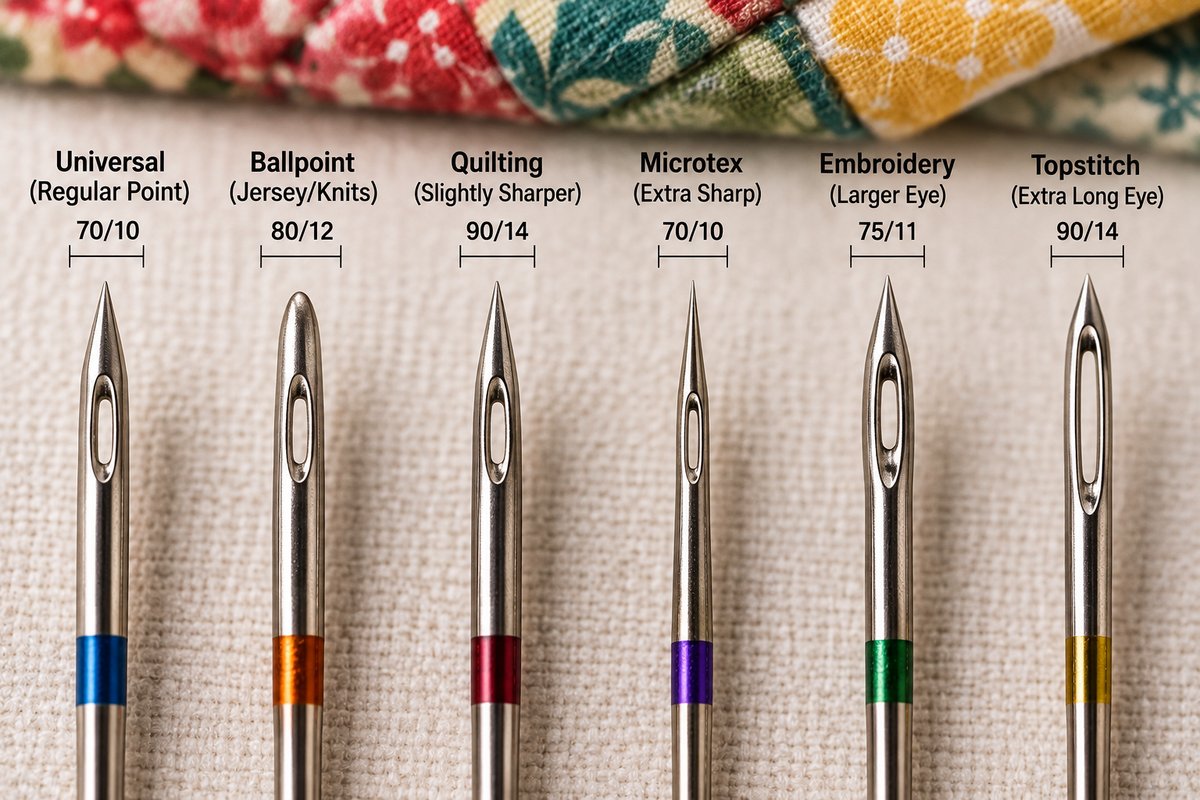
Point shape matters as much as size. A true quilting needle has a slightly tapered, sharp point built to pass through multiple layers of top, batting, and backing without dragging or skipping. A universal needle has a more rounded point that works fine for piecing but starts to struggle once you add batting and a backing layer. Topstitch needles solve a different problem: a larger eye and a deeper groove down the shaft so thicker decorative or quilting thread does not shred or break as it passes through.
Machine vs Hand Needles Side by Side
Machine quilting needles are built to move fast and repeatedly through three layers without overheating, which is why point shape and shaft taper matter more than they do in handwork. Hand quilting needles, commonly called betweens, are short and thin by design so you can take small, even stitches and control exactly where the needle enters and exits the fabric. A between that feels too short for regular sewing is actually doing its job. Length gives you the control hand quilting depends on.
Neither type substitutes well for the other. A hand-sewing needle in a machine will not thread correctly and was never built for that motion, and a machine needle is far too long and stiff to control by hand for small stitches.
Best Needles for Quilting: 4 Picks
Schmetz Quilting needles, sized 75/11 and 90/14, are the standard starting point for machine piecing and quilting through standard cotton and batting. The tapered point and slim shaft are designed to reduce drag through multiple layers, and these two sizes cover most quilting cotton weights without needing to size up further.
Organ Titanium Quilting needles run the same size range, 11/75 up through 16/100, with a titanium coating that resists heat buildup and wears better than an uncoated needle. That coating means real, measurable extra life on long-arm and dense machine quilting sessions where a standard needle would need replacing sooner.
Schmetz Topstitch needles, in 90/14 and 100/16, are the pick once you move to heavier or decorative quilting thread. The larger eye and deeper groove keep thick thread from shredding, which a standard quilting needle eye is simply not built to handle.
John James Betweens, in sizes 8 through 12, cover hand quilting. Most quilters new to handwork start around size 8 or 9, since the shorter, thicker needle in that range is easier to control before moving down to the smaller sizes experienced hand quilters use for finer stitches.
How Often to Change Your Needle
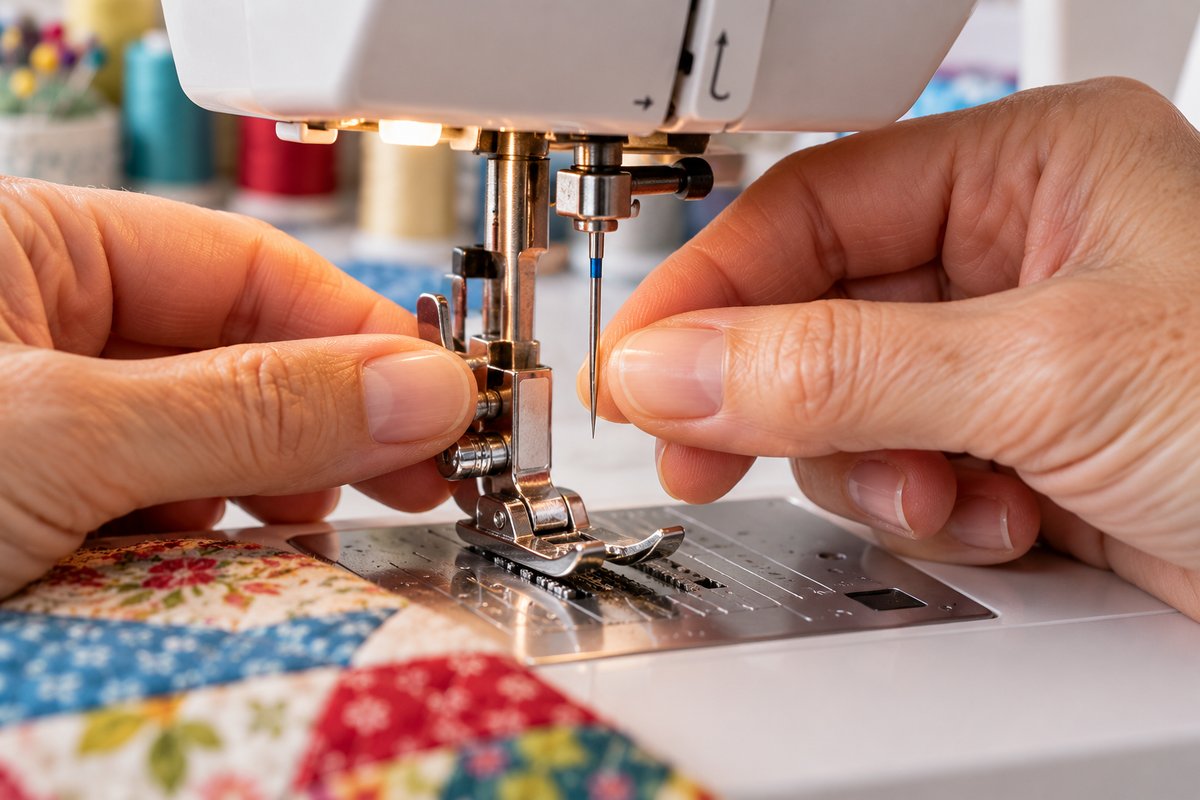
A good rule of thumb, per Schmetz's own needle guide, is every 8 to 10 hours of sewing time, or every 4 to 6 projects, whichever comes first. Batting wears a needle down faster than piecing alone does, so a quilting session with a lot of dense stitching can shorten that window. Skipped stitches, visible puckering, a popping sound as the needle passes through the fabric, or a needle you can feel is bent are all signs to swap it out immediately rather than waiting for the usual interval.
Needle Mistakes to Avoid
The most common mistake is using the same needle across an entire quilt from piecing through binding, when piecing, machine quilting, and heavy topstitching each call for a different point shape or eye size. A close second is inserting the needle with the flat side of the shank facing the wrong direction, which throws off timing and causes skipped stitches that look like a tension problem but are not. The third common mistake is waiting until a needle visibly breaks before replacing it. By the time a needle snaps, it has usually pulled threads and stressed fabric for several projects already.
Frequently Asked Questions
What is the best needle size for machine quilting?
75/11 or 90/14 covers most quilting cotton and standard batting. Size up to 90/14 for denser batting or multiple layers, and stay at 75/11 for lighter piecing work.
How do I know if my quilting needle is dull?
Skipped stitches, visible puckering around the stitch line, a popping sound as the needle passes through the fabric, or a needle that looks bent when you check it closely are all signs it needs replacing.
Can I use a universal needle for quilting?
You can for piecing, but a universal needle's more rounded point starts to struggle once you add batting and a backing layer. A true quilting needle's sharper, tapered point is built for that combination.
What size hand needle should a beginner use for hand quilting?
Start around size 8 or 9. Betweens run finer as the number goes up, so a size 8 or 9 is shorter and thicker than the smaller sizes experienced hand quilters eventually move to, which makes it easier to control while you are still learning the motion.
Why does my thread keep shredding when I quilt?
A standard quilting needle eye is not built for thick or decorative thread. A topstitch needle has a larger eye and a deeper groove down the shaft specifically to stop that kind of shredding.