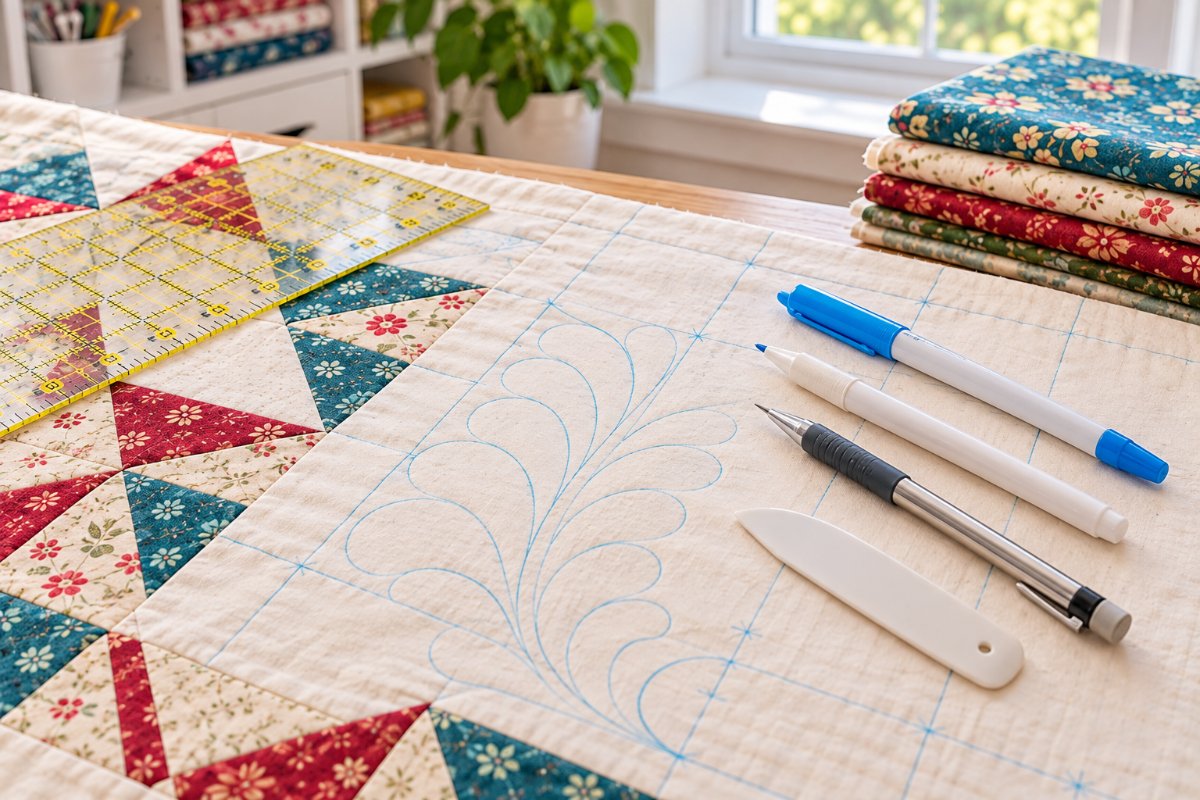
The best fabric marking pen for quilting is the one that shows up while you sew and then disappears for good. That sounds simple, but every marking tool comes out of fabric differently. Some wash out with water, some fade on their own, some brush off, and some vanish with heat and can come back later. Pick the wrong one, and you can end up with blue lines that will not rinse out or ghost marks on a finished quilt.
This guide explains how to pick the best fabric marking pen for quilting, six real tools quilters rely on, and how to test any marker before it touches a quilt top.
Table of contents
- How to choose the best fabric marking pen for quilting
- Best fabric marking pen for quilting: 6 picks
- Side by side
- How to test a marker before you use it
- Mistakes that make marks permanent
- Frequently asked questions
- Bottom line
How to choose the best fabric marking pen for quilting
Start with how the mark comes out, then match the tool to your fabric color and the job. These are the points that matter most.
- How it removes. Water-erase pens need a spray or a rinse. Air-erase pens fade on their own. Chalk brushes or washes off. Heat-erase pens vanish under an iron. A crease tool leaves no ink at all.
- How long the line lasts. Quilting a large project can take days or weeks. An air-erase line may be gone before you get to it, while a water-erase line waits until you remove it.
- Light or dark fabric. Blue and purple ink show best on light fabric. White or yellow chalk shows best on dark fabric.
- Line width. A fine line is easier to follow for free-motion designs and ruler work. A wide chalk line is fine for straight grid lines.
- Where the mark goes. Marks in seam allowances get hidden. Marks on the quilt top need to come out completely, so be pickier there.
Best fabric marking pen for quilting: 6 picks
These six tools keep coming up in quilting guides and marking tests. Details come from each maker's own product information. We didn't list prices because they change often.
Best for light fabric: Dritz Mark-B-Gone Marking Pen
The Dritz Mark-B-Gone is a blue water-soluble pen, and many quilters call it the best fabric marking pen for quilting on light fabric. The line stays put until you remove it with water, so it works well for projects you will quilt over several sessions.
- Blue water-soluble ink that comes out with a spray or a rinse of plain water
- Also sold in an extra fine point version for detailed designs
- Line stays visible until you remove it
Who it fits: quilters marking grids, feathers, or motifs on light and medium fabric. Watch for: remove the marks with water before you press. Heat can set water-soluble ink and make it hard to remove.
Best for quick marks: Dritz Disappearing Ink Marking Pen
The purple Dritz Disappearing Ink pen fades on its own, usually within 24 to 72 hours depending on fabric and humidity. You can also wipe it away with water. That makes it handy for marks you will sew right away, like a diagonal line on a half-square triangle.
- Purple air-erase ink that fades in about 24 to 72 hours
- Can be removed sooner with water
- No washing needed for most marks
Who it fits: piecing marks and small projects finished in one sitting. Watch for: in humid weather, the line can fade before you use it, so only mark what you will sew that day.
Best for dark fabric: Clover Chaco Liner Pen Style
The Clover Chaco Liner Pen Style lays down a fine line of powdered chalk from a fine tip. White is the popular color for dark fabric, and it also comes in blue, pink, yellow, and silver. When it runs out, you swap in a refill cartridge instead of buying a new tool.
- Fine chalk line for straight lines and free-hand curves
- Refillable cartridges in five colors
- Marks that pat off or wash out with detergent
Who it fits: anyone marking dark fabric or quilting a design they will stitch soon. If most of your fabric is dark, this is the best fabric marking pen for quilting to try first. Watch for: Clover warns that ironing or dry cleaning may make marks permanent, so remove the chalk before pressing. The line also brushes off with handling, which can be a problem on big projects.
Best pencil: Sewline Fabric Pencil
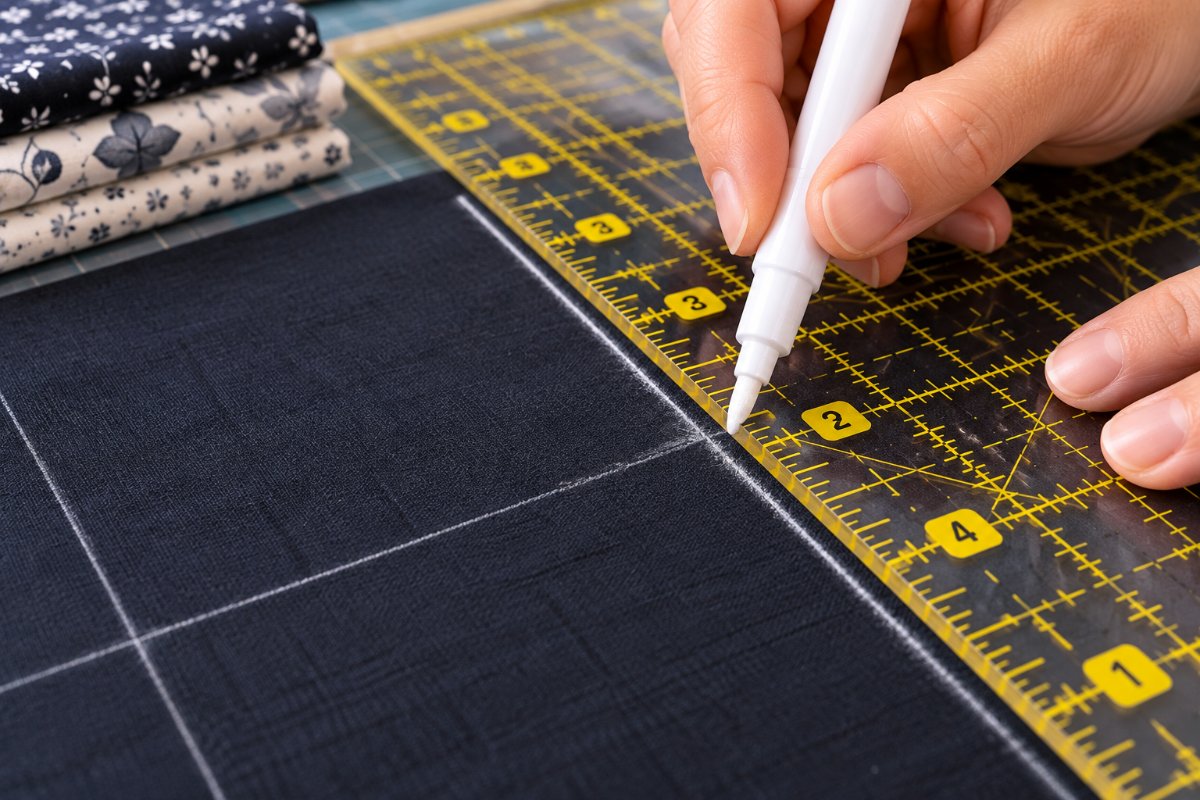
The Sewline Fabric Pencil is a mechanical pencil with ceramic leads made for fabric. It gives a thin, crisp line that is easy to follow, and the leads come in white, green, pink, blue, and black, so one pencil can handle light and dark fabric. If you want one tool for fine lines on any fabric color, it is a strong candidate for the best fabric marking pen for quilting.
- Ceramic leads in five colors, sold in refill packs
- Built-in eraser for small fixes
- Marks come out with the eraser, the Sewline Aqua Eraser, or a damp cloth
Who it fits: quilters who want a fine, precise line for ruler work, stitch-in-the-ditch guides, and appliqué placement. Watch for: press lightly. Sewline itself recommends a light touch so marks remove easily, and the leads can snap under heavy pressure.
Best no-ink option: Clover Hera Marker
The Clover Hera Marker is not a pen at all. It is a small resin tool that presses a crease into the fabric. The crease shows on both sides of the fabric and leaves no residue, so there is nothing to wash out.
- Makes a crease instead of an ink or chalk line
- Leaves no residue on the fabric
- Also useful for finger-pressing seams and folding binding
Who it fits: straight-line quilting, cross-hatching, and fabrics you do not want to get wet. Watch for: the crease is subtle and fades with handling, so it works best for lines you will quilt soon. It is not practical for detailed curved designs.
Use with care: Pilot FriXion heat-erase pens
FriXion pens are popular because the ink disappears when you press over it with a hot iron. The catch is that the ink does not leave the fabric. Pilot says its thermo-sensitive ink can reappear at around -10°C (14°F), so a quilt left in a cold car or shipped in winter can show its lines again. Some quilters also report faint white ghost lines on dark or batik fabric.
Who it fits: marks you will hide in seam allowances, or sewing projects that will not face freezing temperatures. Watch for: many quilters avoid FriXion pens on the visible surface of a quilt meant to last. Test on your fabric first, and keep them away from anything you plan to gift or enter in a show.
Side by side
Here is how the six tools compare when you are choosing the best fabric marking pen for quilting a specific project.
| Tool | Removes with | Best on | Watch for |
|---|---|---|---|
| Dritz Mark-B-Gone | Water | Light fabric | Remove before pressing |
| Dritz Disappearing Ink | Air (24 to 72 hours) or water | Light fabric, quick marks | Fades too fast in humidity |
| Clover Chaco Liner | Patting or washing | Dark fabric | Ironing can set it |
| Sewline Fabric Pencil | Eraser or damp cloth | Light and dark fabric | Press lightly |
| Clover Hera Marker | Nothing to remove | Any fabric | Subtle line |
| Pilot FriXion | Heat (can return in cold) | Hidden marks | Ghost lines, cold return |
How to test a marker before you use it
Every marking tool maker recommends testing first, and quilters agree. Even the best fabric marking pen for quilting can behave differently on a new fabric. A quick test takes a few minutes and can save a quilt.
- Cut a scrap of the same fabric you will quilt, plus a scrap of batting if you plan to test the full sandwich.
- Draw a few lines, including one you trace over twice.
- Leave the scrap for as long as your project will take, even a few days if you can.
- Remove the marks the way the maker recommends, then let the fabric dry completely.
- Check the scrap in good light. If you plan to press later, press it and check again.
Mistakes that make marks permanent
Most problems blamed on the best fabric marking pen for quilting come from how you remove the marks. Avoid these common mistakes.
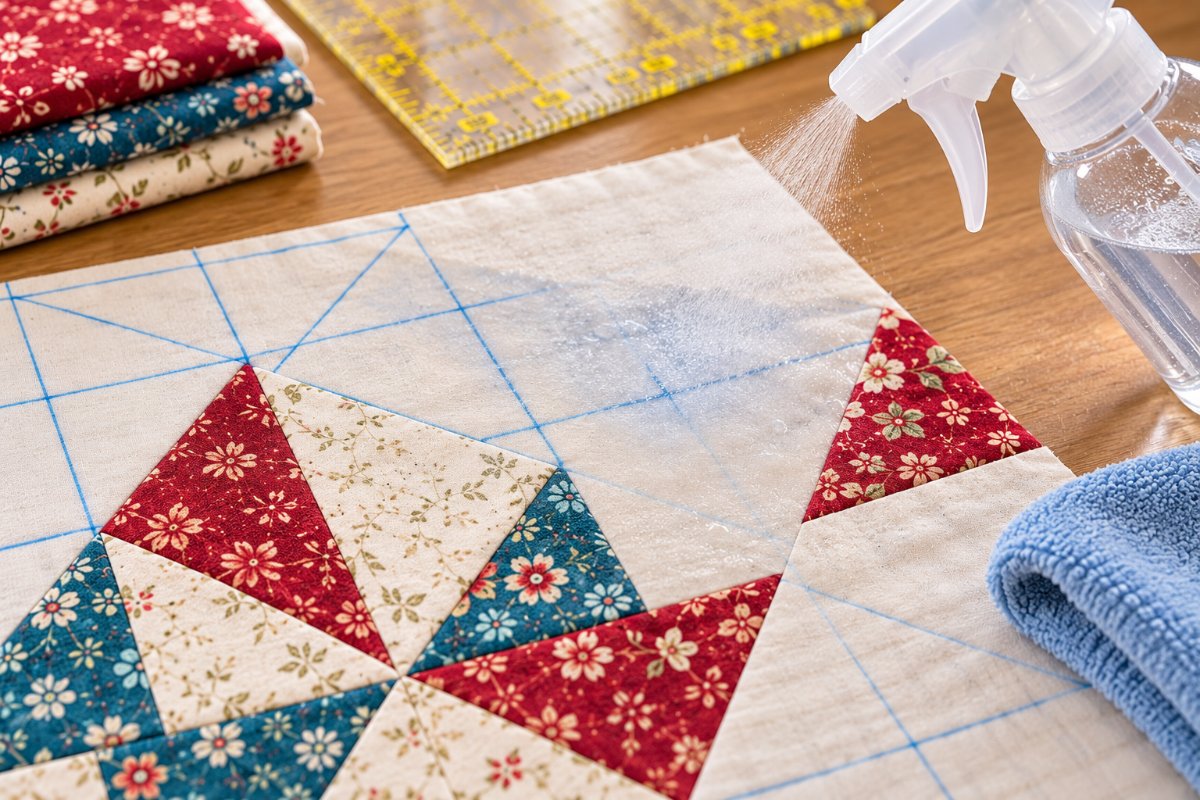
- Pressing before removing marks. Heat can set water-soluble ink and chalk. Remove marks first, then press.
- Pressing too hard. Heavy pressure pushes pencil and chalk deep into the weave. Light lines are easier to remove.
- Leaving marks in the sun. Some quilters find that sunlight or heat makes ink harder to remove. Take marks out soon after you finish quilting.
- Skipping the test. Batiks, solids, and wide-back fabrics can all react differently.
Good marking goes hand in hand with good cutting and pressing. See our guides to the best quilting rulers for beginners and the best iron for quilting, or browse more quilting notions and tools.
For refill colors and care tips, see the Clover Chaco Liner Pen Style product page.
Frequently asked questions
What is the best fabric marking pen for quilting?
For most quilters, the best fabric marking pen for quilting is a blue water-erase pen like the Dritz Mark-B-Gone for light fabric, paired with a white chalk tool like the Clover Chaco Liner for dark fabric. Always test on a scrap first.
Are FriXion pens safe for quilts?
They are risky on the visible surface of a quilt. Heat makes the ink invisible, but Pilot says it can reappear at around -10°C (14°F), and some quilters see faint white ghost lines. Many quilters keep FriXion pens for seam allowances and hidden marks.
How do you remove water-erase pen marks from a quilt?
Spray or rinse the marks with plain cool water and let the quilt dry. Do not press or put the quilt in a hot dryer until the marks are fully gone, since heat can set the ink.
What is the best marking tool for dark fabric?
White chalk tools show best on dark fabric. The Clover Chaco Liner in white and a Sewline Fabric Pencil with a white ceramic lead are both popular choices.
Can I mark a quilt without ink?
Yes. A hera marker presses a crease into the fabric instead of leaving ink or chalk. It works well for straight lines and grids you plan to quilt soon.
Bottom line
No single fabric marking pen is best for every quilting project, but a small kit covers almost everything. Keep a blue water-erase pen like the Dritz Mark-B-Gone for light fabric, a white Clover Chaco Liner for dark fabric, and a Sewline Fabric Pencil for fine, precise lines. Add a HERA marker for ink-free straight lines, and save FriXion pens for marks you plan to hide. Whatever you use, test it on a scrap first.
1 thought on “Best Fabric Marking Pen for Quilting: 6 Tools and When to Use Each (2026)”