
Spray starch has one job in a quilting room. It temporarily stiffens your fabric so rotary cuts stay straight, seams press flat instead of domed, and points match up instead of drifting a sixteenth of an inch at a time. Skip it on a project with a lot of bias edges or small piecing, and you will feel the difference immediately.
We compared the four spray starches quilters reach for most, pulled current ratings and prices straight from live Amazon listings. We also added what most guides leave out: a comparison table, the fabric types that react badly to starch, how to stop flakes from building up on your iron plate, and the one storage habit that ruins starched fabric months after you press it.
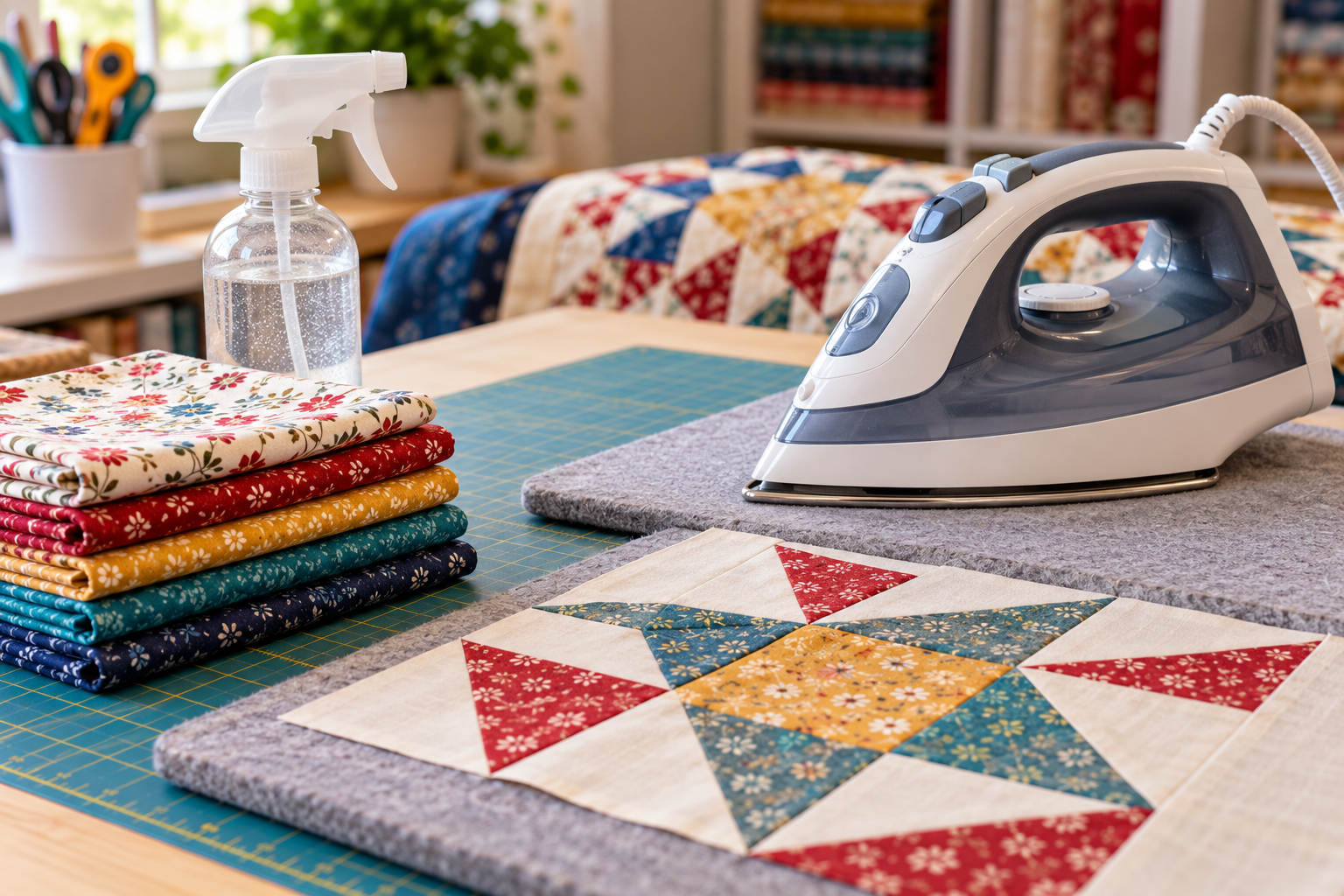
Table of Contents
- What Spray Starch Does to Quilting Fabric
- Starch vs. Sizing vs. Starch Free Sprays
- Quick Comparison
- The Best Spray Starch for Quilting: 4 Top Picks
- How to Spray Starch Without Scorching Fabric or Flaking Your Iron
- Cleaning Starch Flakes Off Your Iron
- DIY Spray Starch Recipes: Cornstarch vs. Vodka
- The One Mistake That Ruins Starched Fabric in Storage
- Which One to Buy
- Frequently Asked Questions
What Spray Starch Does to Quilting Fabric
Starch is a carbohydrate. When you spray a starch solution onto woven cotton and press it dry, the starch molecules settle into the gaps between the threads and harden there. It works the same way the starch in a bowl of cooked rice firms up as it cools. That hardened layer is what makes the fabric feel crisp and hold a crease. It is not permanent. It washes out the first time the finished quilt goes through the laundry, which is exactly why quilters use it during construction and don't worry about it long term.
Wikipedia's overview of starch as a polysaccharide covers the chemistry in more depth than any quilting blog needs to, but the one detail worth knowing is that starch is a plant carbohydrate, not a synthetic polymer. That is the difference between true starch products like Faultless and starch-free alternatives like Soak Flatter, which use a non-starch smoothing agent instead.
Starch vs. Sizing vs. Starch Free Sprays
Fabric store shelves use these three words almost interchangeably, and that is where most of the confusion starts.
- Starch is the real carbohydrate described above. It gives the crispest, most paper-like hand and the strongest hold for precise cutting.
- Sizing is a lighter finishing spray, usually with less or no starch at all, meant to add body without full crispness. It is a better match for garment sewing than for piecing points.
- Starch-free sprays like Soak Flatter use plant-derived, non-starch ingredients to smooth and press fabric. They skip the flaking and residue issues starch can cause, but they also will not hold a sharp crease as long on a long piecing session.
If your main goal is accurate cutting and pressing on quilting cotton, reach for a true starch product. If you are working with silk, wool applique, or a fabric that has ever reacted badly to starch residue, a starch-free spray is the safer starting point.
Quick Comparison
| Product | Type | Scent | Hold | Format |
|---|---|---|---|---|
| Mary Ellen's Best Press | True starch alternative | Scent free | Medium to firm | Pump spray |
| MAGIC Premium Quilting Spray | True starch | Light scent | Firm, flake free | Trigger spray |
| Soak Flatter Smoothing Spray | Starch free | Scentless or lightly scented | Light to medium | Pump spray |
| Faultless Premium Spray Starch | True starch | Light scent | Firm to heavy | Aerosol |
The Best Spray Starch for Quilting: 4 Top Picks
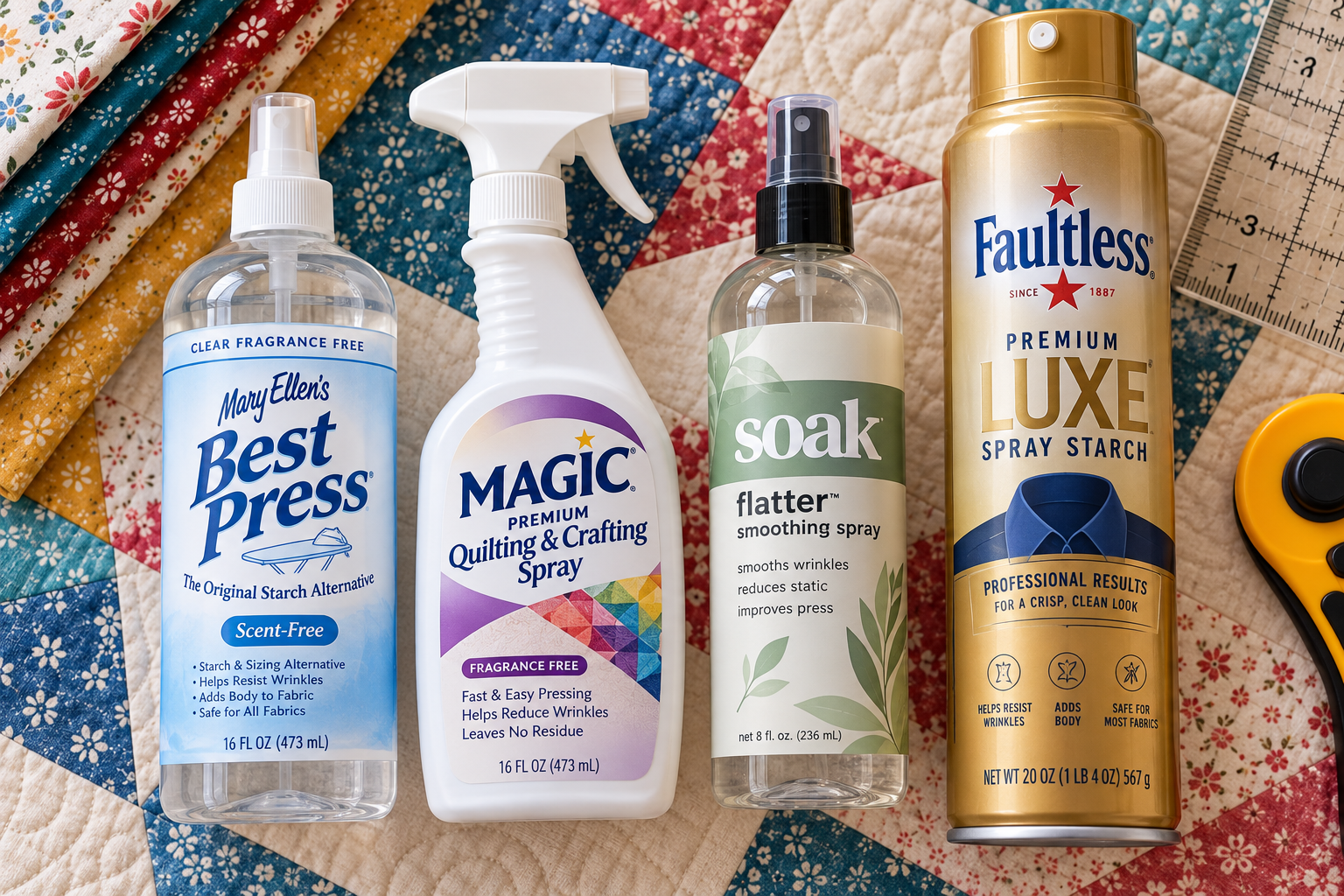
Every product below is currently sold, and each one is the pick in its category. Ratings, review counts, and prices were pulled live and will drift slightly over time, which is normal for Amazon.
1. Best overall: Mary Ellen's Best Press
Best Press has been the default quilting room starch for long enough that most quilting teachers assume you already own a bottle. The scent-free 16.9-ounce pump spray gives a medium-to-firm press without the heavy flaking some older aerosol starches produce, and the pump format means no propellant smell in a small sewing room.
2. Best for flake-free daily pressing: MAGIC Premium Quilting and Crafting Spray
MAGIC's trigger spray formula is built specifically to resist the white flaking buildup that collects on an iron soleplate after repeated use. It comes in a 2-pack of 16-ounce trigger bottles and holds a firm crease similar to Best Press, but quilters who press dozens of blocks in one sitting notice the flaking difference first. For anyone who presses in long sessions, it saves stopping to scrub the iron.
3. Best starch-free option for delicate or dark fabric: Soak Flatter Smoothing Spray
Flatter skips starch entirely in favor of a plant-derived smoothing agent, which matters if you have ever seen white residue bloom on a dark or synthetic fabric after starching it. It comes in an 8-ounce pump bottle. The press is lighter than true starch, so it suits appliqué, wool, and delicate fabric better than it suits a stack of two-inch half-square triangles. It is not a starch, but it is the pick for quilters who want crisp pressing without one.
4. Best budget pick for heavy hold: Faultless Premium Spray Starch
Faultless is the starch most quilters grew up with in the laundry aisle, and the current 4-pack of 20-ounce aerosol cans is the cheapest way into true heavy-starch hold. It is an aerosol, so expect more overspray and a stronger initial scent than the pump options above. But nothing beats it for cost per ounce on a big quilt top that needs a lot of starching before it gets cut.
How to Spray Starch Without Scorching Fabric or Flaking Your Iron
Technique matters as much as the bottle you choose. Hold the nozzle about 8 inches from the fabric and use a fine, even mist rather than a heavy soak. Drenched fabric, instead of damp fabric, can scorch the moment a hot iron touches it, since the iron hits standing water instead of a light coating.
Give the starch about 30 seconds to sit before you press. Pressing too soon, while the spray is still sitting wet on top of the fibers instead of absorbed into them, is the single biggest cause of flaking buildup on an iron soleplate. If you are starching a stack of pieces ahead of time rather than pressing immediately, let each piece dry completely first, then press it dry with no added steam.
Skip starch entirely on anything with lycra or spandex in the blend. The starch coating can interact with the stretch fibers in a way that leaves a stiff, slightly damaged feel that doesn't fully relax out, which matters if you ever piece in a knit binding or a stretch accent fabric.
Cleaning Starch Flakes Off Your Iron
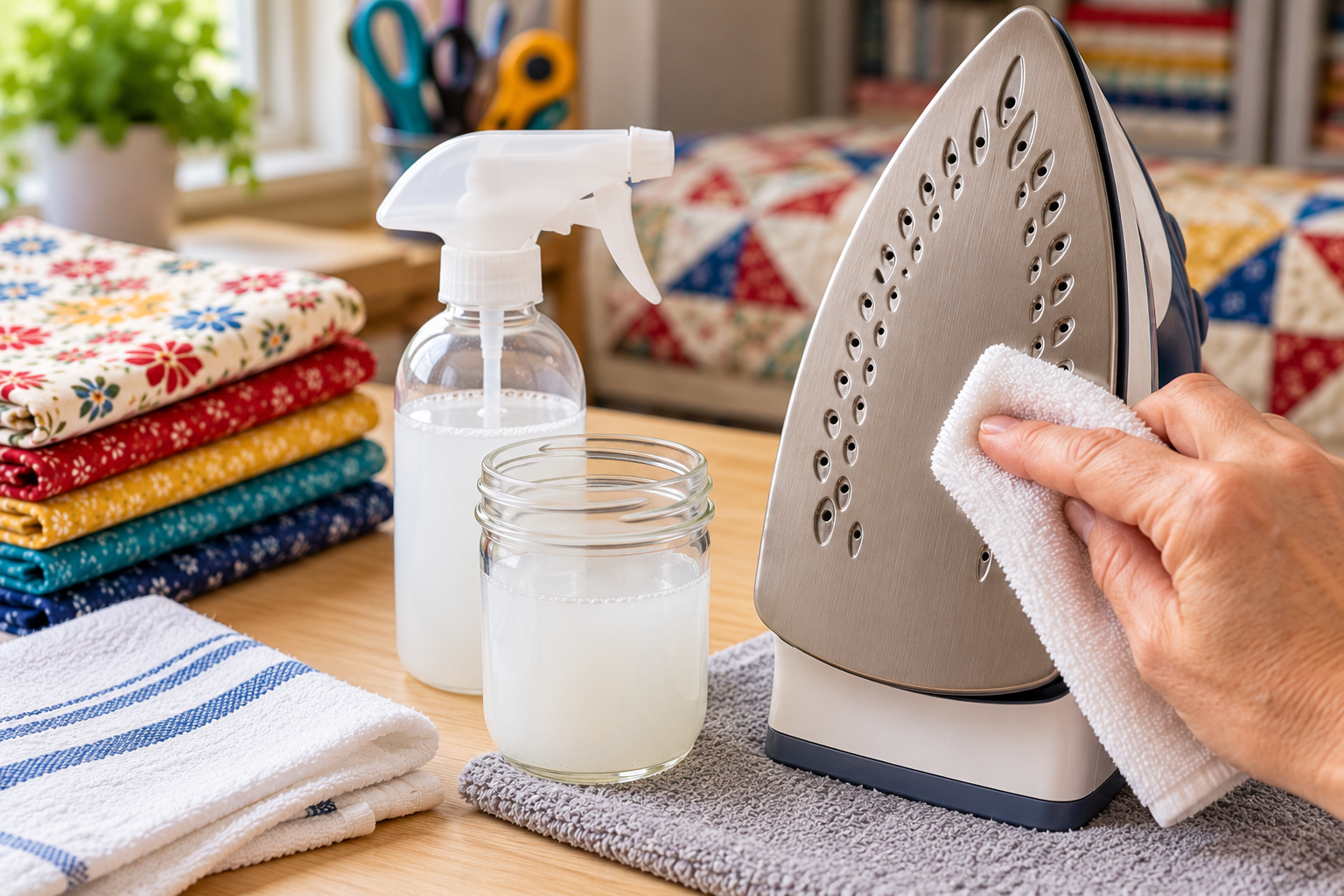
Even with careful technique, starch residue eventually builds up on a soleplate, especially with aerosol starches. A dedicated iron cleaner, like Faultless's own hot iron cleaner stick, is a 2-minute fix. Run a warm iron over the cleaner stick on a scrap of cloth, and the residue lifts off onto the cloth instead of transferring onto your next block.
If you don't have a dedicated cleaner on hand, a paste of baking soda and water applied to a cooled soleplate with a soft cloth, then wiped clean, works as a stopgap. Either way, clean the plate before it builds up enough to leave brown scorch marks on light fabric, since that kind of staining does not come back out.
DIY Spray Starch Recipes: Cornstarch vs. Vodka
Both DIY recipes show up constantly in quilting forums, and both work, with tradeoffs.
- Cornstarch recipe: simmer 2 cups of water, whisk in 1 tablespoon of cornstarch until fully dissolved, cool, and transfer to a spray bottle. It gives a starch hold close to the store-bought formulas, but it spoils within a few days in the bottle and needs to be made in small batches.
- Vodka recipe: mix 2 cups of water with a quarter cup of inexpensive vodka in a spray bottle and shake before each use. It never spoils and costs almost nothing per batch, but the hold is noticeably weaker than true starch and will not replace starch for pieces that need a sharp, lasting crease.
Both recipes take well to a few drops of essential oil if you don't like the plain vodka smell. Neither one is a complete substitute for a store-bought starch if you are prepping a whole quilt top for precision cutting, but either is a reasonable stopgap for a quick pressing session.
The One Mistake That Ruins Starched Fabric in Storage
Don't starch fabric and then put it away. Folding starched fabric and leaving it in a drawer or bin for weeks sets a permanent crease along every fold line, the same stiff, yellowed line you'd find in an old shirt that sat folded in a closet for years. The fix is simple: starch fabric right before you use it, not as a storage step, and let any starched scraps dry fully before they go anywhere near a sealed container.
That last point matters more than it sounds. Starch is a carbohydrate, and carbohydrates attract pantry pests the same way flour or cornstarch in your kitchen does. Starched fabric scraps stored damp, or stored for a long time in a warm space, can draw the same small moths and beetles that get into unsealed pasta or rice. Keep starched scraps in a breathable, dry spot rather than a tightly sealed bag for long-term storage, and you avoid both the crease and pest problems at once.
Which One to Buy
Most quilters do not need four bottles of starch on the shelf. They want one bottle that works for the projects they make. They need one that will not flake onto a dark fat quarter (a precut fabric piece about 18 by 22 inches) or gum up a sewing machine needle by the third block. A good iron matters here too, since a cooler iron or one with mineral buildup in the soleplate makes any starch perform worse than it should.
Mary Ellen's Best Press is the overall pick because it behaves the same way on a cotton charm pack, a linen blend, and a dark batik without a scorch test first. If flaking off a hot iron is the specific problem, MAGIC's quilting formula is built for that. If the fabric is delicate, dark, or starch-sensitive, Soak's Flatter sidesteps the flaking and scorching question by leaving starch out of the bottle entirely. And if a whole quilt top needs heavy sizing before free motion work, Faultless Premium in the 4 pack keeps the per-ounce cost down without giving up hold.
Whichever bottle ends up on the ironing board, store it away from the pressing mat and out of direct sun, and never box up starched blocks for long-term storage without washing the starch back out first.
Frequently Asked Questions
Does spray starch leave a residue on quilting fabric?
Yes, if you overuse it or don't fully dry the fabric before folding it away. A light, even mist that dries completely before pressing rinses out or wears off with normal use and washing. Heavy, repeated applications left to sit in storage are what cause the stiff, yellowed residue quilters are trying to avoid.
Is spray starch bad for a sewing machine needle?
Starch residue can build up and gum up a needle and tension discs during long sessions of piecing starched fabric. That is why some quilters prefer a starch-free alternative like Flatter for piecing and save heavier starch for pressing finished blocks or a quilt top before quilting. Wiping the needle and bobbin area after a heavily starched project is a reasonable precaution.
Can I use spray starch on dark or delicate fabric?
Scent-free, clear formulas like Best Press are the safer choice on dark fabric because they resist the white flaking that shows up on black and navy cottons. For truly delicate fibers such as silk, lycra blends, or hand-dyed batiks, a starch-free sizing spray avoids the risk of scorching and flaking entirely.
How long does starch last once it is applied to fabric?
Through normal handling and piecing, starch typically holds until the fabric is washed. It is not a permanent finish. That is also why you shouldn't store starched fabric for months at a time. The starch breaks down unevenly, attracts pests looking for a carbohydrate source, and can leave creases that do not press back out.
Is homemade starch as good as store-bought for quilting?
A cornstarch and water mix gives decent body for light pressing jobs and costs almost nothing, but it is more prone to flaking and spoils within a few days. A vodka and water mix dries completely clear with zero flaking risk, but gives noticeably less stiffness than a commercial spray. Both are reasonable in a pinch. Neither fully replaces a store-bought starch when a whole top needs consistent, heavy sizing.