
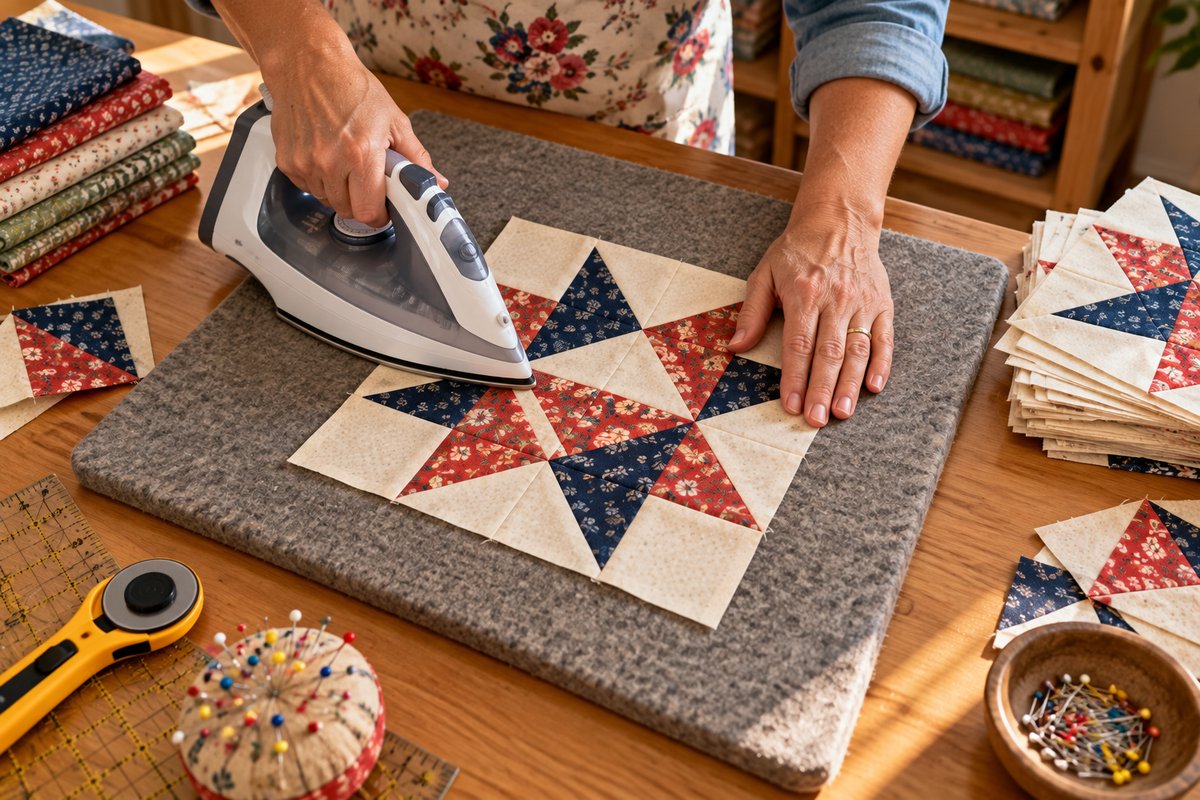
The best wool pressing mat turns pressing from the slowest part of piecing (sewing small fabric pieces together into a quilt top) into the fastest. Wool holds heat and releases it back into the fabric from underneath, so a seam gets pressed from both sides at once instead of just the top. Most quilters find they barely need steam after switching from a padded ironing board to a dense wool mat.
This guide covers what separates a good wool pressing mat from a thin felt pad wearing the name, what to check before you buy, and four picks currently sold on Amazon that cover the compact, best-value, full-block, and expandable angles. We haven't tested these hands-on. We base our picks on maker specs and patterns across thousands of verified buyer reviews, and we call out complaints alongside the praise.
Table of Contents
What a wool pressing mat does
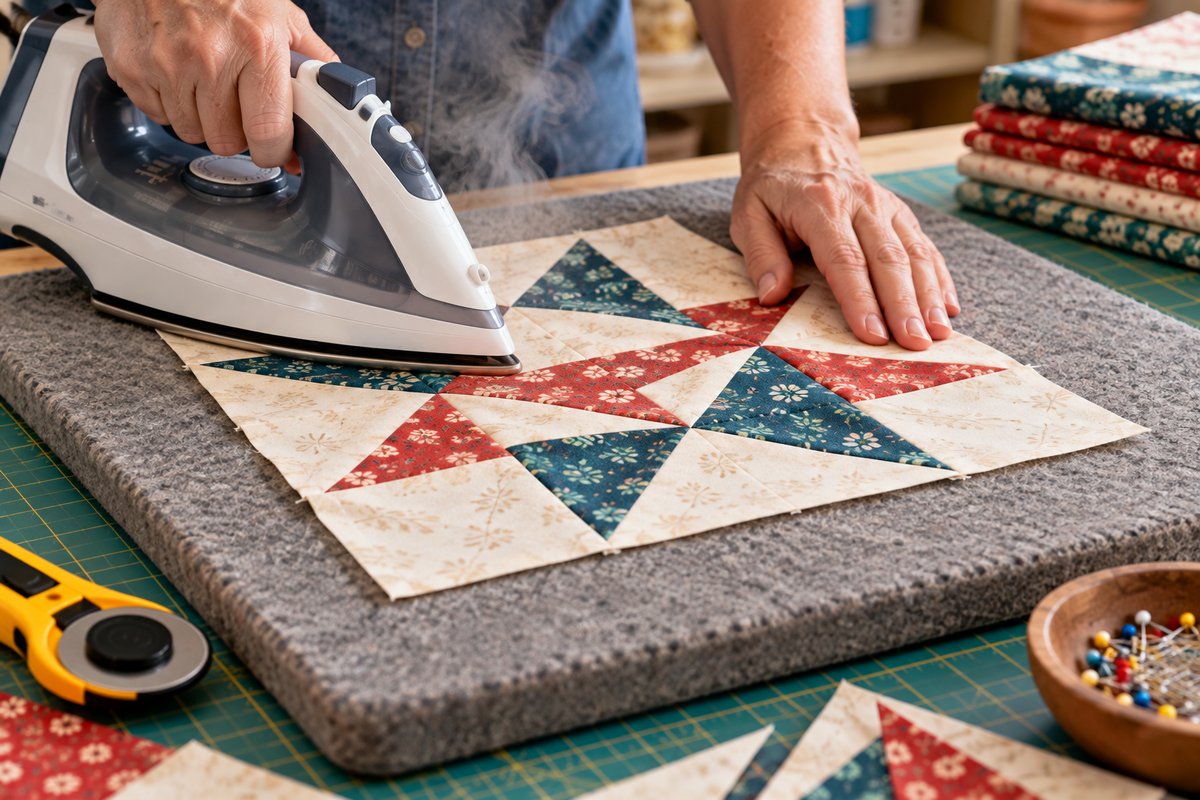
The difference between a regular ironing board and a wool pressing mat comes down to how heat moves. A regular ironing board is padded with cotton batting over a thin metal or wood surface, which mostly reflects heat back at the iron instead of absorbing it. Dense, felted wool works the opposite way: it soaks up heat from the iron and holds it, so the fabric gets pressed by stored heat radiating up from the mat as well as by the iron pressing down. That's why quilters give up steam almost entirely once they switch. The stored heat does the work steam used to do.
Wool's natural crimp and fiber structure let it trap and slowly release heat, which is why a wool pressing mat outperforms foam or cotton-topped boards. A folded towel helps in a pinch, but it does not hold heat the way dense wool does, so seams need more passes with the iron to lie flat.
The thickness also matters for piecing, not just pressing. A half-inch-thick mat is firm enough to pin fabric pieces directly into it like a design wall, which reviewers often mention as a second use.
How to choose a wool pressing mat
A handful of specs separate a mat that lasts years from one that flattens out in a season.
- Material. A good wool pressing mat is 100% wool, ideally New Zealand wool, densely felted rather than a thin craft-felt blend. A real wool mat is noticeably heavy for its size. A light one is usually cut with synthetic fiber and won't hold heat the same way.
- Thickness. Half an inch is the standard that supports heat retention and pins the fabric in place. Thinner mats press fine but lose the pin-board use case.
- Size. A compact mat around 17 by 13.5 inches fits next to a sewing machine for press-as-you-go piecing. A larger 24 by 18 inch pad handles full quilt blocks without repositioning, at the cost of portability.
- Two-sided use. Most wool mats press equally well from either side, which doubles the usable surface before it needs replacing. Check the listing specifically if this matters to you, since not every mat is finished the same on both faces.
- Care and storage. Wool mats are spot-clean and hand-wash only. Never machine wash or dry one, since wool felts further and can shrink or warp. Some mats need to be stored flat rather than rolled or folded, which matters if storage space is tight.
The 4 best wool pressing mats
These four, all currently sold on Amazon, cover the range most quilters need, from a compact pad to a full-block pad. Specs and star ratings are pulled straight from each listing.
| Mat | Size | Thickness | Best for |
|---|---|---|---|
| SAVINA Wool Pressing Mat | 17 x 13.5 in | 1/2 in | Compact, best overall |
| ZOMONETI Wool Pressing Mat | 17 x 13.5 in | 1/2 in | Best value, most reviewed |
| SAVINA Wool Pressing Pad | 24 x 18 in | 1/2 in | Full quilt blocks |
| oliso MultiMat | 14 x 14 in | 1/2 in | Expandable setup |
1. Best overall: SAVINA Wool Pressing Mat
SAVINA's 17 by 13.5 inch mat is one of the most popular wool pressing mats sold. It's 100% wool, half an inch thick, and ships with a free silicone iron rest. That small detail shows up often in the positive reviews since it protects the mat from scorching when the iron is set down.
The one complaint worth noting: a handful of reviewers report a noticeable wool smell on first use, though most say it fades quickly or isn't present at all. That's a known characteristic of raw wool, not a defect specific to this mat, and it shows up in reviews across every wool pressing mat we looked at.
2. Best value: ZOMONETI Wool Pressing Mat
ZOMONETI's mat is the same 17 by 13.5 inch size as the SAVINA pick above, at a lower price. It is one of the most popular wool pressing mats we found. The included care card specifically says steam is fine to use on this mat, which differs from some other brands that recommend dry heat only, so check your own iron's steam output if that matters to your workflow.
Reviewers often call it a close substitute for pricier big-name mats, which is why it's the pick when budget matters more than brand.
3. Best for full quilt blocks: SAVINA Wool Pressing Pad 24x18
The larger 24-by-18-inch version of SAVINA's mat is the pick once a block is too big to press in sections. Reviewers specifically call out that it presses both sides of the fabric at once and holds up to regular use without flattening, and several mention it doubles as an ironing surface for general sewing, not just quilt blocks.
It can be rolled for storage or transport to a class, though a couple of reviewers note it takes a day or so to lie fully flat again after being rolled tightly. Odor feedback is mixed here too, the same pattern as the smaller mats.
4. Best expandable setup: oliso MultiMat
oliso's 14 by 14 inch MultiMat does something none of the other picks here do: it ships with ProPress connectors that join multiple MultiMats edge to edge into one larger surface. Start with one square mat next to the machine, then add a second or third when a bigger project needs more room, instead of buying a whole separate large mat.
It's a smaller surface and costs more per square inch than the fixed-size mats above if you only ever buy one. This pick is for quilters who want to grow their pressing setup over time rather than commit to one fixed size up front.
How to use and care for a wool pressing mat
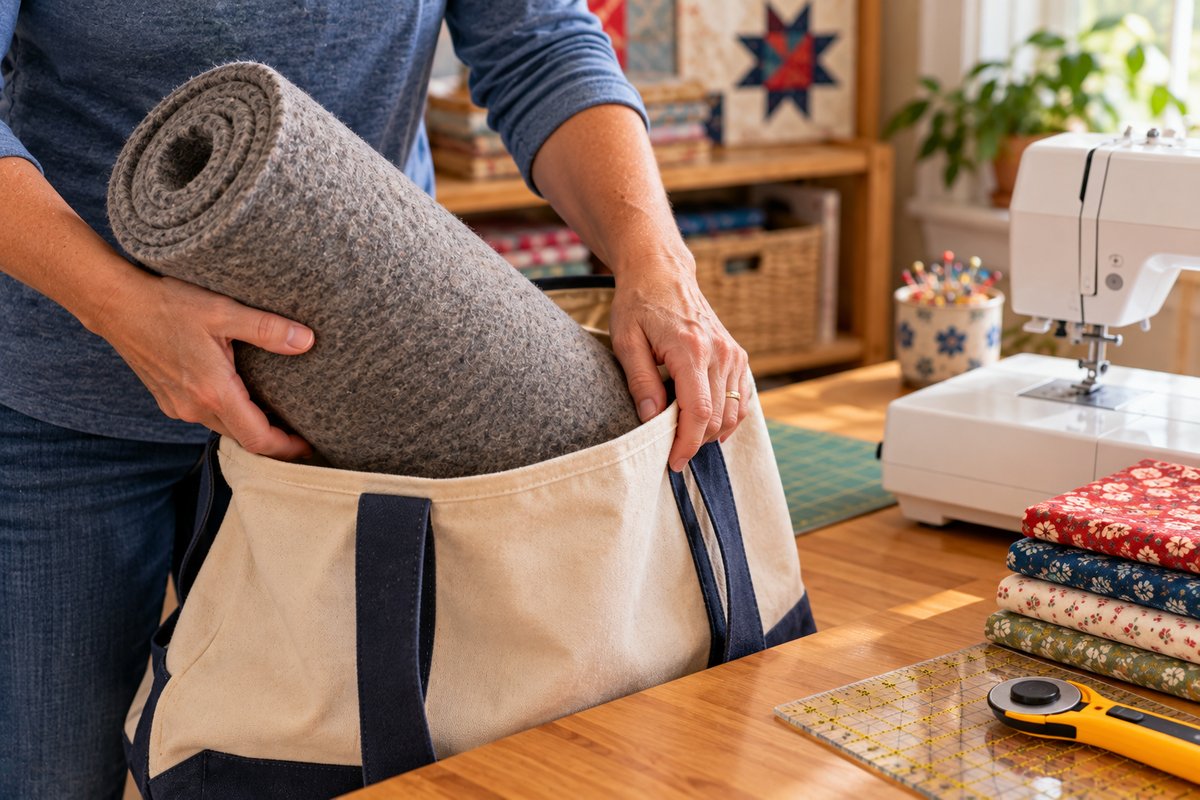
Set the mat on a flat, heat-safe surface. A table or countertop works fine because the wool protects the surface underneath from the iron's heat. Use a medium-to-high setting rather than the iron's maximum temperature, which can scorch the wool fibers over time, and let the mat do the work: press and hold rather than sliding the iron as you would on a padded board. Steam is unnecessary on most wool mats, though a few brands state it's fine, so check the specific mat's care instructions rather than assuming.
Between uses, spot-clean with a damp cloth. Never machine wash or dry a wool pressing mat. The felting process that makes it dense and heat-retentive continues in a washer or dryer, and the mat will shrink and warp. If a mat's instructions call for flat storage, follow that over rolling it, since a tightly rolled mat can take a day or more to lie flat again before its next use. For a complete pressing setup, pair it with a quilting iron that holds steady heat rather than one that cycles on and off. Traveling or working in a small space? A mini iron for quilting works well on a wool mat too.
Frequently asked questions
Do I need a wool pressing mat, or will a towel on an ironing board work?
A folded towel traps heat on top of the fabric the same way a padded ironing board does, so you still rely entirely on the iron and steam to press a seam flat. Dense wool absorbs and radiates heat back into the fabric from underneath, pressing both sides at once and cutting pressing time noticeably, especially on a project with a lot of seams.
What size wool pressing mat should I get?
A compact 17 by 13.5 inch mat fits next to a sewing machine for press-as-you-go piecing and works for most quilters. Move up to a 24 by 18 inch pad if you regularly press full blocks or finished tops without repositioning the fabric.
Does a wool pressing mat need steam?
Usually not. The stored heat in dense wool does most of what steam was doing on a padded board, which is why many quilters stop using steam almost entirely after switching. A few mats state steam is fine to use if you prefer it. Check the specific mat's care instructions since not all brands agree.
Why does my wool pressing mat smell?
A faint wool smell on first use is normal and shows up in reviews across nearly every brand, not just one. It typically fades within the first few uses. A strong, persistent odor is less common but has been reported occasionally. Airing the mat out before first use usually resolves it.
Can you wash a wool pressing mat?
Spot-clean with a damp cloth only. Never machine wash or dry a wool pressing mat, since the felting process that makes it dense continues in a washer or dryer and will shrink and warp the mat.
Which one to buy
The best wool pressing mat for most quilters is the SAVINA 17 by 13.5 inch mat, a popular option that fits comfortably next to a sewing machine.
If price is the deciding factor, the ZOMONETI mat is a near match for less. If you regularly press full quilt blocks, size up to the 24-by-18-inch SAVINA pad. And if you'd rather grow your setup piece by piece than commit to one fixed size, the oliso MultiMat's connectable design is the only one of the four built for that. Whichever you choose, follow the care instructions: hand-wash only, and store the way the mat's own instructions say to, since that's what determines whether it still lies flat a year from now.