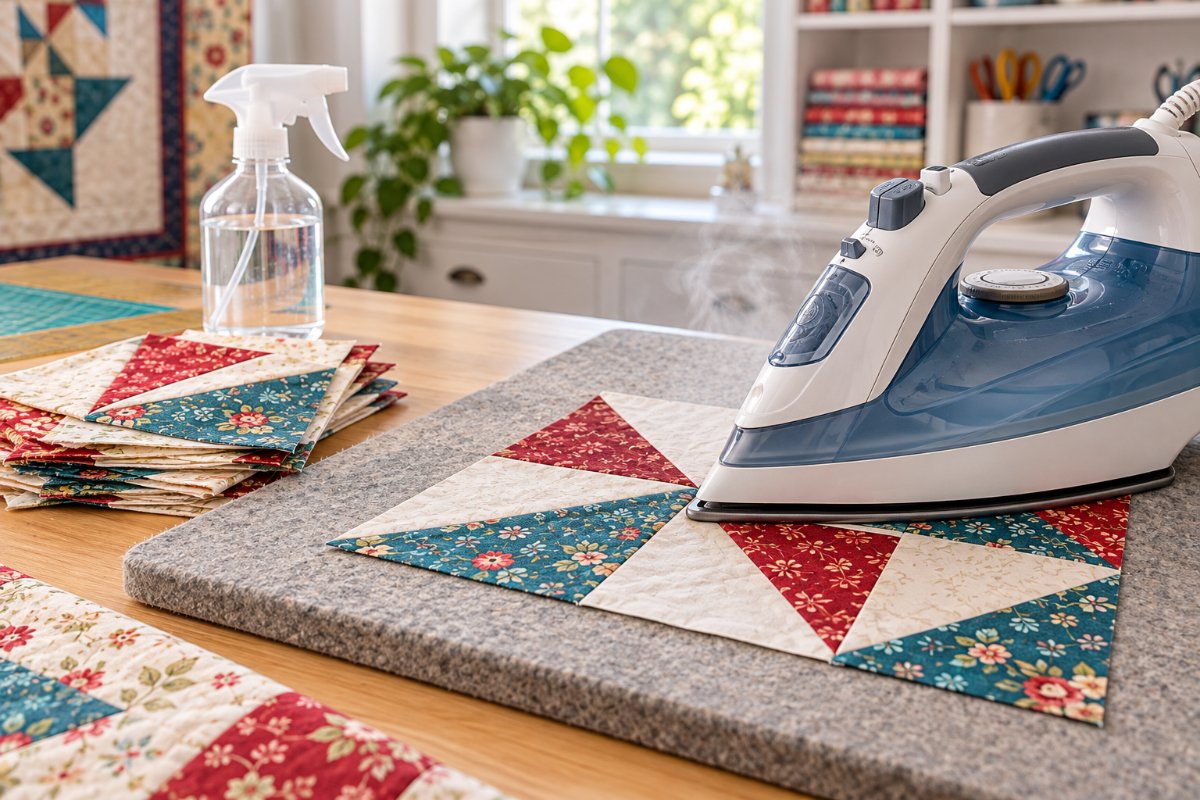
The best iron for quilting is not the one with the most buttons. It is the one that sets a seam flat in one press, keeps its water inside the tank, and does not shut off every time you stop to trim a dog-ear. A regular laundry iron can do the job, but quilting asks more of an iron than a shirt does. You press hundreds of short seams, you work near fussy points, and you switch between steam and dry pressing all afternoon.
This guide covers what to look for in the best iron for quilting, four real irons that quilters keep recommending, and a few pressing habits that matter just as much as the iron you pick.
Table of contents
- What makes the best iron for quilting
- Best iron for quilting: 4 picks
- Side by side
- Do you need a mini iron too
- Pressing habits that matter more than the iron
- Frequently asked questions
- Bottom line
What makes the best iron for quilting
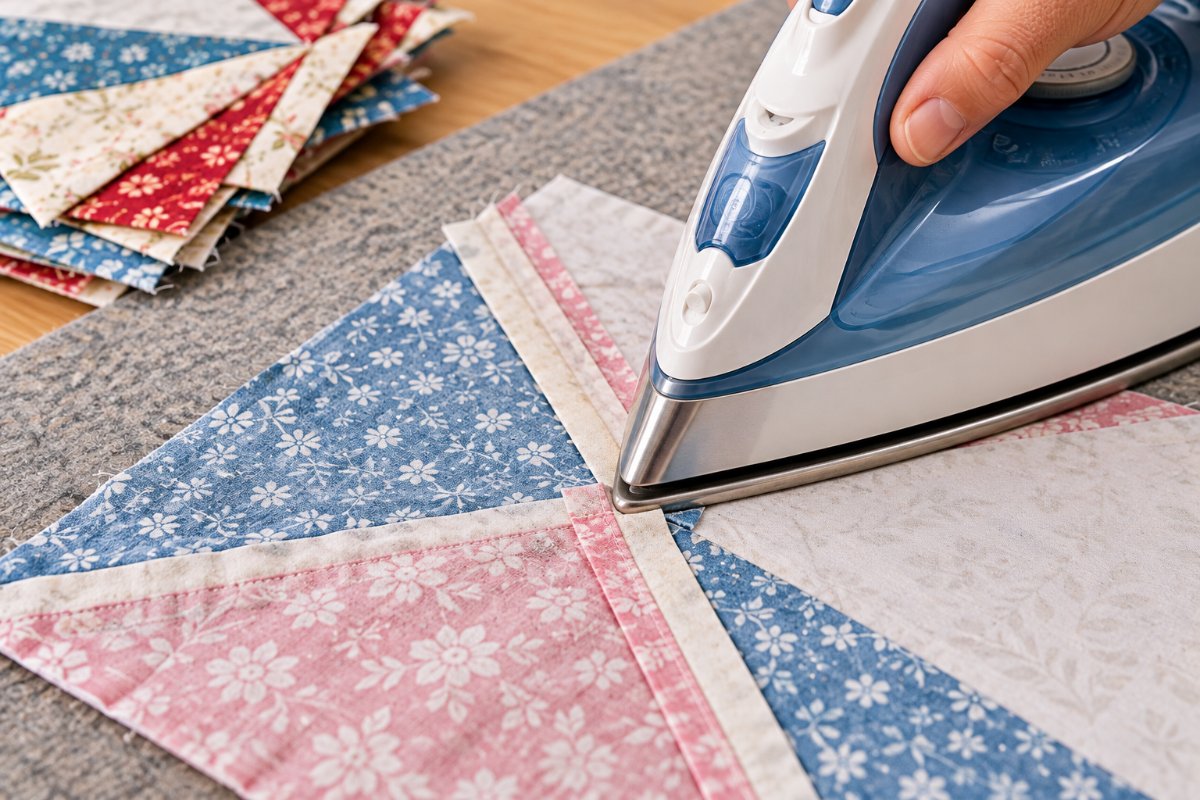
Quilters press. They do not iron. Ironing slides the iron back and forth. Pressing sets the iron down, lifts it, and moves to the next spot. Sliding stretches bias edges and pulls blocks out of square, so the features below all point toward an iron that is easy to lift, easy to set down, and steady when it lands.
- Enough weight to press, not so much it tires you. Most full-size irons quilters like weigh about 3.5 to 4 pounds. Lighter irons are easier on wrists but need more pressure to flatten thick seams.
- Steam you can control. Steam helps set seams, but too much can distort small pieces. Look for a steam lever or button you can turn down or off without digging through menus.
- A smooth soleplate with a pointed tip. Stainless steel and ceramic both glide well. A narrow tip lets you open seams and press into corners on small blocks.
- Auto shutoff that fits how you work. Most irons shut off after about 8 minutes upright. That is safe, but it means waiting for reheat every time you sew a long seam. Irons with longer standby times or lift features are easier to live with.
- No leaking or spitting. Water spots on light fabric are the complaint quilters mention most. Anti-drip systems and letting the iron fully heat before steaming both help.
- A cord that stays out of the way. A long cord with a swivel connection, a retractable cord, or no cord at all makes a big difference at a pressing station next to your machine.
Best iron for quilting: 4 picks
These four keep coming up in quilting groups, pressing guides, and reviews. Specs below come from each maker's own product listing. We have not added prices because they change often, so check current listings before you buy.
Best overall: Oliso TG1600 Pro Plus
The Oliso TG1600 Pro Plus is the iron quilters talk about most, and it's because of its auto lift. When you let go of the handle, small feet lower and lift the soleplate off the fabric. When you touch the handle, the iron sets back down. That means you can leave it flat on the board between seams without scorching anything, and it stays hot while you sew.
- 1800 watts with a Diamond Ceramic Flow soleplate and a 2-inch detailer tip
- 12.7 oz side-fill water tank
- 12-foot cord with a 360-degree pivot connection
- 30-minute standby shutoff while you work, and a 30-second shutoff if it tips over
- About 3.7 pounds, with a 2-year warranty
Who it fits: quilters who press constantly beside the machine and are tired of standing the iron up. Watch for: the lift feet take a few sessions to get used to, and some quilters find it rocks slightly on a narrow board.
Best for steam: Rowenta Steamforce DW9280
The Rowenta Steamforce DW9280 is a heavy steam iron built around a strong burst of steam. Pressing guides often rank it at or near the top for flattening thick seams and stubborn cotton. It has a stainless steel soleplate with 400 microsteam holes and a precision tip for points and corners. If steam matters most to you, it is a strong contender for the best iron for quilting.
- 1800 watts, with steam bursts up to about 210 grams per minute
- About 12 oz water tank and an anti-calc system to reduce mineral buildup
- 8-foot cord
- Shuts off after 8 minutes upright or 30 seconds on its face or side
- About 3.85 pounds
Who it fits: quilters who like lots of steam and heavy pressing, especially on batiks and heavier cottons. Watch for: the 8-minute upright shutoff means you'll need to reheat after long sewing stretches. Rowenta also sells a newer Steamforce+ model (DW9440), so check which version a listing is selling.
Best cordless: Panasonic NI-WL600
The Panasonic NI-WL600 sits on a heated base and lifts off with no cord. Its soleplate has a point at both ends, so you can press forward and backward without turning the iron around. That is handy on a small pressing mat right next to the machine.
- 1500 watts with a curved stainless steel soleplate pointed at both ends
- Charging base with a retractable cord, plus a heat-resistant carrying case
- Adjustable heat and steam, plus vertical steam
- Small water tank, so plan on refilling more often
Who it fits: quilters who press blocks in short bursts and hate cords dragging across fabric. It is also the best iron for quilting classes and retreats because it packs so easily. Watch for: it cools as you use it and needs a few seconds back on the base, so it is slower on large pieces like backing fabric.
Best retractable cord: CHI 13102 Steam Iron
The CHI 13102 is a full-size steam iron with a titanium-infused ceramic soleplate, more than 400 steam holes, and electronic temperature control that sets the heat for the fabric you pick. Its 8-foot cord winds back into the iron at the push of a button, which keeps a small sewing room tidy.
- 1700 watts with a titanium-infused ceramic soleplate
- Electronic temperature control with a fabric guide and adjustable steam lever
- 8-foot retractable cord
- 3-way auto shutoff and a 2-year limited warranty
Who it fits: quilters who want a solid everyday steam iron without special features to learn. Some well-known quilt designers use it as their daily pressing iron. Watch for: it has fewer quilting-specific features than the Oliso, such as auto lift or a long standby time.
Side by side
Here is how the four picks for the best iron for quilting compare on the specs that matter most at a pressing station.
| Iron | Watts | Soleplate | Cord | Standout feature |
|---|---|---|---|---|
| Oliso TG1600 Pro Plus | 1800 | Diamond ceramic | 12 ft swivel | Auto lift, 30-minute standby |
| Rowenta Steamforce DW9280 | 1800 | Stainless steel, 400 holes | 8 ft | Heavy steam output |
| Panasonic NI-WL600 | 1500 | Stainless steel, dual tip | Cordless (base) | Presses in both directions |
| CHI 13102 | 1700 | Titanium-infused ceramic | 8 ft retractable | Electronic temperature control |
Do you need a mini iron too
A mini iron does not replace a full-size iron, but many quilters keep one next to the machine for small jobs. It is great for pressing seams on paper piecing, English paper piecing, appliqué, and binding without getting up. The Oliso M3Pro Project Iron is a 1000-watt mini steam iron with a ceramic soleplate and dual voltage for travel. The Clover Mini Iron II is a tiny dry iron with three heat settings and swappable tips, popular for appliqué.
If you only buy one iron, get a full-size iron first. For most projects, the best iron for quilting is still a full-size steam iron. Add a mini iron once you start doing small detailed work.
Pressing habits that matter more than the iron
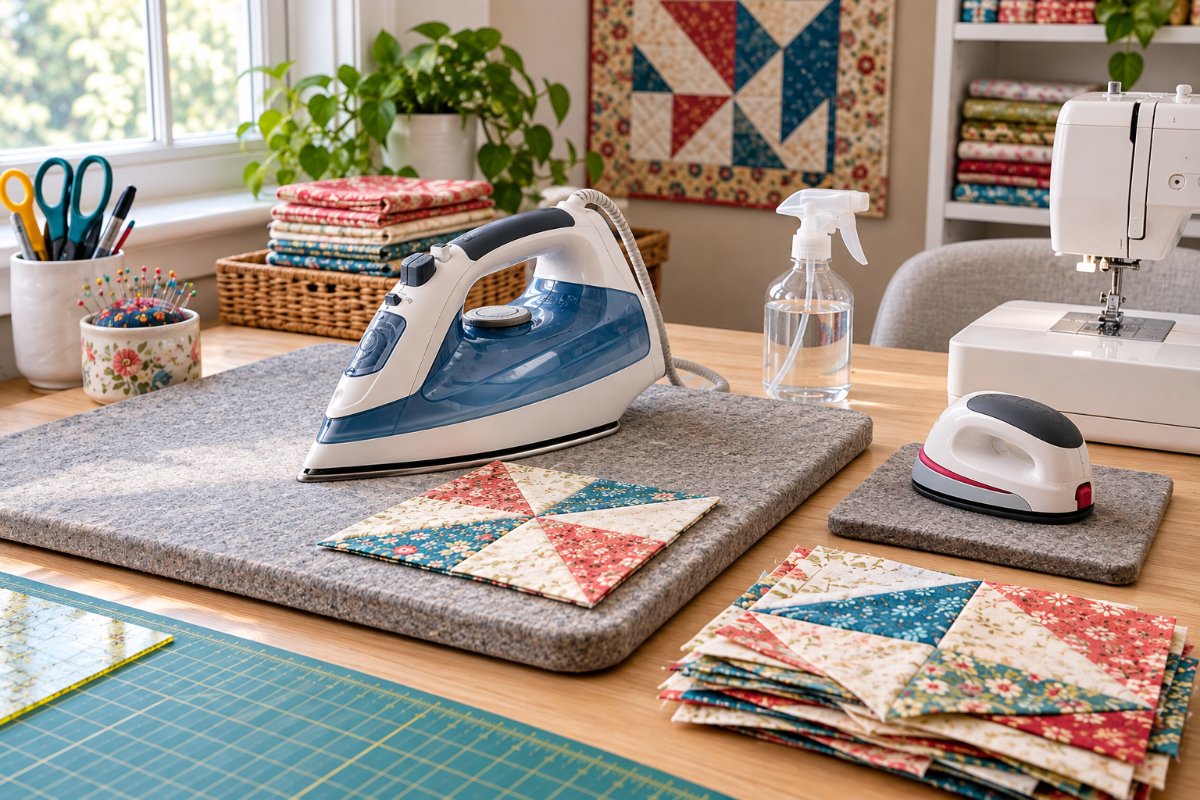
Even the best iron for quilting will not fix rushed pressing. These habits make a bigger difference than any single feature.
- Set the seam first. Press the seam flat as sewn before opening it. This melts the thread into the fabric and gives a crisper result.
- Press, lift, move. Do not slide the iron across pieced blocks, especially near bias edges.
- Use a spray bottle when you need moisture. Many quilters keep the tank empty or low and mist fabric instead. It gives more control and cuts down on leaks.
- Check the manual before using tap water. Some irons are built for tap water, while others prefer distilled water or a mix. Following the maker's advice helps prevent spitting and buildup.
- Give the iron a firm surface. A wool pressing mat or a wide quilting board gives better results than a thin, padded ironing board cover.
- Clean the soleplate. Fusible and starch residue cause drag and brown marks. Clean it the way the maker recommends.
Pressing is part of accurate cutting and piecing too. If your blocks keep coming out a little off, check your quilting rulers, your rotary cutter, and your cutting mat as well. For more tools, see our quilting notions and tools hub.
You can read the full maker specs on the Oliso TG1600 Pro Plus product page.
Frequently asked questions
What is the best iron for quilting?
For most quilters, the best iron for quilting is a full-size steam iron between about 3.5 and 4 pounds, with a smooth soleplate, a pointed tip, and steam you can turn off. The Oliso TG1600 Pro Plus is a popular overall pick because its auto lift keeps it hot and safe on the board between seams.
Should I use steam when pressing quilt blocks?
It depends on the step. Steam helps set seams and flatten stubborn cotton, but it can stretch small or bias-cut pieces. Many quilters press blocks dry and use steam or a light mist only when a seam will not lie flat.
Is a cordless iron good for quilting?
Yes, for short pressing jobs next to the machine. A cordless iron like the Panasonic NI-WL600 cannot drag fabric with a cord, but it cools as you use it, so it is slower on large pieces like quilt backs.
Why does my iron leak water on my quilt?
Most leaks happen when the iron isn't fully heated, the steam is set too high for the temperature, or minerals have built up. Let the iron heat fully, lower the steam, and follow the maker's cleaning advice.
Do I need a special iron for quilting?
No. The best iron for quilting does not have to be a special model. Any good steam iron can press quilt blocks. Irons marketed to quilters add things like longer shutoff times, auto lift, and precision tips, which make long pressing sessions easier.
Bottom line
The best iron for quilting matches how you press. If you press constantly between seams, the Oliso TG1600 Pro Plus saves the most hassle. If you want strong steam for heavy seams, the Rowenta Steamforce is hard to beat. If cords drive you crazy, the Panasonic NI-WL600 is the easy pick, and the CHI 13102 is a dependable everyday iron with a tidy retractable cord. Whichever you choose, pressing instead of ironing will do more for your quilts than any single feature.
1 thought on “Best Iron for Quilting: 4 Picks That Press Seams Flat (2026)”