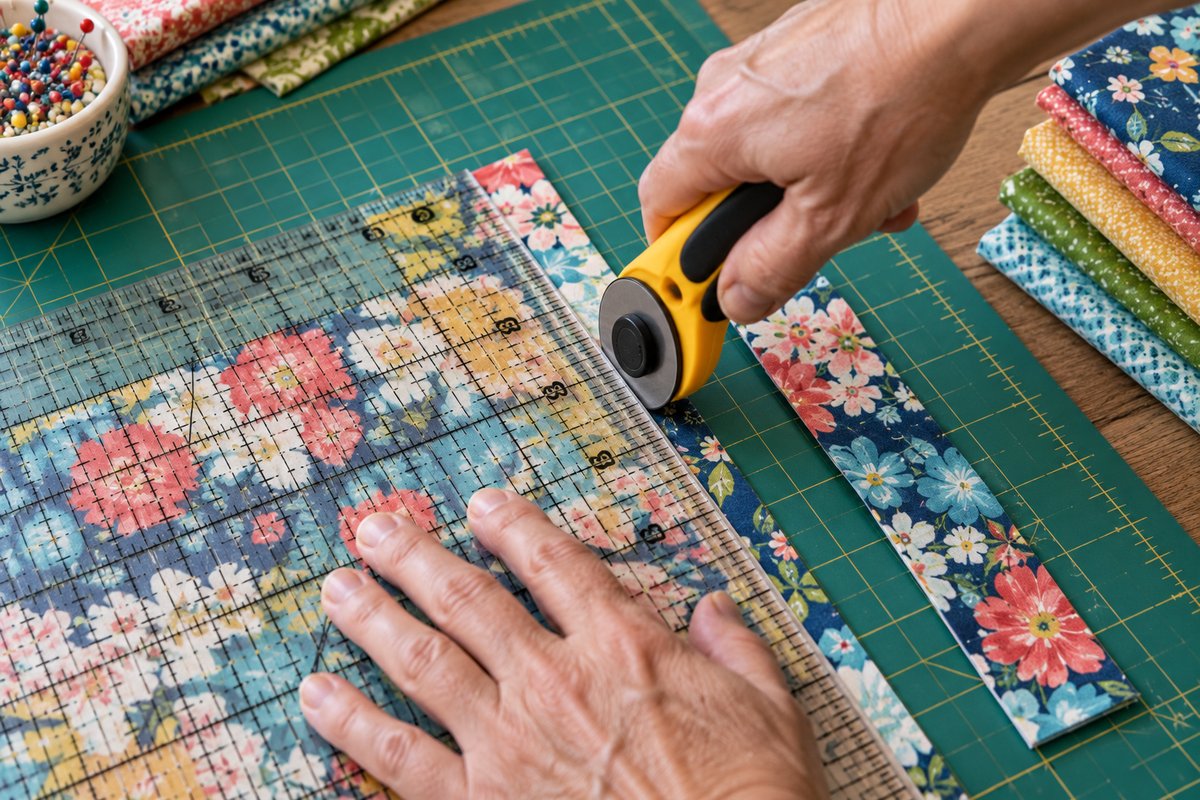
Finding the best rotary cutter for quilting starts with avoiding a dull or wobbly blade, since that turns every cutting session into a fight with the fabric, so it's worth getting right before you buy a full ruler set or cutting mat to go with it. It's just as important as picking the right sewing machine for quilting in the first place. This guide covers what makes a rotary cutter good for quilting, the blade sizes worth knowing, and a handful of widely sold cutters to consider depending on how you cut.
Table of Contents
What matters when choosing the best rotary cutter for quilting
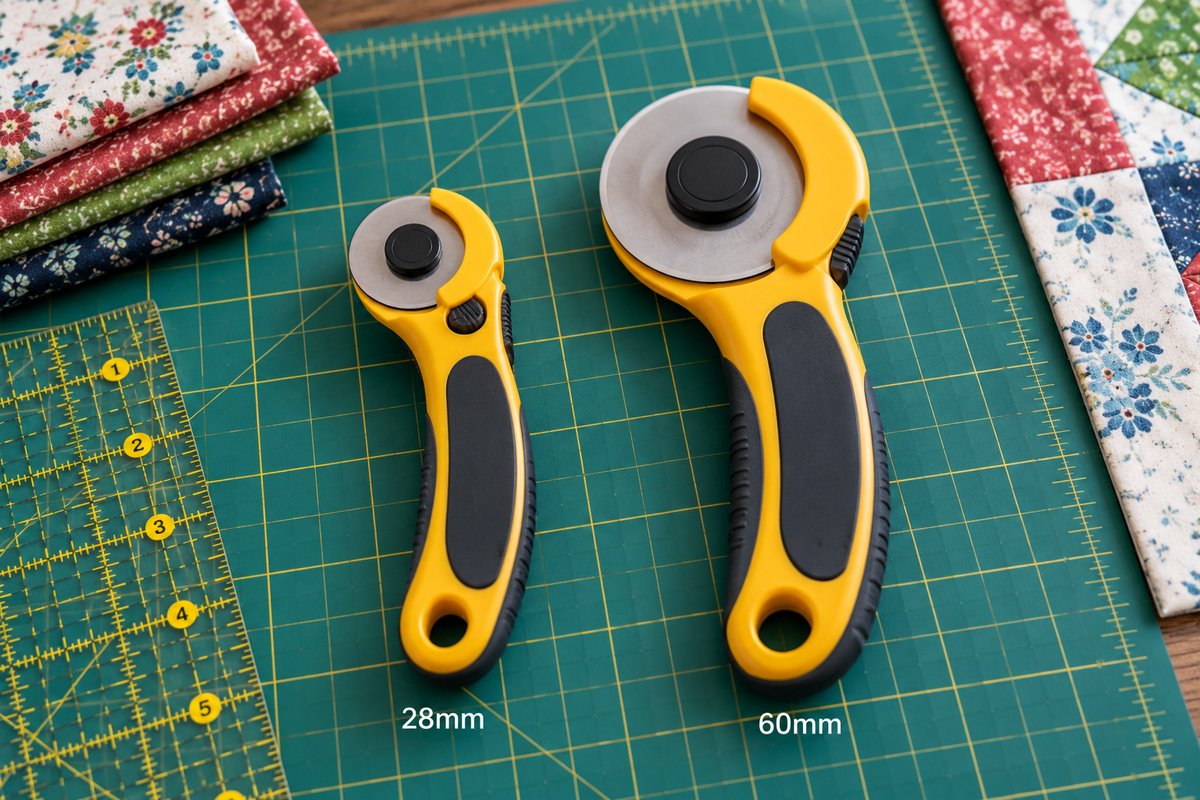
- Blade size. 45mm is the standard all-purpose size for most piecing and cutting. 28mm is easier to control on curves and small pieces but struggles through more than a layer or two. 60mm cuts through more fabric layers at once and is the better choice for cutting multiple layers of batting or thick stacks, but it's harder to control precisely on tight curves.
- Blade guard and safety mechanism. A cutter that doesn't retract automatically when you let go of the handle is a real safety risk, especially with kids or pets around. Auto-retracting blade guards cost a little more but are worth it.
- Handle shape and grip. Pistol-grip handles put less strain on your wrist during long cutting sessions than straight-stick handles, but some quilters prefer the control a stick handle gives on straight, repeated cuts. Try both if you can before assuming one is "better."
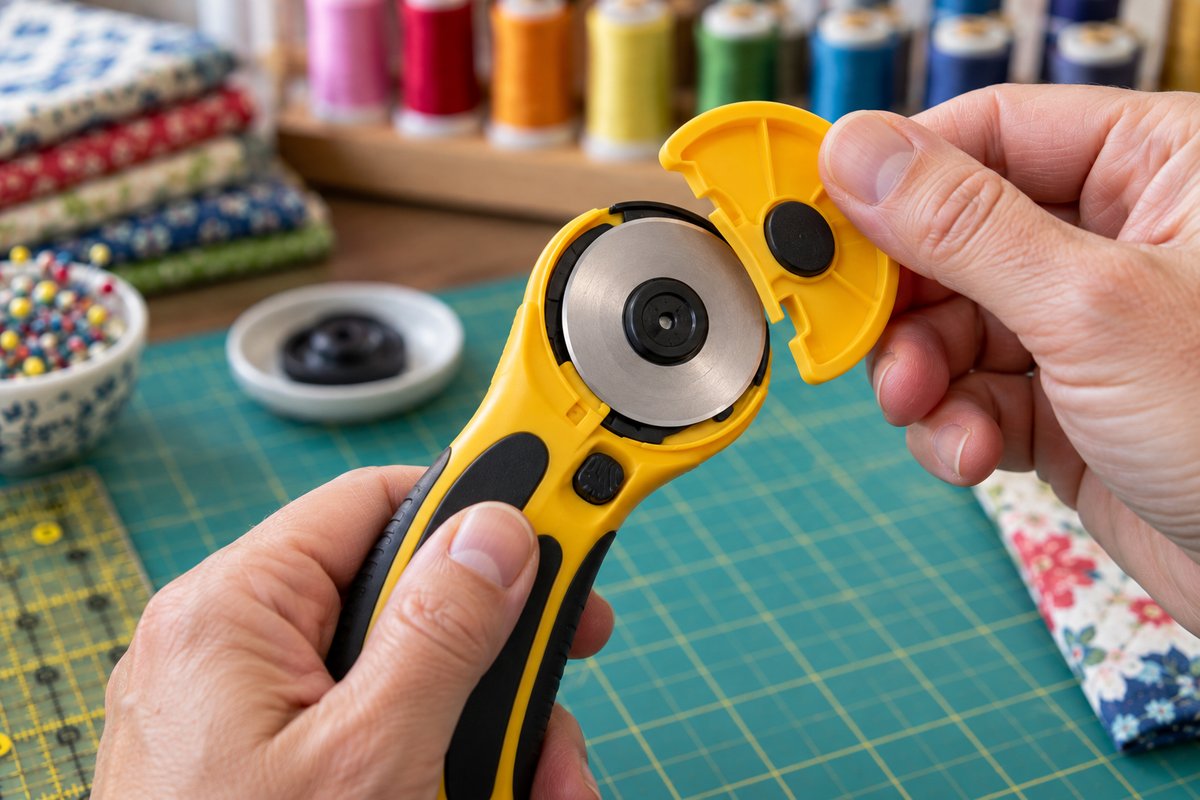
- Blade change mechanism. Blades dull faster than most quilters expect, especially when cutting through pieced seams. A cutter with a quick, tool-free blade change gets you back to cutting faster than one that needs a screwdriver.
- Weight and balance. A cutter that's too light can skip or wander on thicker fabric. One that's too heavy tires your hand faster. This is genuinely a "hold it before you buy if you can" decision.
Real rotary cutters worth knowing about
These are grouped by how they're used, not ranked, since the best rotary cutter for quilting depends more on hand size and cutting habits than any single "best" spec.
All-purpose 45mm: OLFA and Fiskars
Both brands make 45mm cutters that show up constantly in quilters' bags, and for good reason: they're widely available, replacement blades are easy to find at any craft store, and both offer ergonomic and straight-handle versions. OLFA's tungsten-steel blades tend to hold an edge a little longer. Fiskars leans into softer, cushioned grips that some quilters find easier on the hand during long cutting sessions.
Precision and small pieces: 28mm cutters
A smaller-diameter blade turns more easily, which matters if you piece a lot of curved patterns or small units like half-square triangles. The tradeoff is layer capacity: a 28mm blade struggles past two or three layers of quilting cotton, so it works best as a second cutter alongside a 45mm, not a replacement.
Heavy-duty cutting: 60mm cutters
When you're cutting through several layers at once, batting included, a 60mm blade earns its size. Fiskars' titanium-coated 60mm cutters and similar heavy-duty models from other brands are built for exactly this: fabric bolts folded several times, layered batting, or anything where a smaller blade would stall halfway through the cut.
Ergonomic and specialty grips: Martelli and Quilters Select
Martelli's ergonomic cutters use a rolling grip designed to reduce wrist strain, which matters if you cut for long stretches or deal with hand fatigue or arthritis. Quilters Select's cutters focus on blade longevity and a locking safety mechanism that some quilters find more reliable than a simple slide guard. Both cost more than an entry-level OLFA or Fiskars, and the extra spend is really about comfort over many hours of use rather than cutting performance on any single pass.
A note on where to buy: this guide is intentionally written without shopping links right now. Rotary cutter blades are sharp and inexpensive enough that trying a couple of brands before settling on one is a reasonable way to figure out what fits your hand.
Do you need more than one rotary cutter?
Most quilters end up with at least two: a 45mm for everyday piecing and cutting, and either a 28mm for detail work or a 60mm for heavy cutting, depending on what they make most. If you only ever buy one, a 45mm ergonomic-handle cutter from a mainstream brand is the best rotary cutter for quilting for most people, covering the widest range of projects without forcing a compromise in either direction.
A rotary cutter works best with the right partners. See our guides to the best quilting rulers for beginners and the best self-healing cutting mat for quilting. Once your pieces are cut and sewn, our guides to the best fabric marking pen for quilting and the best basting spray for quilting cover the next steps.
Common questions
What size rotary cutter should I use for quilting?
45mm is the standard size for most quilting and piecing work. Step down to 28mm for detail cutting on curves and small pieces, or up to 60mm when you're regularly cutting through multiple layers or thick fabric stacks.
Which is the best rotary cutter for quilting fabric?
There isn't one universal best rotary cutter for quilting, since hand size and grip preference matter as much as the blade itself. OLFA and Fiskars 45mm cutters are the most common starting point because they're affordable, widely available, and have easy-to-find replacement blades.
What is the best fabric cutting machine for quilting?
For hand-guided cutting, a quality 45mm rotary cutter paired with a good ruler and self-healing mat covers most quilters' needs. Electric fabric cutting machines exist for high-volume cutting, but they're a separate, much bigger purchase most home quilters don't need.
Which rotary cutter is better, Fiskars or Olfa?
Both are reliable, well-established brands, and the difference comes down to preference rather than one being objectively better. OLFA's blades tend to hold an edge slightly longer. Fiskars' ergonomic grips tend to feel more cushioned. If you can, trying both is the most reliable way to decide.
The bottom line
The best rotary cutter for quilting is the one that matches your hand, your grip habits, and the kind of cutting you do most, not necessarily the priciest or most feature-loaded option. Start with a 45mm from a mainstream brand, add a second size once you know where your everyday cutting falls short, and replace blades before they get dull enough to drag instead of slice.
4 thoughts on “Best Rotary Cutter for Quilting in 2026”