
Here is how to thread a bobbin. First, wind it: run the thread from the spool through the bobbin winder guide and around the small tension disc, wrap a few turns around an empty bobbin, put it on the winder spindle, push the spindle to the right, and run the machine at medium speed until the bobbin is full. Then put it in the machine: drop it in or load it into its case so the thread unwinds the way your manual shows, pull the thread through the slot and under the tension spring, and close the cover.
QuiltGearHQ is a participant in the Amazon Services LLC Associates Program, an affiliate advertising program designed to provide a means for sites to earn advertising fees by advertising and linking to Amazon.com.
Learning how to thread a bobbin means learning both halves of the job: winding and inserting. This guide covers both, for drop-in and front-loading machines. It also explains the common bobbin types, so you buy the right ones, and lists the bobbin mistakes that cause most tension trouble. The steps come from the Brother, Singer, and Janome manuals and support pages. Your own manual is the final word for your model.
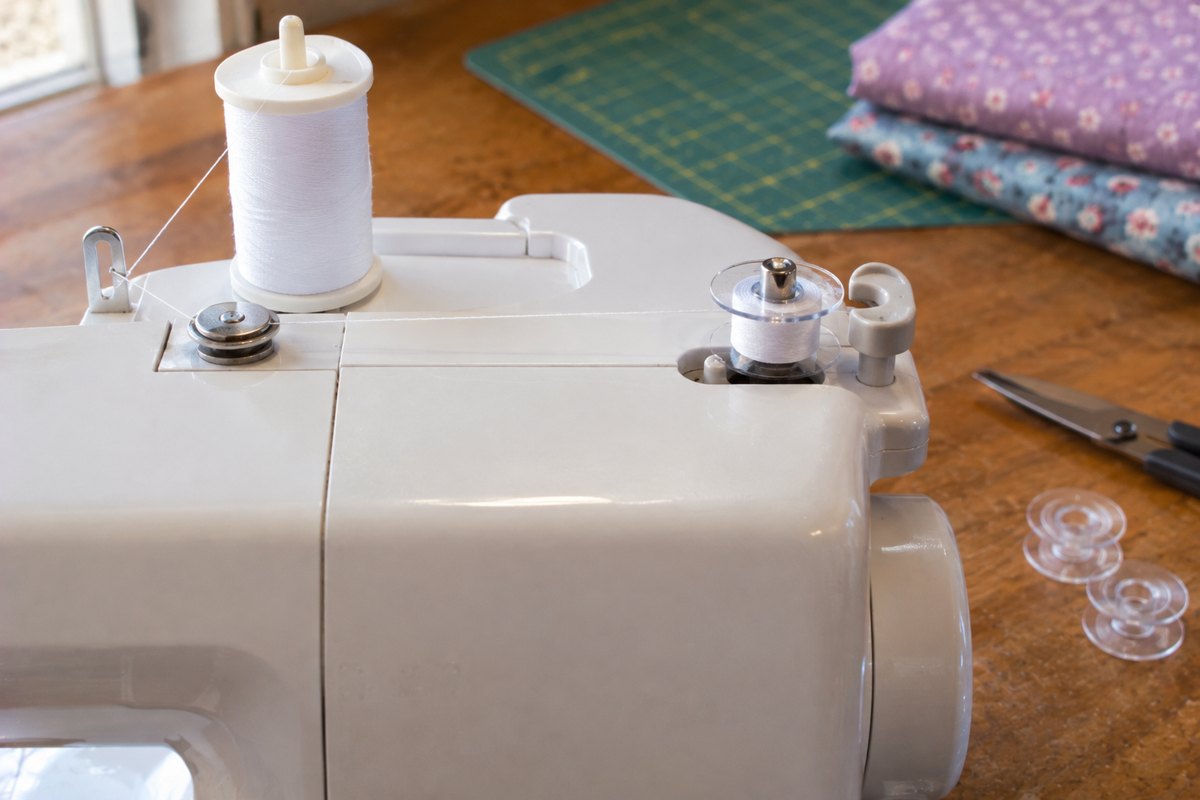
Table of Contents
What Is a Bobbin?
A bobbin is the small spool that holds the bottom thread. It sits under the needle plate, either in a case or in a built-in holder. Each stitch forms when the top thread from the needle loops around the bobbin thread, so the bobbin matters as much as the top thread. If the bobbin is wound unevenly or put in the wrong way, the stitches go wrong even when the top thread is perfect.
When people ask how to thread a bobbin, they usually mean two jobs. You wind thread onto the empty bobbin with the machine's bobbin winder, then you put the full bobbin in the machine and guide its thread into place.
How to Wind a Bobbin
Most modern machines have the bobbin winder on top, to the right. Look for a short metal spindle and a small round tension disc, often marked with a dotted line showing the thread path.
- Put the spool on the spool pin. Use the same thread you plan to sew with, or a bobbin thread your pattern calls for.
- Guide the thread around the bobbin winder tension disc. This small disc keeps the thread snug as it winds. Follow the printed path on your machine. Brother's bobbin winding guide says to pass the thread under the hook of the winding guide, then counterclockwise under the pretension disc. Singer's 4423 manual says to wind the thread clockwise around the bobbin winder tension discs. The direction varies by machine, so follow the path printed on yours.
- Attach the thread to the empty bobbin. Brother says to wind the thread clockwise around the bobbin 5 or 6 times by hand. Janome says to push the thread end through the small hole in the bobbin from the inside out instead. Hold the tail straight up as you start.
- Put the bobbin on the winder spindle and push it to the right. It clicks into place. On many machines, this also stops the needle. Singer's 4423 manual says the machine will not sew while the spindle is in the winding position. Some older models, like the Janome 2206, have you pull the handwheel out instead.
- Run the machine at medium speed. Press the foot pedal or the start button. Janome suggests medium speed so the thread winds evenly, since winding at full speed can stretch the thread. If you are holding a thread tail, stop after a few turns and cut the tail close to the bobbin.
- Stop when the bobbin is full. Many machines stop winding automatically when the bobbin is full. Brother says to stop the machine if winding becomes slow, or the machine may be damaged.
- Cut the thread and push the spindle back to the left. Many Brother machines have a small cutter beside the winder for this. Pushing the spindle back lets the needle move again.
Wind a good bobbin firmly and evenly from top to bottom, with no loose loops. If it feels spongy or the thread is piled on one side, unwind it and start again. The National Sewing Circle notes that uneven winding throws off the stitch tension.
How to Put In a Drop-In (Top-Loading) Bobbin
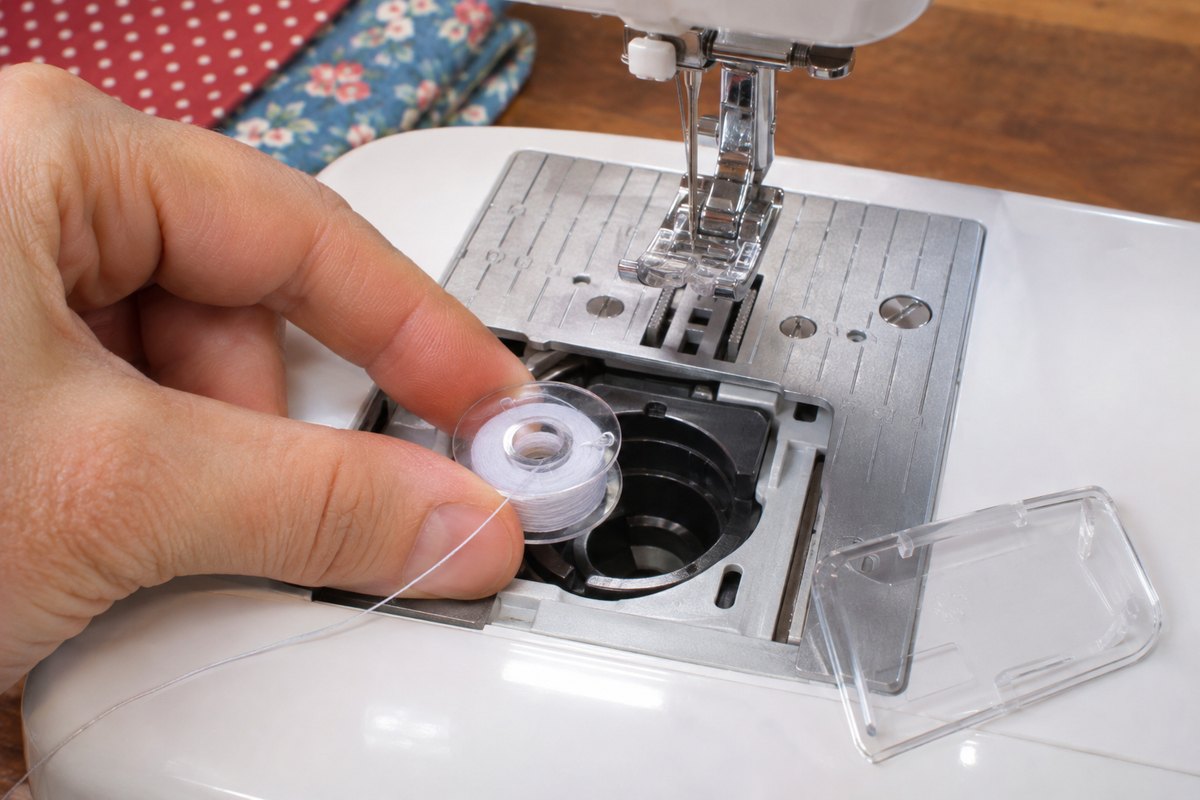
Many newer Brother, Singer, and Janome machines use a drop-in bobbin. You slide off a clear cover on the needle plate and set the bobbin straight into a built-in holder.
- Raise the needle and the presser foot, then turn the power off if your manual suggests it.
- Remove the bobbin cover. On most models, it slides toward you or has a small release button.
- Drop in the bobbin with the thread going the right way. Brother says to set the bobbin so the thread unwinds to the left, and its XS37 manual says the bobbin should turn counterclockwise when you pull the thread. Singer says the same for its top drop-in bobbins: the bobbin should rotate counterclockwise when you pull the thread. A small arrow diagram usually appears next to the holder.
- Guide the thread through the slot. Hold the bobbin down lightly with one finger and pull the thread into the notch and along the groove, following the arrows. This puts it under the tension spring. On Brother machines, finish by pulling the thread toward the cutter to trim it.
- Replace the cover. Brother says to insert the tab in the lower left corner of the cover first, then press it down.
Brother says some of its machines can start sewing without pulling up the bobbin thread. Other machines need one more step, covered in the section on bringing up the bobbin thread below.
How to Put In a Front-Loading Bobbin
Front-loading machines hold the bobbin in a small metal case that clicks into place behind a door below the needle. Some machines, including many older and heavy-duty models, work this way.
- Raise the needle to its highest point and open the small door in front of the free arm.
- Put the bobbin in its case so the thread turns clockwise. Singer says to insert the bobbin so the thread runs clockwise. Janome's HD9 manual says the same: make sure the thread winds clockwise on the bobbin.
- Pull the thread through the slit and under the tension spring. The spring is the thin metal finger on the side of the case. Singer calls it the finger. The thread should slide under it and come out the end.
- Hold the case by its latch. Pull the small hinged latch open. This also holds the bobbin in the case.
- Push the case onto the center pin until it locks in place. Janome says to line up the bump on the case with the matching recess in the hook. Release the latch and give the case a light tug to make sure it is locked in.
- Close the door and leave a few inches of thread hanging out.
Drop-in bobbins usually turn counterclockwise, and front-loading bobbins usually turn clockwise. Because the direction changes with the machine, follow the arrows on yours.
How to Bring Up the Bobbin Thread
If your machine does not pull the bobbin thread up for you, bring it up by hand before you sew.
- Hold the top thread lightly with your left hand.
- Turn the handwheel toward you one full turn, so the needle goes down and comes back up.
- Pull the top thread gently. A loop of bobbin thread comes up through the needle plate.
- Pull both threads under the presser foot and toward the back, leaving a few inches of each.
If the top thread is not on yet, our guide on how to thread a sewing machine walks through the upper thread path step by step.
Bobbin Direction Finder
Pick your machine type to see which way the bobbin should turn and which bobbin type to check for. Always follow the diagram on your own machine first.
Bobbin Direction Finder
Pick your machine type. These answers come from the Brother, Singer, and Janome manuals and support pages.
Bobbin finder by QuiltGearHQ. Always check the diagram on your own machine.
Bobbin Types: Class 15, L Style, and More
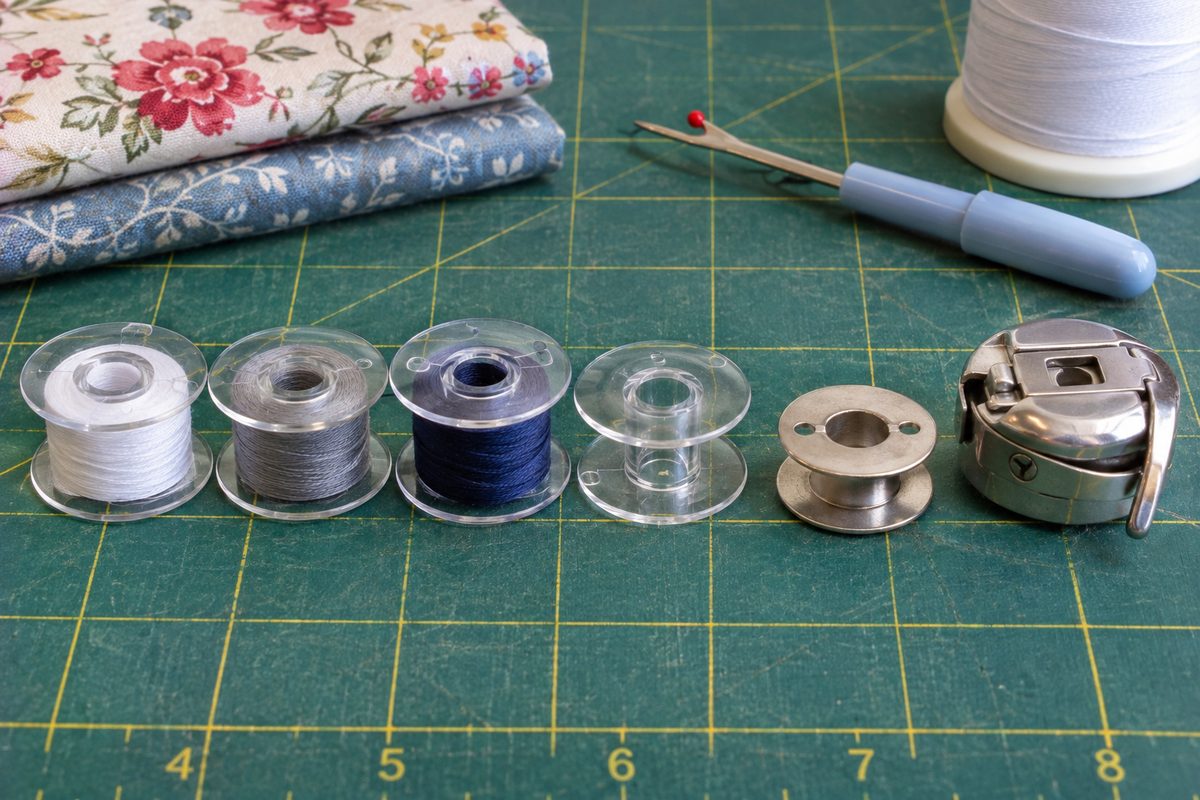
Bobbins look alike, but they are not interchangeable. A Threads Magazine guide to bobbin types notes that the wrong size bobbin can cause jamming, poor stitches, or damage to your machine. Singer says to always use the same bobbin style that came with your machine.
| Bobbin type | Size and shape | Where you see it |
|---|---|---|
| Class 15 (A style, SA156) | 13/16 in across, 7/16 in tall, flat sides | Many Brother home machines use SA156, which is a Class 15 bobbin. Select Singer, Kenmore, and other home machines also take Class 15, per Singer's listing. |
| Class 15J | Same size as Class 15, slightly curved sides | Some Singer machines, including the Futura embroidery series, per Singer's listing. |
| Class 66 | Similar size, slightly curved sides | Some home machines. Check your manual. |
| L style (SA155) | 13/16 in across, 5/16 in tall, thinner than Class 15 | Some home and quilting machines. Check your manual. |
| M style | Larger across than Class 15 and L style | Longarm machines such as A-1, Gammill, and Handi Quilter, per Superior Threads. |
Material matters too. Janome says all of its top-loading machines use the same clear plastic bobbins, and that metal bobbins interfere with the magnetic hook system on those models. Threads Magazine advises using the same material as the machine's original bobbins. Your manual lists the exact type, often with a part number like SA156 for Brother.
Prewound bobbins are another option. They come already full of thread, wound by machine for a smooth, even wind. Thread maker Superior Threads sells them in several styles, including L style and Class 15, and notes that plastic ones can be reused while cardboard ones are thrown away. They can save time on big quilting projects, since you stop less often to wind.
Common Bobbin Problems and Fixes
- Loops or a nest of thread under the fabric. This usually points to the top thread, but check the bobbin too. Make sure it is turning the right way and that the thread is under the tension spring. Brother warns that missing the tension spring in the bobbin case can cause incorrect thread tension.
- Loose or uneven stitches on the back. The bobbin may be wound too loosely or unevenly. Rewind it at medium speed.
- The bobbin thread keeps breaking. Check that you are using the bobbin type your manual lists and that it sits correctly in the holder. Brother warns that if the bobbin thread does not unwind correctly, the thread may break or the tension will be off.
- Bobbin thread will not come up. Make sure the top thread is threaded and hold it as you turn the handwheel. Check that the bobbin is seated correctly in its holder.
- Lint in the bobbin area. Fuzz from cotton batting and fabric builds up fast when quilting. Remove the needle plate and brush out the bobbin area as your manual describes. Our guide to sewing machine oil covers cleaning and oiling.
If the stitches still look wrong after you fix the bobbin, see our guide on how to fix tension on a sewing machine, or read why thread keeps breaking when quilting.
Bobbins Worth Having on Hand
Spare bobbins let you wind a few colors before you start. Buy only the type your manual lists. Each of these is sold by Amazon, the maker's authorized distributor, or a highly rated reseller when neither sells it, checked on 5 Nov 2026.
- SINGER Class 15 Transparent Plastic Bobbins, 50 count. A big pack of clear Class 15 bobbins from Singer. The listing names select Singer, Brother, Kenmore, and other machines, and warns never to add thread to a partly wound bobbin. It is sold by Creative Designs Depot, the store of Singer's North American accessory distributor. Check Price on Amazon
- Brother PWB250 Prewound Bobbins, 10 count. Genuine Brother prewound bobbins with 100 yards of white 60 weight thread on each clear plastic bobbin, size 11.5. Brother makes them for machine embroidery and notes that not all machines take this bobbin size and thread weight. Sold by Amazon. Check Price on Amazon
- Janome Plastic Bobbins, 10 pack. Janome's own clear plastic bobbins. Janome says all its top-loading machines use the same clear plastic bobbins, and that metal bobbins interfere with the magnetic hook on those models. Neither Janome nor Amazon sells them on Amazon, so this link goes to Osewpersonal, a highly rated reseller. Check Price on Amazon
- Brother SA155 Top Load Bobbins, 10 count. Genuine Brother bobbins, 3/8 inch deep, for Brother machines whose manual lists SA155. They are thinner than the SA156 bobbins most Brother home machines use, so check your manual first. Sold by Amazon. Check Price on Amazon
Frequently Asked Questions
How do you thread a bobbin?
Wind the bobbin first: guide the thread from the spool around the bobbin winder tension disc, attach it to an empty bobbin, put the bobbin on the winder spindle, push it right, and run the machine at medium speed until full. Then insert the bobbin so the thread turns the way your machine shows, and pull the thread under the tension spring.
Which way does the bobbin go in?
It depends on the machine. Brother and Singer drop-in bobbins should turn counterclockwise when you pull the thread. Bobbins in a front-loading case should turn clockwise, according to Singer and Janome. Always follow the arrows on your machine.
Can I use any bobbin in my sewing machine?
No. Class 15, Class 15J, Class 66, L-style, and M-style bobbins look alike but aren't interchangeable. The wrong one can jam or damage the machine. Use the type and material your manual lists.
Why is my bobbin thread bunching under the fabric?
A nest under the fabric is often a top thread problem, but check the bobbin too. Make sure it turns the right way, that the thread is under the tension spring, and that the bobbin was wound evenly.
Do I need to pull up the bobbin thread?
On many machines, yes. Hold the top thread, turn the handwheel toward you one full turn, and pull up the loop. Brother says some of its machines can start sewing without this step.
Bottom Line: How to Thread a Bobbin
To thread a bobbin, wind it evenly at medium speed through the bobbin winder tension disc, then put it in so the thread turns the way your machine's arrows show. That is usually counterclockwise for drop-in bobbins and clockwise for front-loading cases. Pull the thread under the tension spring, use only the bobbin type your manual lists, and keep the bobbin area free of lint. Most bobbin trouble comes from one of those steps.
Ready to choose thread for your bobbin? See our guide to the best thread for machine quilting.