
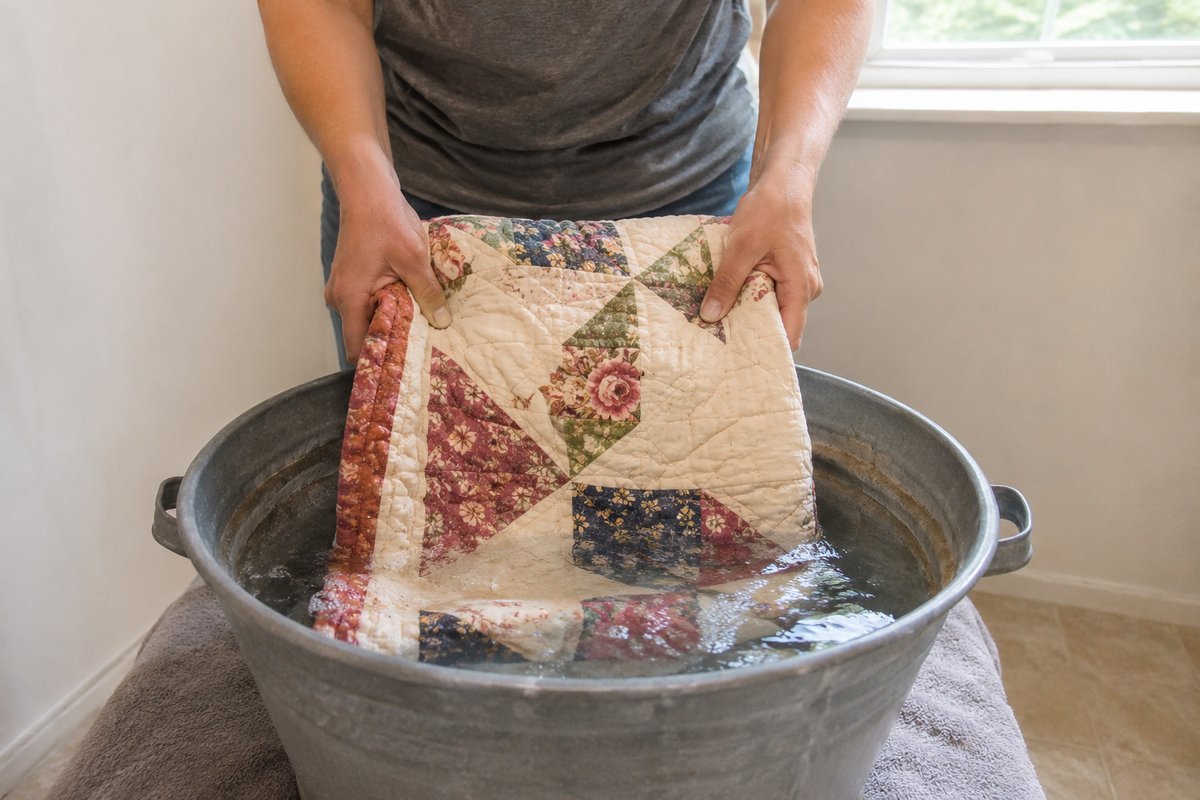
Knowing how to wash a quilt the right way protects stitches that took hours to sew, since a quilt earns its wear slowly over years on a bed or folded across the back of a couch. Before a handmade quilt goes anywhere near a washer or a tub, a few checks protect the stitching, the batting, and the colors.
This guide covers how to tell whether a quilt is ready for the wash, the steps for both machine washing and hand washing, how to dry a quilt without damaging it, and how the batting inside, the insulating layer between the quilt top and the backing, changes the approach. It also covers how often a quilt needs washing, since washing a quilt too often wears it out faster than washing it too rarely.
Table of Contents
Should You Wash This Quilt?
Before anything touches water, look the quilt over. Check whether the colors are colorfast, whether every seam and the binding are still holding tight, and whether you know the fiber content at all. A quilt that fails any of these checks still might be washable, but it changes how you should do it. These checks matter just as much as knowing how to wash a quilt once you start.
An antique or inherited quilt with an unknown fiber content, fragile fabric, or hand stitching you cannot repair yourself is often safer left to a gentle spot clean or a professional textile cleaner rather than a full wash.
What You Need
Most of what you need to wash a quilt is already in your laundry room.
- A mild, unscented, dye-free liquid detergent, without fabric softener built in
- Color catcher sheets, especially for a quilt with strong or mixed colors
- A front-load washing machine, or a large-capacity top-load machine with no center agitator
- A clean bathtub for hand washing
- A few white cotton cloths, for testing colorfastness and for extra padding when you dry a quilt flat
Test for Colorfastness and Check the Seams
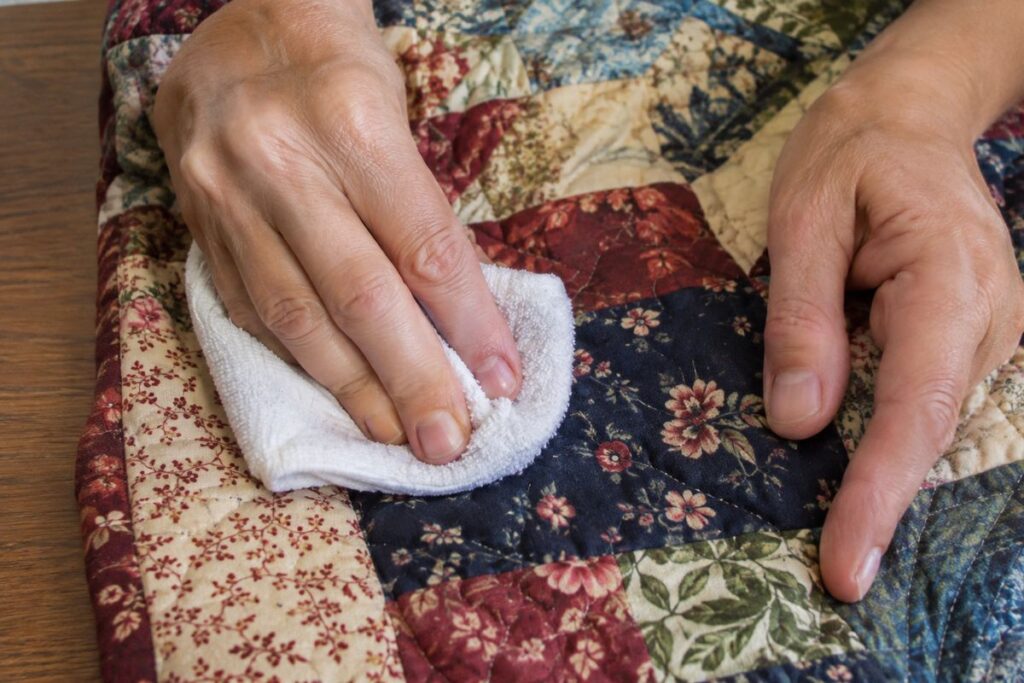
- Dampen a white cotton cloth with cool water.
- Press it firmly against a dark or saturated patch of fabric on the quilt and hold it there for about 10 seconds.
- Check the cloth for any color transfer. If color comes off onto the cloth, the quilt is not fully colorfast. Wash it in cold water only, with a color catcher sheet, or skip the machine and hand wash it alone instead.
- Run a hand over every seam and along the full length of the binding, feeling for loose threads, open seams, or thin spots. Repair anything you find before washing, since the agitation of a machine or the handling of a hand wash puts extra stress on a seam that is already weak.
How to Wash a Quilt in a Machine
A sturdy, colorfast quilt made from all cotton or a cotton blend usually tolerates a gentle machine wash. A quilt that is hand pieced, hand quilted, or built on wool batting is generally safer hand washed instead, covered in the next section.
- Check for a fabric care label first. If the quilt has none, which is common on a handmade or vintage quilt, treat it as hand wash only unless you already know the fiber content and construction are sturdy.
- Use a front-load machine, or a large-capacity top-load machine with no center agitator. An agitator twists and pulls fabric, which can break stitches in a pieced or quilted top.
- Wash the quilt by itself, not mixed in with other laundry, so stitching has nothing to snag on.
- Add a mild, dye-free detergent and a color catcher sheet or two if the quilt has strong or mixed colors.
- Select a cold water wash on the gentle or delicate cycle, with a slow spin speed.
- If the first rinse leaves suds in the water, run a second rinse with no detergent added. Leftover detergent stiffens fabric over time.
How to Wash a Quilt by Hand
Hand washing is the gentler choice for a hand-pieced or hand-quilted top, a quilt with wool batting, an antique or inherited quilt, or any quilt too large to move freely inside your washing machine.
- Fill a clean bathtub with cool or lukewarm water.
- Add a small amount of mild detergent and mix it into the water before you add the quilt. Undiluted detergent sitting directly on fabric can leave spots.
- Submerge the quilt and gently press water through it with open hands. Do not rub, scrub, twist, or wring it, all of which stress seams and can felt wool batting.
- Let it soak for about 10 to 15 minutes for a light cleaning, longer if the quilt is more soiled.
- Drain the tub and press, rather than wring, the water out of the quilt. Refill with clean water and press the quilt through it to rinse. Repeat until the rinse water runs clear.
- Support the quilt with both arms when you lift it out of the tub. A wet quilt is heavy, and lifting it by one corner can tear the fabric under its own weight.
How to Dry a Quilt
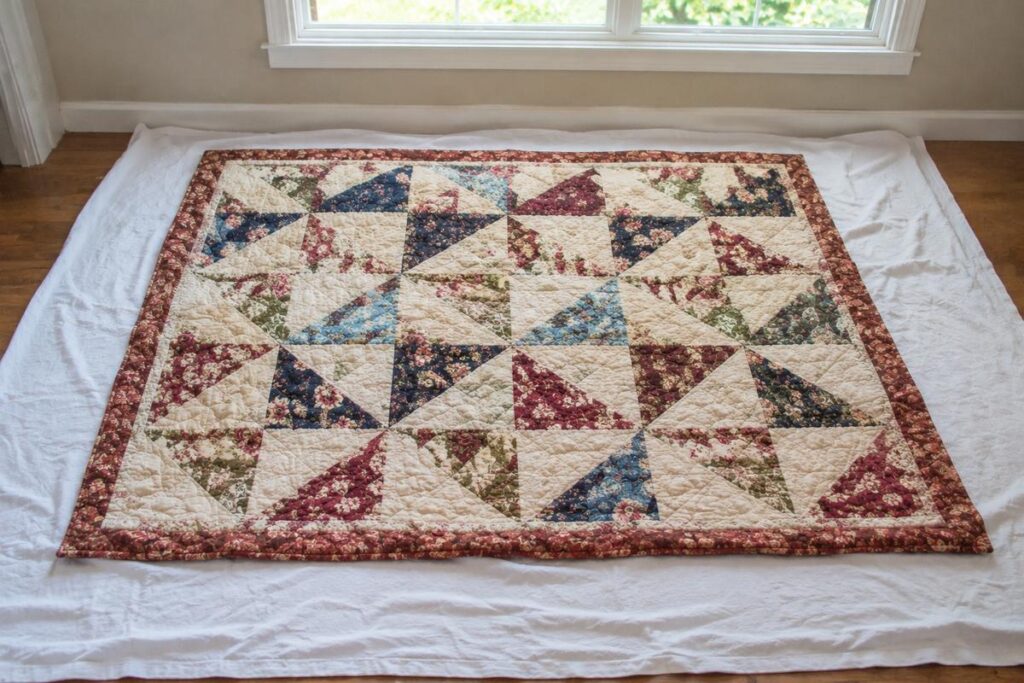
- Air drying flat is the safest choice for any quilt. Lay it on a large clean sheet or several towels, outdoors in the shade or indoors on a clean floor, and reshape it gently while it is still damp.
- Line drying works for a sturdy cotton quilt. Use several clothespins spaced along the top edge, or drape it over two parallel lines to spread the weight, and avoid long stretches of direct sun, which fades color.
- Machine drying suits a sturdy, colorfast, all-cotton quilt with no delicate hand stitching. Use a low heat or air-fluff setting, add a couple of clean towels to help the quilt tumble instead of balling up, and check it every 15 to 20 minutes.
- Never use high heat. It can melt polyester batting or scorch fabric.
Washing by Batting Type
How you wash a quilt should change based on the fiber inside it. Our cotton vs. wool vs. bamboo batting guide covers how each fiber behaves, and the short version for washing is below.
- Cotton batting shrinks and crinkles slightly the first time it is washed. Many quilters like the soft, puckered look this gives an all-cotton quilt, so a small amount of shrinkage is normal rather than a sign of damage.
- Wool batting should be hand washed only, in cool water, never hot or warm. Heat and agitation felt and mat wool fibers, and the damage cannot be undone. Dry wool-batting quilts flat.
- Polyester and poly-blend batting holds its shape and shrinks very little, and it tolerates machine washing and low-heat tumble drying better than natural fibers do.
How Often to Wash a Quilt
How often you wash a quilt depends on how it is used. A quilt used as the top layer of a made bed can be washed every one to three months, similar to a bedspread. A quilt used mainly as a decorative throw or a wall hanging needs washing far less, sometimes only once a year or whenever it is visibly soiled, since washing itself is what wears a quilt out over time. Knowing how to wash a quilt the right way for its intended use helps it last for years.
Common Quilt-Washing Mistakes
A few habits cause most of the damage people run into when they learn how to wash a quilt. Here is what typically goes wrong, and how to fix it.
| Problem | Why It Happens | Fix |
|---|---|---|
| Colors bleed into the background fabric | Dye was not fully set, or no color catcher was used | Test for colorfastness first, wash with a color catcher sheet, and use cold water only |
| Seams pull open during washing | A machine agitator twisted the quilt, or it was wrung out by hand | Use a machine with no center agitator, or hand wash, and press water out instead of wringing |
| Batting bunches or shifts | The quilt was dried on high heat or over-agitated in the wash | Dry on low heat or air dry flat, and wash on a gentle cycle |
| Quilt smells musty after storage | It was stored before it was fully dry, or sealed in plastic | Make sure the quilt is completely dry before storing it, and use a breathable cotton bag or pillowcase |
| Wool batting feels stiff or matted | It was washed in hot water or handled too roughly | Hand wash wool-batting quilts in cool water only, and press the water out gently |
Frequently Asked Questions
These are the questions quilters ask most often about how to wash a quilt.
Can I put a quilt in the dryer?
Yes, if the quilt is sturdy, colorfast, and made from all cotton or a cotton blend with no delicate hand stitching. Use a low heat or air-fluff setting and check it every 15 to 20 minutes. Wool batting and hand-stitched antique quilts should air dry instead.
What detergent should I use for a quilt?
A mild, unscented, dye-free liquid detergent works best. Skip fabric softener and bleach, since both can weaken fibers and strip color over time.
How do I get a stain out of a quilt before washing?
Treat the stain first with a gentle stain remover made for delicate fabrics, testing it on a hidden corner first. Washing over an untreated stain can set it permanently.
Can I wash an antique or inherited quilt?
Before you wash a quilt like this, test the colorfastness and check every seam first. If the fabric feels fragile or you do not know the fiber content, a gentle hand wash or a professional textile cleaner is safer than a washing machine.
Do I need to prewash fabric before I piece a quilt?
Many quilters prewash fabric to remove sizing and let any extra dye rinse out before cutting, which lowers the chance of bleeding or shrinking later. It is a personal choice. If you skip it, wash the finished quilt extra carefully the first time, since that first wash is when loose dye is most likely to run.
Where to Go Next
Now that you know how to wash a quilt safely, if the quilt is not finished yet, our guides to binding a quilt and squaring up a quilt cover the steps that come before its first wash. If you are starting from scratch, our how to make a quilt guide walks through the whole process, and our batting guide explains how fiber content shapes the way your finished quilt should be cared for.