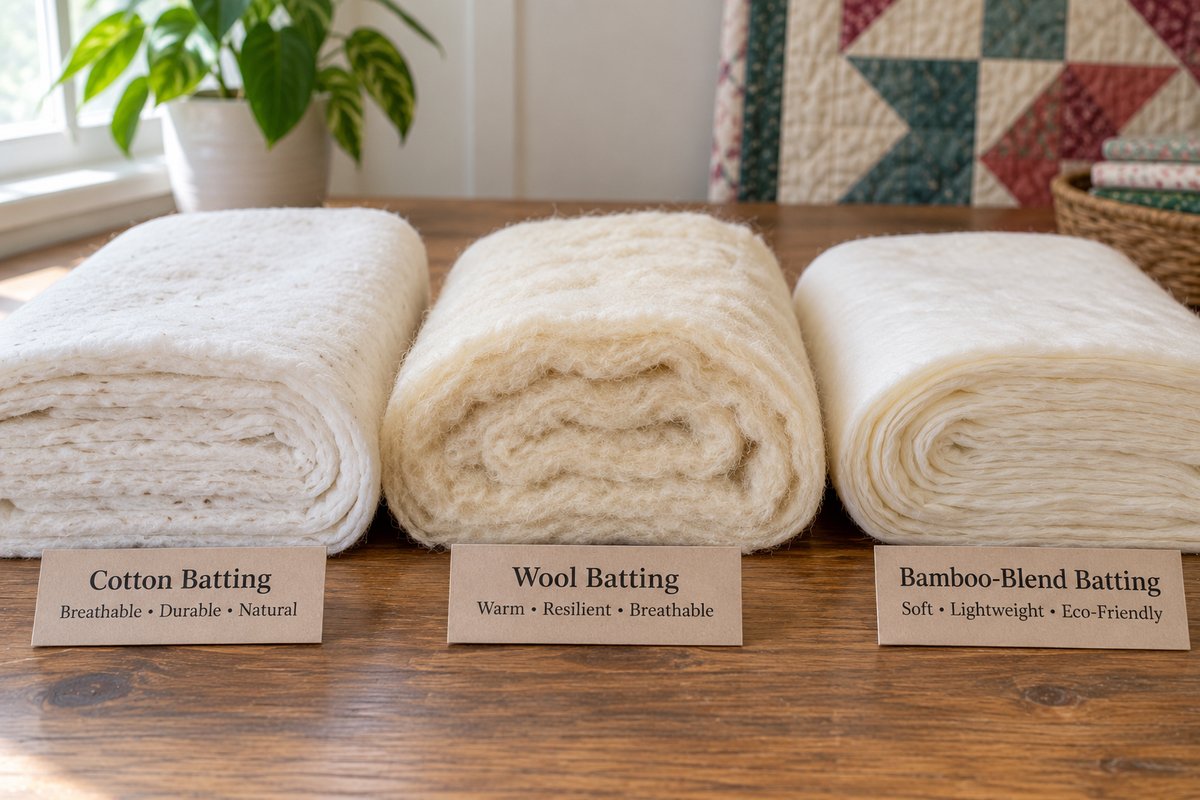
Ask five quilters which types of quilt batting they use and you will get six opinions, one of them delivered with real heat. Part of the disagreement is taste. Part of it is that cotton, wool, bamboo, and polyester batting genuinely behave differently under a needle, in a dryer, and on a bed fifteen years from now. This is the comparison of batting types that gets skipped in most buying guides, which tend to jump straight to brand picks. Here it is laid out plainly, fiber by fiber, so you can match the batting to the quilt instead of grabbing whatever is closest to the register at the shop.
If you are specifically outfitting a baby quilt, our guide to the best batting for baby quilts covers the safety and softness picks for that project in more detail. This article is the broader version: what each fiber does, so you can make that call yourself for any quilt you are planning.
Table of Contents
- What batting does
- The four battings quilters compare
- Loft, side by side
- Care and washing differences
- Which one should you pick
- Frequently asked questions
- Bottom line
What batting does
Batting is the layer sandwiched between your quilt top and backing, and its job is more specific than just filling space. Three things matter: loft, warmth, and drape. Loft is thickness, and across different types of quilt batting, it gives a quilt that puffy, dimensional look where the quilting stitches show. Warmth is a separate variable from loft, which surprises people, since a thick batting is not automatically the warmest one. Warmth comes from how well a fiber traps still air, not from how much material is stuffed between the layers.
Drape is how the finished quilt hangs and folds, and a quilt meant to lie flat on a bed wants different drape than a lap quilt someone will wrap around their shoulders on the couch. Get this tradeoff wrong, and you end up with a wall hanging that sags, a bed quilt that traps heat all summer, or a baby quilt that turns stiff after three washes.
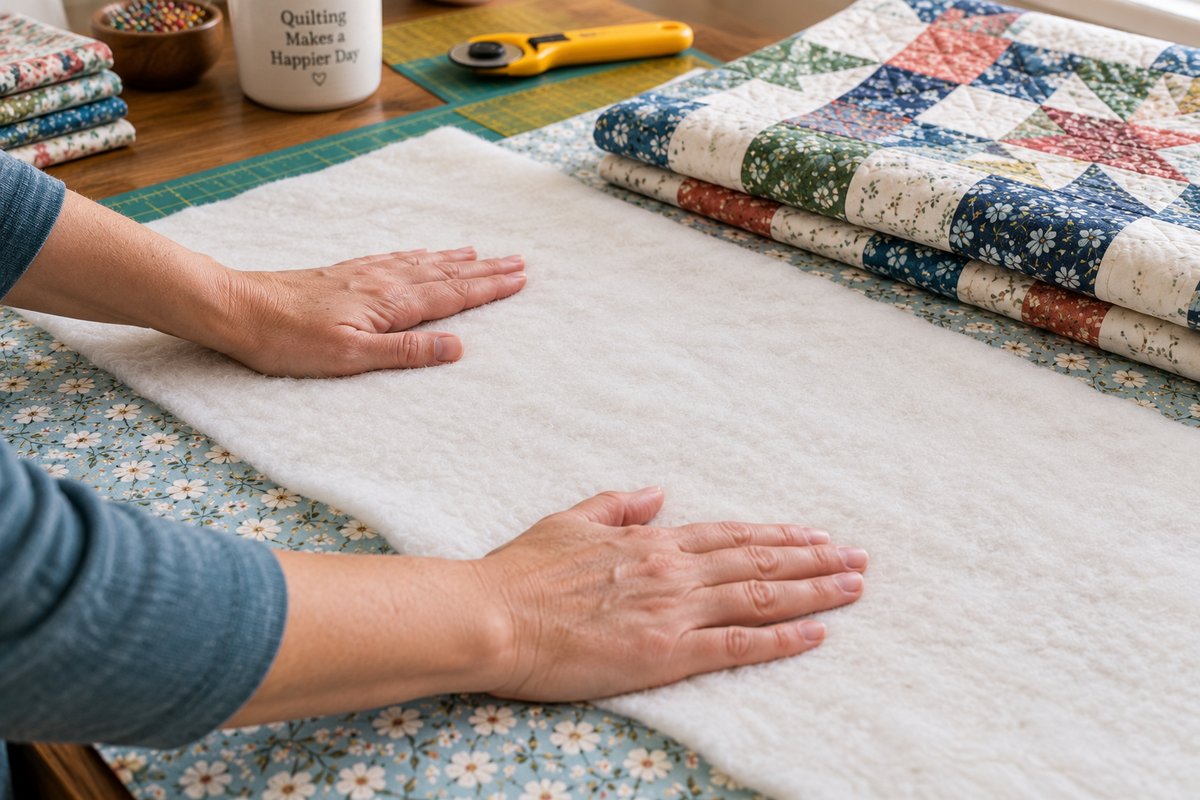
The four types of quilt batting quilters compare
Cotton, wool, and bamboo get the headline treatment among types of quilt batting because they're natural-fiber options, but polyester belongs in this conversation too. It is the fourth option quilters constantly weigh against the other three, even if it doesn't photograph as well on a marketing page.
Cotton batting
Cotton is the default for a reason. It breathes, it is affordable, and it produces that slightly flattened, antique look after the first wash that a lot of quilters specifically want. Warm & Natural, one of the most widely used cotton battings on the market, lists 3 percent shrinkage in a cold wash and up to 5 percent in warm water on its product page, and quilters chasing that puckered, well-loved vintage look wash in warm water on purpose to get it.
The tradeoff is loft. Cotton batting runs low to medium almost across the board, so it will never give you the poofy, high-relief look some modern quilts go for, and it is heavier per square yard than polyester, which matters if you are mailing a finished quilt or hand quilting for hours at a stretch. It needs no prewashing before use, and you can quilt or tie it at distances up to about 10 inches apart, which is generous compared to wool.
Wool batting
Wool is the warmth-to-weight champion of this list, and it is not close. Wool fiber traps air more efficiently than cotton or polyester, so you get real warmth from a batting that stays light in the hand, which is why show quilters reach for it despite the higher price. Hobbs Heirloom wool batting runs about a quarter to three-eighths of an inch of loft with 3 to 5 percent shrinkage, similar to cotton, but the fiber resists creasing in a way cotton does not. A wool quilt hangs and folds without holding a hard crease line, which is why it photographs so well on a quilt show wall.
The caveats are real, though. Wool needs to be quilted closer together, about 4 inches apart per the manufacturer's own spec, tighter than cotton's 10-inch allowance, and high heat felts it, ruining loft permanently, so it is hand wash or gentle cold cycle only, never a hot dryer or an iron on the batting layer. Wool can also darken light or white fabric slightly over time, something Hobbs flags on its own product page, so test it against your actual fabric before committing a full quilt to it.
Bamboo batting
Here is what surprises most people shopping for bamboo batting the first time: the popular bamboo options on the market, including Quilters Dream Bamboo, are not pure bamboo. Quilters Dream's own product page describes it as a blend of bamboo, Tussah silk, Tencel, and cotton, since pure bamboo fiber alone is too short and weak to needle-punch into a stable batting. That blend is what gives bamboo batting its reputation for an exceptionally soft, silky drape, since the silk and Tencel add strength and length bamboo can't provide on its own.
Drape is the whole selling point here. Bamboo blend batting hangs closer to how a quilt made with silk would move, which makes it a strong pick for anything meant to be worn, displayed, or draped over furniture rather than pulled flat on a bed, and it carries genuine eco appeal since bamboo is a fast-renewing crop and Tencel comes from sustainably farmed wood pulp. Quilting distance runs up to about 8 inches apart, shrinkage is minimal with a cool machine wash, and no prewashing is required. The tradeoff is price, since this blend costs noticeably more per yard than plain cotton.
Polyester batting
Polyester does not get the romantic write-up the natural fibers do, but it wins on durability and price. Fairfield's Poly-Fil Low-Loft batting weighs 2 ounces per square yard and can be quilted at 2 to 4 inch intervals, and the manufacturer's own spec notes it retains loft wash after wash without flattening, a real weakness in some cotton battings over years of use. It also dries fast, since synthetic fiber does not hold water the way cotton does, which matters for a quilt that gets washed often, like a kid's everyday quilt.
The downside is breathability. Polyester does not wick moisture or regulate temperature the way a natural fiber does, so a heavier polyester batting can run warm and stuffy rather than cozy, especially in humid climates, and it is more prone to bearding, where synthetic fibers work their way through the surface fabric over time, particularly noticeable on darker fabrics. For a budget-friendly, low-maintenance quilt that will get washed a lot and does not need heirloom longevity, polyester is a perfectly reasonable choice, not a lesser one.
Loft, side by side
Loft numbers vary by brand and blend across these types of quilt batting, but the general order holds across manufacturers. Cotton battings like Warm & Natural sit at the low end, thin enough that they barely show quilting texture from a distance. Wool sits a step up at roughly a quarter to three-eighths of an inch, enough to give visible dimension without becoming heavy. Bamboo blends land in a similar low-to-medium range as cotton, since drape rather than puff is the point. Polyester spans the widest range of any fiber here, from the same low loft as cotton up through high-loft options thick enough for a tied comforter rather than a densely quilted piece.
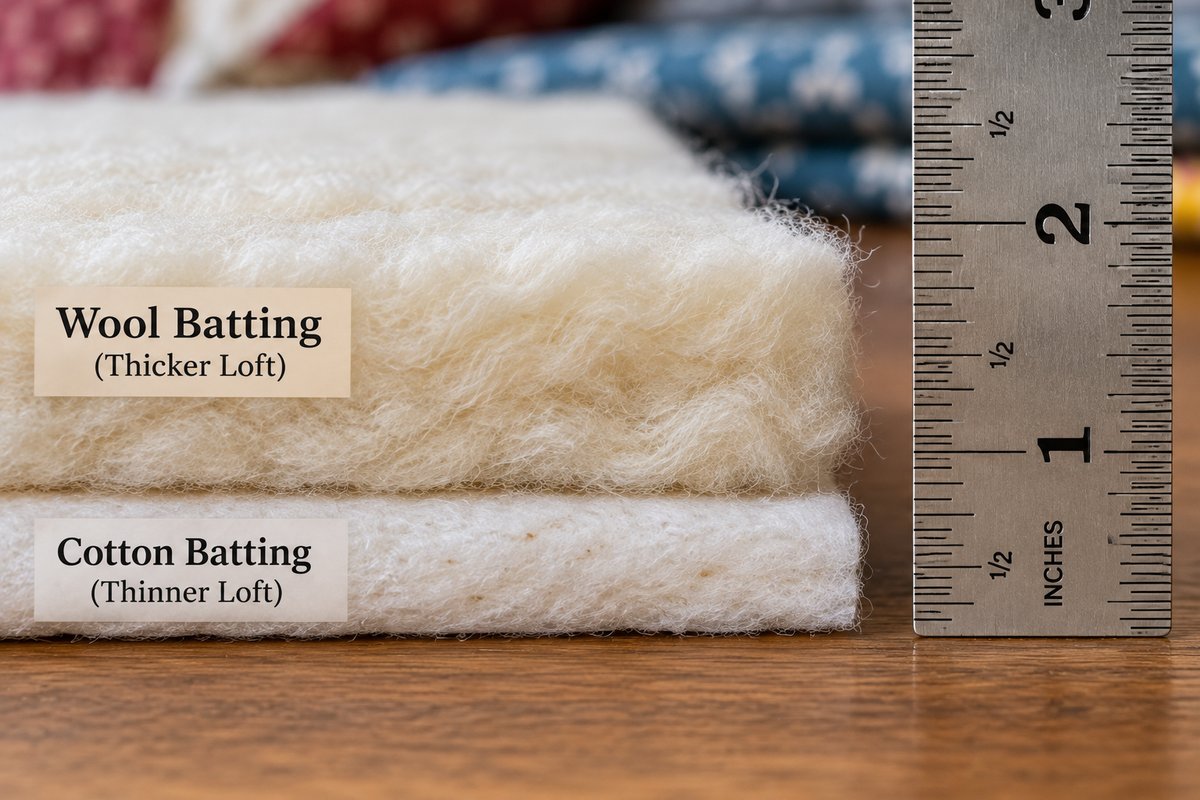
Loft also has a practical downstream effect: thicker batting is harder to maneuver under a machine's throat space during free-motion work, and it changes how a walking foot feeds all three layers evenly. If heavy free-motion quilting is the plan, a lower-loft cotton or bamboo blend will fight you less than puffy, high-loft poly batting. Our guide to free-motion quilting machines gets into throat space and feed considerations in more depth.
Care and washing differences
Washing is where these types of quilt batting diverge the most, and it is worth planning for before you piece a single block. Cotton is the most forgiving, going into the wash straight out of the package with no prewashing needed, and a normal cold or warm cycle is fine depending on whether you want that crinkled antique look. Bamboo blend batting behaves similarly: machine-washable on a cool, gentle cycle, though the higher fiber cost makes a hot dryer a needless risk.
Wool needs the most care of the four. Hand washing in cool water and laying flat to dry is the manufacturer's recommendation, and while a gentle cold machine cycle is allowed, high heat anywhere in the process will felt the fibers and permanently ruin loft. Polyester is the low-maintenance winner. It does not shrink meaningfully, tolerates repeated machine washing without losing loft, and dries quickly, which is why it shows up so often in kids' quilts and anything headed for weekly laundry duty rather than a cedar chest.
Which one should you pick?
If you want a quilt that will get used, washed constantly, and still look right in ten years, cotton is the safe, proven default, and there is no shame in reaching for it every time. If warmth matters most, a quilt for a cold bedroom or a show piece meant to drape without a crease, wool earns its higher price. If drape and a soft hand are the priority, especially for a lap quilt or a wearable project, bamboo blends deliver something cotton and wool cannot match. And for an everyday, hard-use quilt that needs to survive weekly washing without babying, polyester is not a compromise choice. It is the right one.
Among all the types of quilt batting, the choice for a baby quilt specifically comes down to softness against skin and washability, which usually outrank warmth and drape, which is why our best batting for baby quilts guide leans toward specific low-loft cotton and cotton-blend picks rather than wool or a pricier bamboo blend. That article covers the actual product recommendations for that use case in detail.
A few questions come up again and again once quilters start comparing the types of quilt batting side by side, so here are straight answers to the most common ones.
Once you have picked a batting, you need a way to hold the layers together. Our guide to the best basting spray for quilting covers the main options and why you should test a spray on your batting first.
Frequently asked questions
What is the best batting for a beginner quilter?
Cotton batting is the easiest place to start. It needs no prewashing, tolerates a wide range of quilting distances up to about 10 inches apart, and forgives uneven stitching better than low-loft polyester. Warm & Natural is one of the most common beginner picks for exactly this reason.
Is bamboo batting 100 percent bamboo?
Usually not. Most bamboo battings on the market, including Quilters Dream Bamboo, are a blend of bamboo with silk, Tencel, and cotton, since pure bamboo fiber is too short and weak to needle-punch into a stable batting on its own. The blend is what gives it that soft, silky drape.
Which batting is warmest: cotton, wool, or bamboo?
Wool wins on warmth for its weight by a real margin, since wool fiber traps still air more efficiently than cotton, bamboo blends, or polyester. Cotton comes next, with bamboo blends and polyester generally running cooler because they prioritize drape or durability over insulation.
Do I need to prewash batting before making a quilt?
No, and manufacturers of these types of quilt batting, whether cotton, wool, bamboo blend, or polyester, all advise against it. Cotton is designed to shrink slightly in its first wash for that classic puckered look, wool can felt if handled roughly before it is secured inside a quilt, and bamboo and polyester batting simply do not need it.
How far apart can I quilt or tie different battings?
It depends on the fiber, since quilting distance is one of the biggest practical differences between the types of quilt batting on the market, and going too far apart risks the batting shifting or bunching inside the quilt over time. Cotton batting like Warm & Natural allows up to about 10 inches, bamboo blends up to about 8 inches, polyester low-loft batting 2 to 4 inches, and wool needs the tightest spacing at about 4 inches. Always check the product's specs, since this varies by brand.
Bottom line
None of these four types of quilt batting is objectively best, and anyone who tells you otherwise is usually just describing the one quilt they happen to have made most recently. Cotton is the reliable workhorse. Wool is the warmth specialist that asks for gentler handling in return. Bamboo blends trade a higher price for drape and softness that neither cotton nor wool quite reaches.
Polyester trades a little breathability for durability and an easy wash cycle, making it hard to beat for anything that will get used hard. Match the quilt batting to what the quilt needs to do, not whichever bag is on sale that week, and the rest of the project gets easier.
2 thoughts on “Cotton vs. Wool vs. Bamboo Batting: How to Choose”