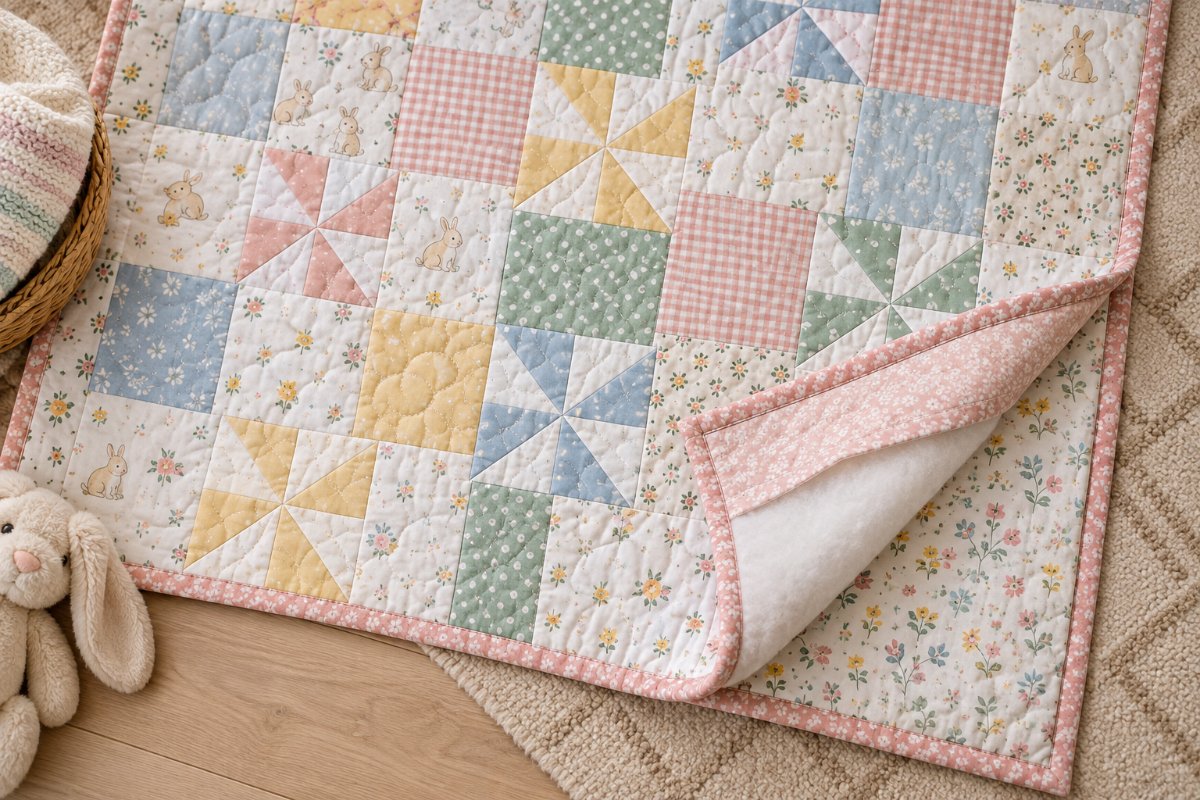
The best batting for baby quilts is not the same as what works for a queen-size bed quilt. A baby quilt only needs to survive spit-up, a few hundred washes, and a lot of dragging around the house. It doesn't need the same heavy batting you would use in a bed quilt meant to hold heat through a Midwestern winter. Pick the wrong batting, and you end up with something stiff, hard to hand-quilt, or too warm to leave safely in a crib. Pick the right one, and you get a quilt that softens with every wash and gets used instead of folded over the back of a chair.
Below is what matters when choosing batting for a baby quilt, six real options worth buying in crib size, and answers to the questions people search most often once they start comparing brands.
Table of Contents
What Makes the Best Batting for Baby Quilts
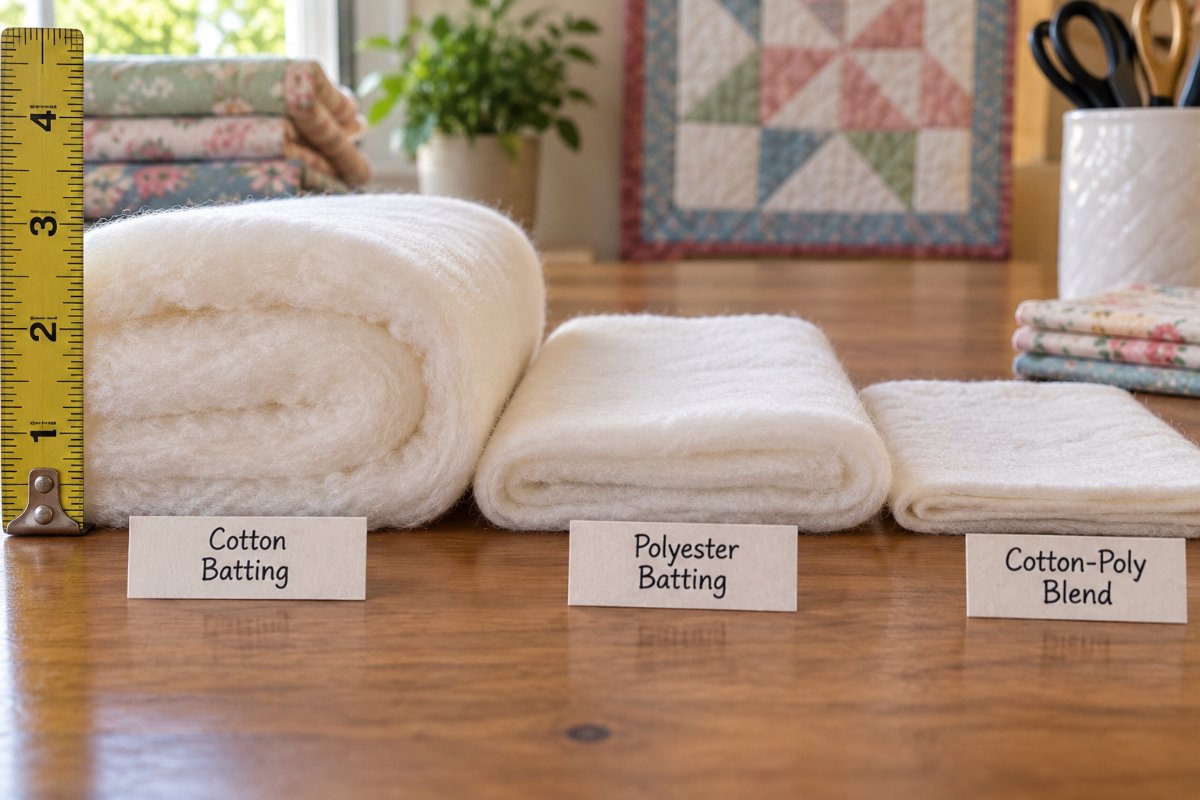
Four things separate a batting that works well in a baby quilt from one that fights you the whole way through.
- Fiber content. 100% cotton battings breathe well and are the safest default for anything going in a crib. Cotton/poly blends (usually labeled 80/20) are lighter, drape softer, and are noticeably easier to hand-quilt or free-motion quilt for beginners, since the needle glides through the poly fiber instead of catching on dense cotton.
- Loft. Baby quilts almost always want low loft, meaning a thin, flat batting rather than a puffy one. A crib quilt is for snuggling under or crawling on, not insulating a bed in winter, so thick batting adds bulk without real benefit.
- Shrinkage and softening. Cotton battings shrink slightly the first time they are washed, which is what gives a quilt that soft, slightly puckered, well-loved look. If you want that vintage texture, wash the finished quilt before gifting it. If you want it flat and crisp, a cotton/poly blend shrinks less.
- Needle-punched versus scrim. A batting with a scrim, a thin stabilizing layer, holds its shape better over time and needs quilting lines spaced farther apart. A needle-punched batting without scrim is softer but needs closer quilting to keep it from shifting or bunching after washing.
Safety-wise, any of the crib-size cotton or cotton-blend battings below are fine for a quilt used the normal way, as a blanket a baby is under while supervised. Loose bedding recommendations from pediatric safety guidelines focus on unsupervised sleep in a crib, not on what batting goes inside a quilt someone makes by hand, so that concern doesn't really apply here.
Best Overall: The Warm Company Warm & Natural Cotton Batting, Crib Size
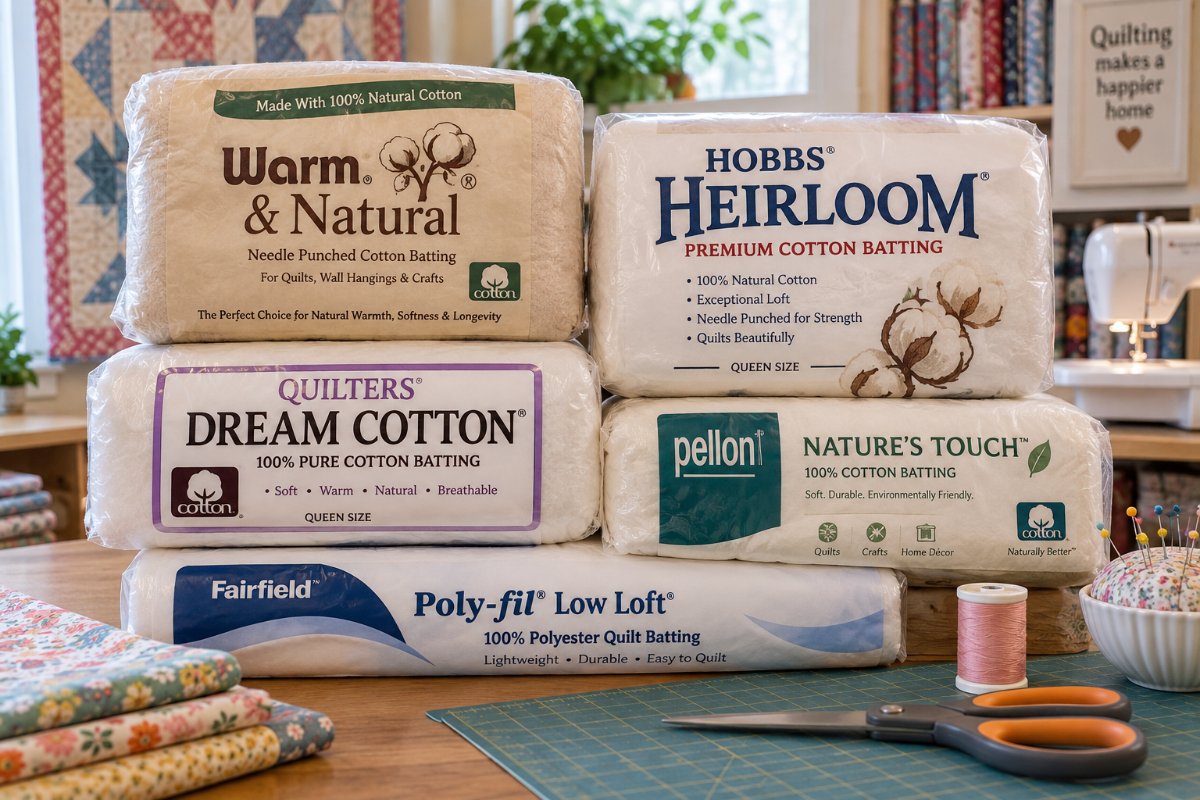
For most people, this is simply the best batting for baby quilts. The Warm Company Warm & Natural Cotton Batting (45in x 60in crib size) is the most-reviewed batting on Amazon by a wide margin, with 4.8 stars across nearly 14,000 ratings, and it is one of the least expensive crib-size battings. It is 100% cotton, needle-punched, low loft, and has been the standard recommendation from quilt shops for decades for good reason. It quilts up flat, shrinks just enough on the first wash to give a quilt that soft crinkled texture, and it is forgiving enough that a beginner is unlikely to have trouble with it.
The downside is that pure cotton batting is denser than a blend, so hand quilting through it takes a bit more effort than a cotton/poly option. For machine quilting, it is not an issue at all.
Best for Hand Quilting or Beginners: Hobbs Heirloom 80/20 Cotton Blend, Crib Size
If you are hand quilting, this is arguably the best batting for baby quilts. Hobbs Heirloom 80/20 Cotton Blend Batting (45 in x 60 in crib size) is marketed specifically for baby quilts, and the 80% cotton/20% polyester blend makes a real difference if you are hand quilting or new to free motion quilting on a machine. The needle moves through it more easily than pure cotton. It is lighter in the hand, and it still has enough cotton content to breathe and drape naturally instead of feeling synthetic. It runs 4.7 stars across 341 ratings.
This is the pick to reach for if the quilt will be tied rather than densely machine quilted, since the blend holds up well with wider spacing between quilting lines.
Best Budget Pick: Quilters Dream Natural Cotton Request Batting, Crib Size
Quilters Dream Natural Cotton Request Batting (46in x 60in crib size) is a lower-loft option in the Quilter's Dream Cotton line, with a 4.7-star rating across 116 reviews. "Request" is Quilter's Dream's thinnest loft level, which suits a baby quilt well since it keeps the finished piece light and flexible rather than puffy. It is a good choice if you already know you like working with Quilter's Dream cotton but don't want to pay for their higher lofts made for bed-size quilts.
Best Low-Loft, Flat Finish: Quilter's Dream Cotton White Select Batting, Crib Size
Quilter's Dream Cotton White Select Batting (46in x 60in crib size) sits one loft level above Request, with 4.8 stars across 119 ratings, and it costs more than the other crib battings here. The "Select" loft gives a bit more definition to quilting stitches than the thinnest Request loft while still staying flat and appropriate for a crib quilt. The white cotton (bleached rather than natural unbleached cotton) is worth choosing specifically if the quilt top uses white or very pale fabrics, since natural cotton battings can shadow through light fabric with a faint tan cast.
Also Worth Considering: Quilters Dream 80/20 Natural, Crib Size
Quilters Dream 80/20 Natural Batting (crib size) is Quilter's Dream's own cotton/poly blend, at 4.6 stars across 67 ratings. It sits between the all-cotton Quilter's Dream options and the Hobbs 80/20 above, and is worth a look if you want to stay within one brand's product line for a whole quilt but still want an easier-to-needle option among the best batting choices for baby quilts on this list.
A Note on Sizing
Crib size batting typically runs 45 in x 60 in, which comfortably covers most baby and crib quilt patterns that finish between 36 in and 54 in square, leaving enough overhang to square up the quilt with a rotary cutter after quilting. If your pattern finishes larger than that, most of these lines also come in throw or twin sizes from the same brand, so check the listing's size options before buying rather than assuming crib is the only choice. Whichever size you need, look for the same fiber and loft qualities described above, since those matter more than the brand name when picking the best batting for baby quilts.
Baby Quilt Batting Comparison
Note: QuiltGearHQ does not currently have live shopping links on this article. We link to the manufacturer's product information below and will add direct retail links once our Amazon Associates application is approved.
For a wider look at fibers and lofts, see our guide to types of quilt batting. When the quilt is ready to baste, our guide to the best basting spray for quilting covers sprays that wash out cleanly.
Frequently Asked Questions
What kind of batting is best for a baby quilt?
100% cotton or an 80/20 cotton/poly blend with low loft is generally the best batting for baby quilts. Cotton breathes well and softens nicely with washing, while the 80/20 blends are easier to hand quilt or free-motion quilt if you are newer to the craft.
What is the best filling for a baby quilt?
Cotton batting is the most common filling for a baby quilt because it is breathable, washes well, and gives the finished quilt a soft, slightly textured look after the first wash. A cotton/poly blend is a close second if you want something a little easier to needle.
Should I put batting in a baby quilt?
Most baby quilts include batting, since it gives the quilt weight, warmth, and the dimensional look that quilting stitches create. Thin, low-loft batting keeps the quilt light enough for a baby without making it too warm.
What is the best backing for a baby quilt?
A soft, pre-washed quilting cotton or a cotton flannel is one of the two most common backing choices for baby quilts. Flannel adds extra softness and warmth, while quilting cotton keeps the quilt lighter and is easier to match to the front.
Bottom Line
The best batting for baby quilts, in a nutshell, is The Warm Company's Warm & Natural cotton batting in crib size: it is affordable, extremely well reviewed, and quilts up exactly the way most patterns expect. If you're hand quilting or new to free motion work, the Hobbs Heirloom 80/20 blend is worth the small upgrade because it's much easier to needle. Whichever you choose, stick to a low loft in crib size and the quilt will turn out soft, flat, and ready for actual use, not just for folding over a chair.
Once you've chosen your batting and pieced your top, a good rotary cutter makes trimming and squaring up the finished quilt much easier than scissors, especially on a smaller crib-size project where accuracy matters more than speed.
2 thoughts on “Best Batting for Baby Quilts”