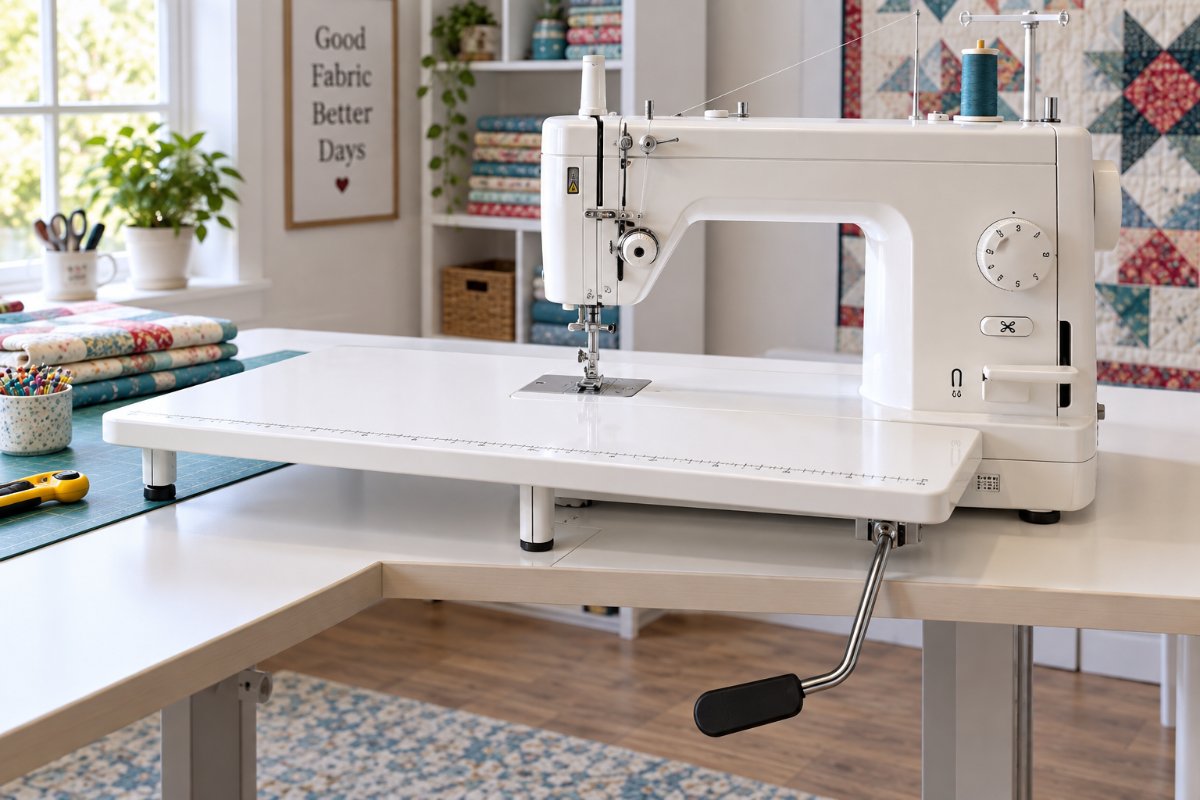
If you have spent any time researching straight stitch machines for quilting, you have probably already come across the Juki TL-2000Qi. It shows up again and again in our roundups of free motion and large project machines, and for good reason. It is fast, simple, and built to hold up under heavy use. This Juki TL-2000Qi review looks at what the machine does well, where it falls short, and whether the price makes sense compared with the other machines we have covered on this site.
Table of contents
- What the Juki TL-2000Qi is
- Specs at a glance
- What it is like to sew on it
- Price and what you pay
- Who the Juki TL-2000Qi fits
- Where it falls short
- Quilting tips from this Juki TL-2000Qi review
- How it stacks up against other machines we have reviewed
- Frequently asked questions
- Bottom line
What the Juki TL-2000Qi is
The Juki TL-2000Qi is a semi-industrial, single-needle sewing machine built around one job: straight stitching, fast and cleanly, for hours at a time. No zigzag, no decorative stitch library, and no embroidery unit. Juki stripped the machine down to the mechanics that matter most for piecing and free motion quilting, then built those mechanics to a higher standard than most home machines bother with. That focus is why this Juki TL-2000Qi review keeps coming back in our other roundups, including the beginner guide and the free motion machine guide, as reviewers point to it when someone outgrows a standard home sewing machine.
Specs at a glance
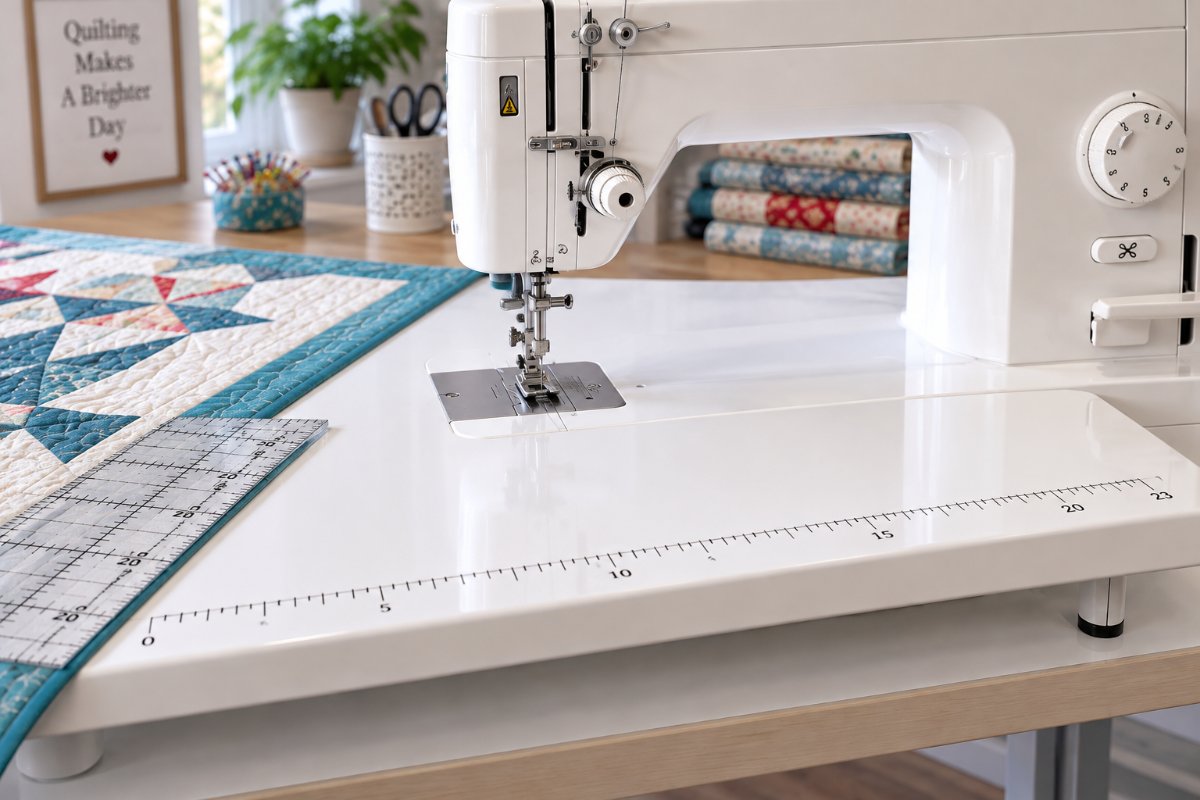
- Sewing speed: up to 1,500 stitches per minute
- Work area: about 23 inches across with the included extension table attached
- Needle system: HAx1 (130/705H), sizes 7 to 18
- Stitch type: straight stitch only, no zigzag or decorative stitches
- Knee lift lever included for hands-free presser foot control
- Automatic, foot-controlled thread trimmer
- Automatic needle threader and needle up or down button
- Droppable feed dogs for free motion quilting
- Weight: about 25.4 pounds
- Price: usually sells for about half of Juki's list price at most retailers
What it is like to sew on it
Most owners first mention speed. At 1,500 stitches per minute, the TL-2000Qi runs well past what a typical home machine can manage, and the aluminum body keeps vibration low even at that pace. Reviewers who have put the machine through long piecing sessions describe the stitch quality as consistently even, with no skipped stitches or tension drift that can show up on lighter machines after a few hours of use.
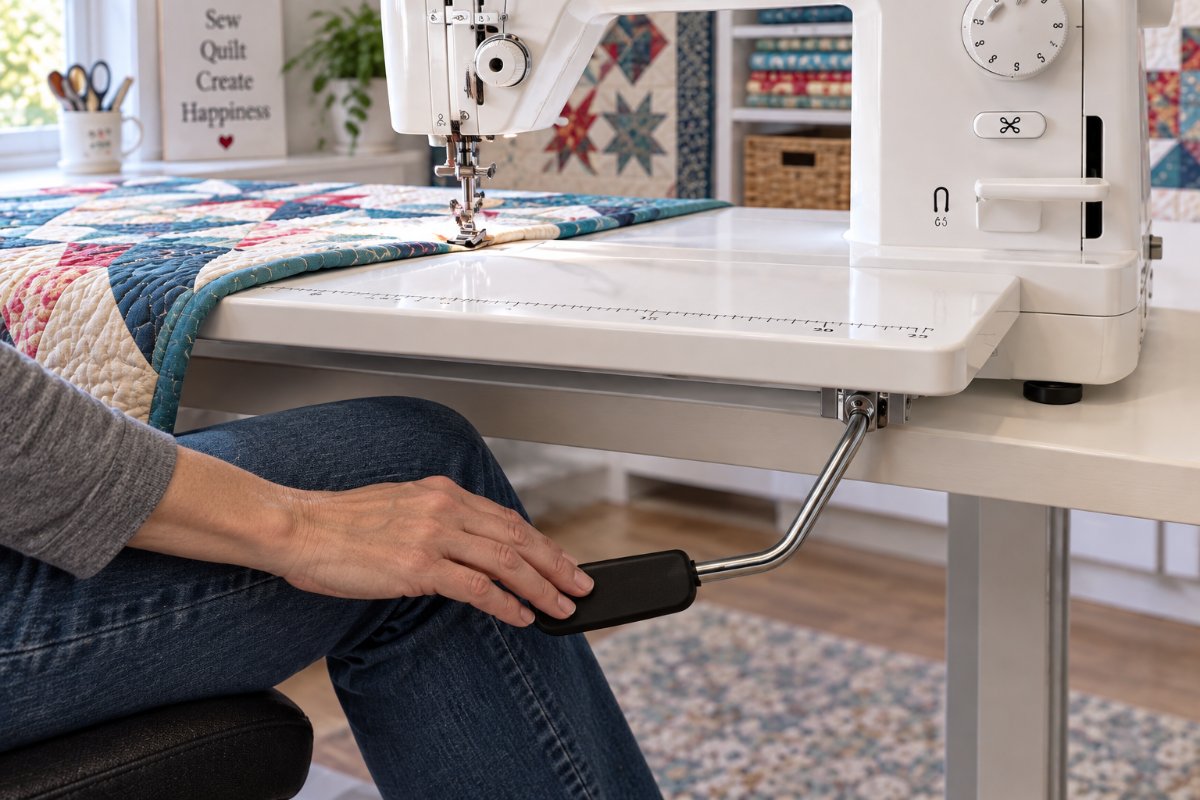
The knee lift is the other detail owners bring up unprompted. Once you get used to raising and lowering the presser foot with your knee instead of your hand, piecing chains of blocks together gets noticeably faster, since both hands stay on the fabric the whole time. Pair that with the foot-controlled thread trimmer and the automatic needle threader, and a lot of the small stops that slow down a normal sewing session simply disappear. Some reviewers note the LED lighting could be brighter for detailed free motion work in a dim room, which matters if your sewing space doesn't get much natural light.
Longevity is another point owners bring up. Because the TL-2000Qi is built on a semi-industrial frame rather than a typical home machine chassis, it has less plastic in the drivetrain and fewer parts that wear out under sustained high-speed use. Long-time owners report running the machine for years of regular piecing with only routine oiling and bobbin case cleaning, rather than the belt and gear repairs that can show up on lighter computerized machines after heavy use.
Price and what you pay
As this Juki TL-2000Qi review found, very few buyers pay Juki's list price. Across the retailers we checked, the street price sits at roughly half of list. At that price, it lands solidly in the mid-range for a machine built to this level of durability and speed, well below what a longarm setup costs and well above an entry-level home machine. The extension table that comes bundled with it is worth factoring in too, since a comparable table sold separately for other machines can add a meaningful amount.
The extended work area matters more than the number suggests once you are maneuvering a queen- or king-size quilt through the machine. With roughly 23 inches of clearance to the right of the needle, more of the quilt's bulk rests on the table instead of bunching up against the machine head, which makes it easier to keep stitch lines straight on a large project. Owners who upgraded from a standard 6 to 8 inch home machine throat space describe this as one of the most noticeable quality of life improvements, second only to the speed itself.
Who the Juki TL-2000Qi fits
Based on this Juki TL-2000Qi review, this machine makes the most sense for quilters and piecers who already know what they need from a machine and do not need it to also handle garment construction or embroidery. If you piece a lot of quilt tops, do a fair amount of free motion quilting, or simply want a machine that will not slow down during a long project, the speed and the extended work area pay off quickly. It is also a reasonable step up for someone who has outgrown a beginner machine and wants something built to run harder without needing repairs.
Where it falls short
The straight stitch-only design is the biggest limitation, and it's deliberate. If you need zigzag for garment finishing, buttonholes, or any decorative stitching, this machine cannot do it, and you will want a second machine on hand for that work. Beginners who are not sure yet what kind of sewing they will settle into may also find the single-purpose focus limiting compared to a computerized machine that can do a little of everything. As reviewers noted above, the lighting is functional but not the brightest on the market, which matters more for detailed quilting than for straightforward piecing.
Quilting tips from this Juki TL-2000Qi review
Owners who get the most from this machine tend to follow a few simple habits. This Juki TL-2000Qi review collects the ones that come up most.
- Oil it as the manual directs. Long-term owners in every Juki TL-2000Qi review we read mention this, because a semi-industrial machine needs more regular oiling than most home machines.
- Use the knee lifter from day one. It takes a session or two to get used to, but it frees both hands to guide the quilt.
- Slow down for free-motion work. 1,500 stitches per minute is fast, so lower the feed dogs and practice on a scrap sandwich at a lower speed first.
- Use good thread and a fresh needle. Fast straight stitching shows thread and needle problems quickly.
None of these steps are hard, and following them is the simplest way to get the years of fast, even stitching that owners describe throughout this Juki TL-2000Qi review. If you are still deciding, the FAQ below answers the questions that come up most in any Juki TL-2000Qi review.
How it stacks up against other machines we have reviewed
In our guide to the best sewing machine for quilting beginners, we steer newer quilters toward more flexible, lower-cost machines first, since the TL-2000Qi assumes you already know straight-stitch piecing and free-motion quilting are what you want to focus on. In our best sewing machine for free motion quilting guide, we compare the TL-2000Qi directly against four real machines, and it holds up well against the competition on speed and work area alone.
If large project throat space matters more to you than raw speed, our best large throat quilting machine guide covers machines built specifically around that tradeoff. And if you want a single machine that also handles embroidery, the TL-2000Qi isn't built for that. Our best sewing machine for quilting and embroidery guide covers combo machines that trade some of this machine's speed and simplicity for added versatility.
For the official specs straight from the manufacturer, Juki's own TL-2000Qi product page lists the full feature set and included accessories.
Frequently asked questions
Is the Juki TL-2000Qi good for beginners?
It can work for a motivated beginner, but it is really built for someone who already knows they want to focus on straight-stitch piecing and free-motion quilting. Someone still exploring different kinds of sewing may prefer a more flexible, lower-cost machine first.
Can the Juki TL-2000Qi sew zigzag stitches?
No. It is a straight-stitch-only machine. If you need zigzag, buttonholes, or decorative stitches, you will need a second, separate machine for that work.
How much does the Juki TL-2000Qi cost?
Most retailers sell it for roughly half of Juki's list price, and that is what most buyers pay.
Does the Juki TL-2000Qi come with an extension table?
Yes. The included extension table expands the work area by roughly 23 inches, which is one reason it handles large quilts more comfortably than a standard home machine.
Is the Juki TL-2000Qi worth it for quilting?
For most owners, yes. This Juki TL-2000Qi review found that reviewers and owners with regular piecing habits like the speed, durability, and the knee lift for hands-free control. It is less worth it for someone who also wants embroidery or decorative stitching from the same machine.
Juki TL-2000Qi review: bottom line
The short version of this Juki TL-2000Qi review: the machine earns its reputation the straightforward way: it does one thing, straight stitch piecing and quilting, and it does that one thing faster and more reliably than most machines at this price. If that matches how you sew, the street price is a fair trade for the speed, the extended work area, and the hands-free features that keep a long piecing session moving. If you need a machine that also handles zigzag, decorative stitches, or embroidery, look at one of the combo machines in our other guides instead.
4 thoughts on “Juki TL-2000Qi Review: An Honest Look for Quilters (2026)”