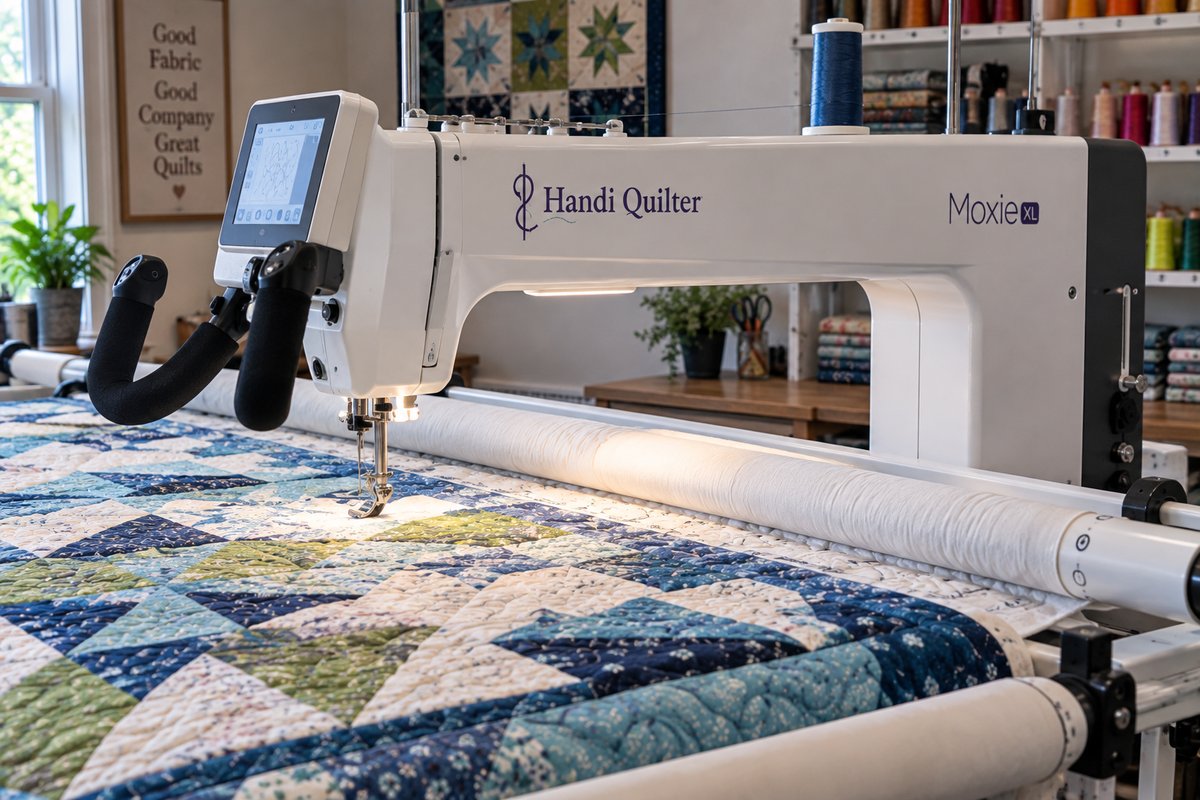
Finding the best longarm quilting machine starts with a bigger question: have you outgrown what a domestic sewing machine can handle? It's a real jump in price and space, so it helps to know what a longarm does that a regular machine can't, and which machines are worth the money at each stage. If you're still deciding between a longarm and upgrading your sewing machine for quilting, this guide covers the real differences between longarm and mid-arm setups, what matters when comparing machines, and a handful of widely sold models worth knowing about.
Table of Contents
Longarm vs mid-arm: what's the actual difference
Both terms describe machines built specifically for quilting rather than piecing, but they're not interchangeable.
- Longarm machines mount on a dedicated frame, usually 10 to 12 feet long, and the machine head moves over a quilt that stays stretched flat on rollers. Throat space (called "harp space" on these machines) typically runs 18 to 26 inches, which is why they can handle king-size quilts in one setup without rolling and re-rolling the fabric.
- Mid-arm machines are a middle step: still frame-mounted in most cases, but with a smaller harp space, usually 15 to 18 inches, and a smaller frame footprint that fits in a spare bedroom or a corner of a sewing room rather than a dedicated quilting studio.
- Sit-down longarms are a third category worth knowing about. These have the wide harp space of a longarm but no frame. You sit at them like a regular sewing machine and move the quilt yourself, which trades some of the ease of a frame setup for a much smaller footprint and a noticeably lower price.
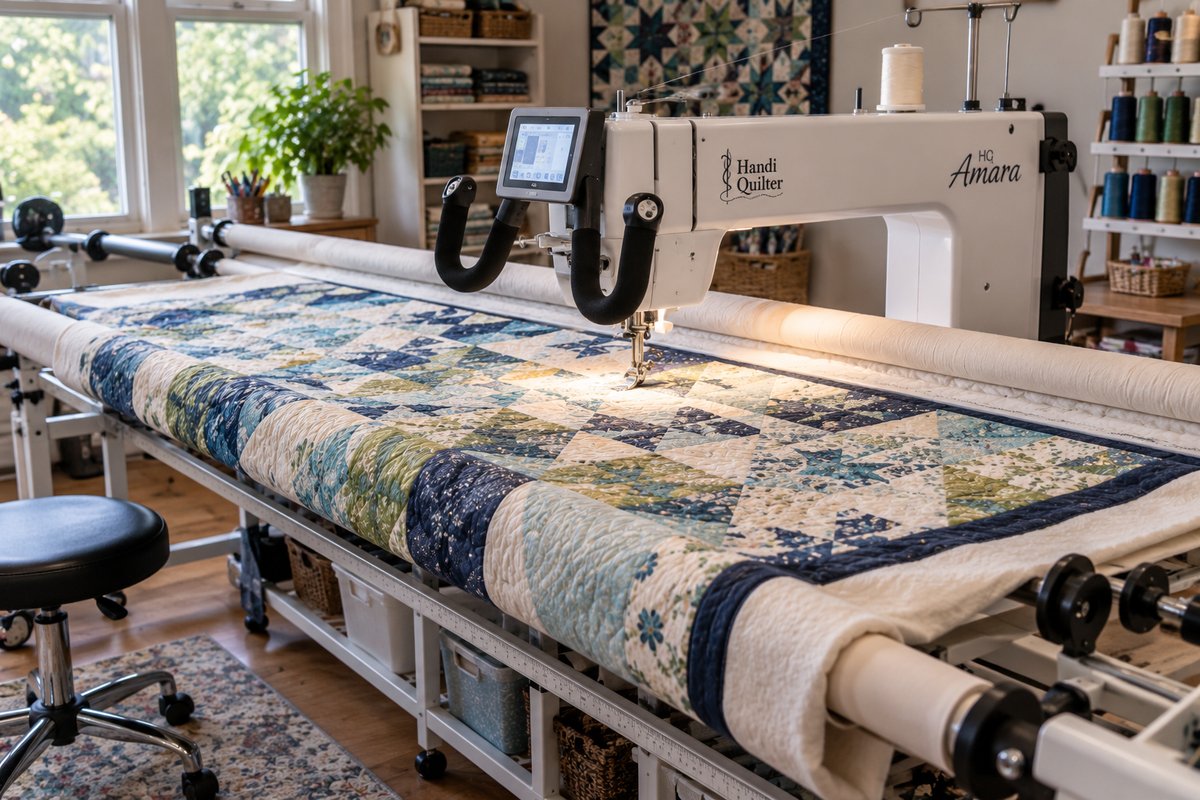
None of these replace a domestic machine for piecing. They exist for one job: quilting the actual quilt sandwich (top, batting, backing) evenly and quickly on projects too large to comfortably manage under a regular machine's arm.
What matters when you're comparing machines
- Harp space. More space means fewer times you have to stop and reposition a large quilt. Worth paying for if you regularly make anything queen-size or larger. Less important if you mostly finish throws and baby quilts.
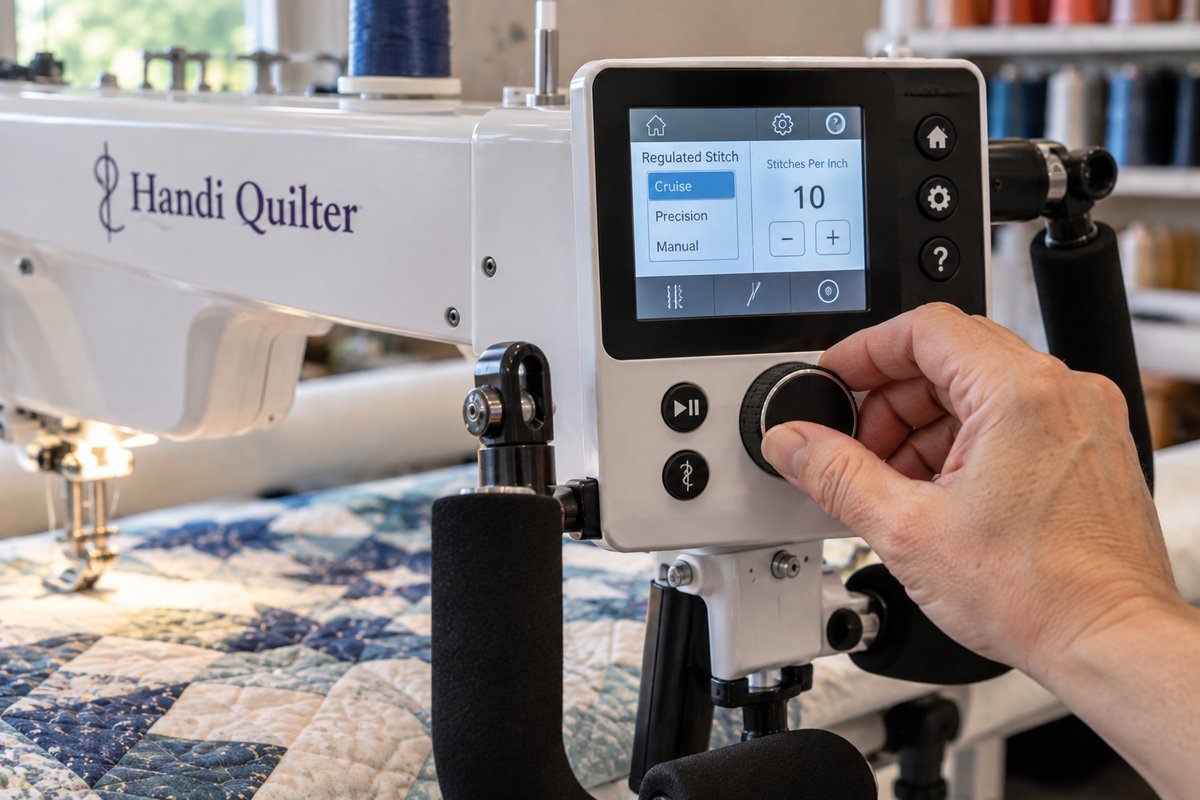
- Stitch regulation. A regulated machine adjusts stitch length automatically based on how fast you move the quilt, which is the single biggest factor in getting even stitches while free-motion quilting by hand on a frame. Unregulated machines are cheaper but require a steadier, more practiced hand.
- Frame quality and stability. A wobbly frame undermines even a good machine head. Look at how the frame's carriage moves front-to-back and side-to-side, not just the machine's specs.
- Computerized vs. manual operation. Computerized longarms can stitch pre-programmed patterns on their own. Manual (and manual-only) machines rely entirely on your hand movement. Computerized capability adds significantly to the price and isn't necessary to produce good machine-guided quilting.
- Service and dealer support. Longarms are a different category of purchase than a sewing machine. Local dealer support for setup, tuning, and repairs matters more here than almost anywhere else in quilting gear, since these machines are mechanically complex and expensive enough that shipping one back and forth for service is a real hassle.
Real machines worth knowing about
These are grouped by where they sit in the category, not ranked, since "best" depends heavily on your space, budget, and how often you'll use it.
Entry point: Grace Q'nique 15R / 16X
Grace's Q'nique line is one of the more common ways quilters move from a domestic machine into their first longarm or mid-arm. The 15R sits at the mid-arm end with a smaller harp space, while the 16X steps up to full longarm territory. Both are widely sold with frame bundles, which matters since buying the machine and frame separately can get complicated fast for a first purchase.
Mid-range: Handi Quilter Moxie
A 15-inch machine that consistently comes up as a sensible step-up choice: stitch regulation included, a strong dealer network (Handi Quilter machines are sold and serviced through a large network of independent sewing shops), and a frame designed specifically around it rather than a generic frame adapted to fit. Good middle ground between a first longarm and a high-end studio machine.
Sit-down option: Bernina Q20
A sit-down longarm with a genuinely wide 20-inch harp space but no frame required, which makes it a real option for anyone short on room for a full frame setup. You move the quilt by hand rather than the machine head, so it takes a different set of skills to get comfortable with than a frame-mounted longarm, but it's a legitimate way to get longarm-level harp space in a fraction of the footprint.
Higher-end: Janome Quilt Maker 18
An 18-inch longarm aimed at quilters who are past their first machine and want more speed and stitching precision without moving into the industrial-grade Gammill or APQS territory. Computerized stitch regulation and a stronger motor than entry-level frame machines, at a price that still sits below the top end of the category.
Studio-grade: Gammill and APQS
Worth knowing about even if they're not a realistic first purchase. Gammill and APQS build the machines most professional longarm quilters (people who quilt other people's tops for a fee) use: wide harp spaces, industrial-grade motors built for hours of continuous use, and price tags that reflect commercial-grade equipment rather than a hobbyist tool. If you're seriously considering quilting professionally rather than just for your own projects, these are the names to research next.
A note on where to buy: this guide is intentionally written without shopping links right now. Longarm machines in particular are usually sold and serviced through local or regional dealers rather than shipped like a typical online order, so talk to a dealer near you about setup, delivery, and service before buying, not just price.
Do you need a longarm, or would a mid-arm do?
If you're mostly making baby quilts, table runners, and throws, a mid-arm or even a domestic machine with a walking foot handles that fine, and a full longarm frame is more machine and more space than the projects call for. The jump to a full longarm makes the most sense once you're regularly finishing queen- or king-size quilts yourself, or once hand-guiding a large quilt sandwich through a domestic machine has become the actual bottleneck in how many quilts you finish. It's also worth being honest about space: a longarm frame is a permanent, dedicated setup in most homes, not something you fold up and put away between projects.
If a full longarm is more than you need, our best large throat quilting machine guide covers home machines with extra room under the arm. Longarm owners should also read how to clean a longarm quilting machine and our guide on how to fix tension on a sewing machine, since the same tension basics apply.
Common questions
What are some good longarm quilting machines?
There isn't one best longarm quilting machine for every quilter, but Grace, Handi Quilter, Janome, Bernina, Gammill, and APQS all make longarm or mid-arm machines with real track records among quilters. Which one is "good" for you depends mostly on harp space needs, budget, and whether you want stitch regulation and computerized guidance or plan to quilt by hand.
What is the best longarm quilting machine for a beginner?
The best longarm quilting machine for a beginner is usually an entry-level frame bundle like the Grace Q'nique line, since that's where most first-time longarm buyers start, since they pair the machine with a frame designed to work together rather than requiring you to piece together compatible parts. A sit-down option like the Bernina Q20 is also worth considering if space, not budget, is the main constraint.
What is the top-of-the-line quilting machine?
Among machines competing for the title of best longarm quilting machine, Gammill and APQS are generally considered the top of the category, built for the kind of continuous daily use professional longarm quilters put them through rather than occasional home use. They're priced accordingly and are usually overkill unless you're quilting for others as a business.
Is a mid-arm good enough for a home quilter?
For most home quilters, yes. A mid-arm gives you a real frame setup, and it can be a smarter buy than the best longarm quilting machine money can buy if space is tight, and meaningfully more harp space than a domestic machine without the full footprint, cost, or commitment of a 12-foot longarm frame. It's the more practical choice unless you're consistently finishing very large quilts, and stepping up to the best longarm quilting machine you can afford only pays off once you need that extra harp space.
The bottom line
The best longarm quilting machine for you is a real investment in both money and space, so it's worth being honest about how large your projects are and how much room you have before deciding which category makes sense. Start by matching harp space and frame footprint to your real projects and your real room, not the biggest machine available, and lean on stitch regulation if you're still building confidence with free-motion quilting by hand.
3 thoughts on “Best Longarm Quilting Machine in 2026”